


 Pro Benefits

 الشروط
 الخصوصية
 Child Safety & Protection
 الإشعارات
 Ayrush Global It Services Pvt Ltd
Micro OLED Display Guide: High-Resolution Solutions | ARVR Optical
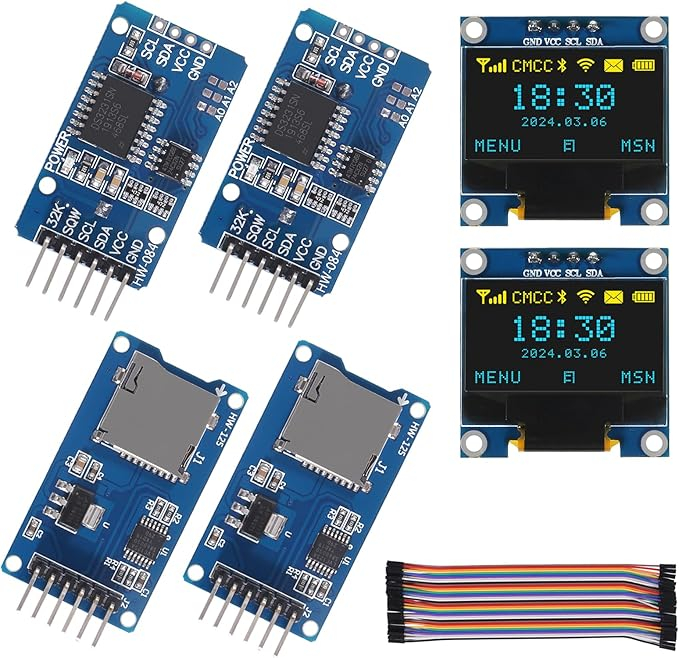
The landscape of visual technology is shifting toward "near-eye" experiences. Whether for industrial maintenance, medical imaging, or high-end consumer electronics, the demand for smaller, brighter, and more efficient screens is at an all-time high. At the heart of this revolution is the Micro OLED display.
Also known as OLED-on-Silicon (OLEDoS), this technology is not just a smaller version of your smartphone screen. It represents a fundamental leap in how we integrate light-emitting materials with high-performance computing.
What is a Micro OLED Display?
A Micro OLED display is a specialized screen where the OLED material is deposited directly onto a silicon backplane rather than a traditional glass or plastic substrate. By using a silicon wafer—the same material used to create computer chips—manufacturers can pack millions of pixels into a space smaller than a postage stamp.
This integration allows for an incredible pixel density (PPI), often exceeding 3,000 pixels per inch. For a buyer, this means a "screen door effect" is virtually non-existent, providing a seamless and immersive viewing experience.
Key Benefits for Industry Experts and New Buyers
When choosing a display for a new project, understanding the technical advantages is crucial. ARVR Optical focuses on delivering modules that excel in the following areas:
-
Extreme Contrast and True Blacks: Unlike LCDs that require a backlight, each pixel in a Micro OLED emits its own light. When a pixel is off, it is completely black, leading to an infinite contrast ratio.
-
Low Power Consumption: Because only active pixels use energy, these displays are ideal for battery-operated wearable devices like smart glasses.
-
Rapid Response Times: Micro OLEDs respond in microseconds. This is vital for Augmented Reality (AR) and Virtual Reality (VR) to prevent motion blur and "sim sickness."
-
Compact Form Factor: By removing the need for bulky backlights, the entire optical module becomes thinner and lighter.
Technical Comparison: Micro OLED vs. Micro LED
In the optoelectronics industry, a common question is how Micro OLED compares to the emerging Micro LED technology.
| Feature | Micro OLED (OLEDoS) | Micro LED |
| Material | Organic Compounds | Gallium Nitride (Inorganic) |
| Brightness | High (Up to 5,000 nits) | Ultra-High (10,000+ nits) |
| Maturity | Market-Ready / Commercial | Experimental / High Cost |
| Best Use | AR/VR, Viewfinders, Medical | Outdoor HUDs, Large Signage |
While Micro LED offers higher peak brightness, Micro OLED remains the superior choice for near-eye applications due to its color accuracy, manufacturing maturity, and cost-effectiveness for B2B scale.
Applications of Micro OLED Technology
The versatility of OLEDoS technology makes it a cornerstone for several high-stakes industries:
-
Consumer AR/VR: Powering the next generation of headsets for the "Metaverse," offering 4K-per-eye resolutions.
-
Medical & Surgical: Providing surgeons with ultra-clear, real-time data overlays during complex procedures.
-
Military & Defense: Used in helmet-mounted displays (HMDs) and night-vision goggles where reliability and low latency are non-negotiable.
-
Industrial Training: Enabling workers to view 3D blueprints and instructions via smart glasses in 5S-managed environments.
Why Partner with ARVR Optical?
At ARVR Optical, we understand that a display is only as good as the optics supporting it. We specialize in providing complete optical solutions, including Birdbath and Pancake modules, which are perfectly calibrated for Micro OLED integration. Our expertise in technical content and manufacturing ensures that your products meet the highest industry standards for clarity and durability.
Future Trends: What to Expect in 2026
As we move through 2026, the industry is seeing a shift toward RGB OLEDoS. Most current models use a white OLED with color filters, but direct RGB deposition promises even higher brightness levels and better energy efficiency. Furthermore, the integration of AI-driven "super-sensing" in XR headsets is making these displays smarter, allowing them to adjust brightness and focus based on the user's environment automatically.
Conclusion
The Micro OLED display is the gold standard for high-performance, near-eye visual systems. Its combination of high pixel density, low power usage, and incredible contrast makes it the preferred choice for both innovators and established industry players.
For businesses looking to integrate these cutting-edge displays into their next project, ARVR Optical offers the technical knowledge and supply chain expertise to bring your vision to life. As the digital and physical worlds continue to merge, OLEDoS technology will be the window through which we view the future.
 Arabic
 English
 French
 Spanish
 Portuguese
 Deutsch
 Turkish
 Dutch
Dutch
 Italiano
 Russian
 Romaian
 Portuguese (Brazil)
 Greek
Greek
