


 Pro Benefits
 About
About
 Koşullar
 Gizlilik
 Child Safety & Protection
 Bildirimler
 Ayrush Global It Services Pvt Ltd
How Can an Admission Management System Speed Up Admissions?
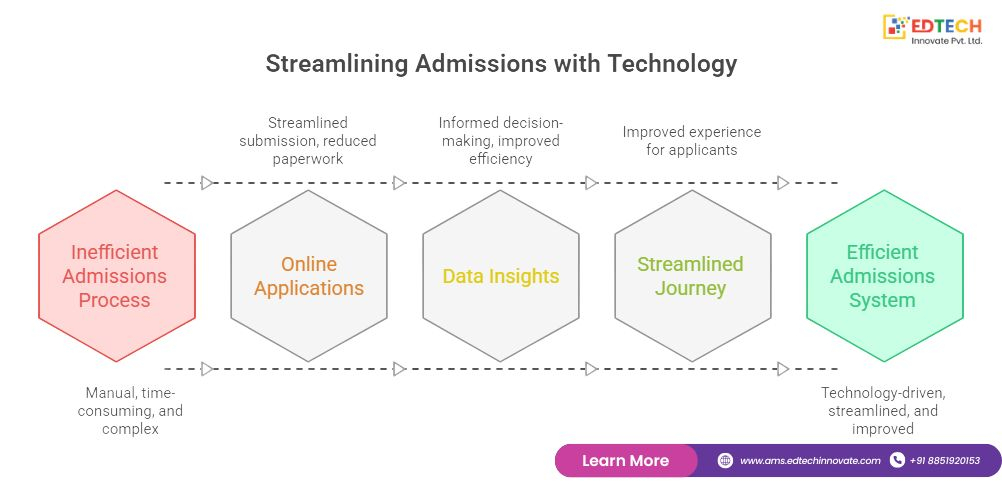
In today’s fast-paced digital world, speed is no longer a luxury in the admissions process—it’s an expectation. Students and parents want quick responses, seamless application experiences, and real-time updates. Institutions that fail to meet these expectations often lose potential applicants to faster, more efficient competitors.
This is where an Admission Management System becomes essential. By automating workflows, reducing manual intervention, and streamlining every stage of the admissions journey, it significantly accelerates the entire process—from application submission to final enrollment.
The Problem with Slow Admissions Processes
Traditional admissions methods are often time-consuming and fragmented. Applications arrive through multiple channels, documents are handled manually, and staff must coordinate across departments to move each application forward.
This leads to delays in verification, slower communication, and bottlenecks in decision-making. Applicants are left waiting without clarity, and institutions risk losing them due to lack of responsiveness.
Speed, in this context, is not just about efficiency—it directly impacts enrollment success.
What Does “Faster Admissions” Really Mean?
Speeding up admissions is not simply about processing applications quickly. It involves creating a smooth, uninterrupted flow where every stage is optimized for efficiency and accuracy.
A well-implemented Admission Management System ensures that applications are collected, reviewed, and processed without unnecessary delays, while maintaining data accuracy and compliance. It creates a structured process where nothing gets stuck or overlooked.
How an Admission Management System Speeds Up Admissions
Automated Application Collection
One of the biggest delays in traditional systems comes from handling application forms manually. An online admission portal eliminates this issue by allowing applicants to submit their details digitally through a structured online application form.
The system instantly captures and organizes data, removing the need for manual data entry and reducing processing time from the very beginning.
Instant Data Validation and Error Reduction
Errors in application forms can slow down the process significantly, requiring back-and-forth communication with applicants.
An Admission Management System includes built-in validation features that ensure all required fields are completed correctly before submission. This reduces incomplete applications and minimizes delays caused by missing or incorrect information.
Real-Time Application Tracking
In manual systems, tracking the status of applications can be difficult and time-consuming. Staff often need to check multiple sources to understand where an application stands.
With an integrated tracking system, every application is updated in real time. Admissions teams can instantly see whether a form has been submitted, documents verified, or decisions made. This transparency eliminates confusion and speeds up internal coordination.
Faster Document Management
Handling physical documents or email attachments can slow down admissions considerably.
A digital online admission process allows applicants to upload required documents directly through the platform. These documents are automatically linked to the applicant’s profile, making them easy to access, review, and verify.
This streamlined approach reduces the time spent searching for documents and ensures quicker decision-making.
read more: How Does the Best Admissions Software Support Institutional Growth?
Automated Communication and Notifications
Communication delays are one of the biggest causes of slow admissions.
An Admission Management System automates communication at every stage—sending confirmations, reminders, and status updates instantly. Applicants are informed without delay, and staff do not need to manually send emails or messages.
This keeps the process moving smoothly and ensures that applicants remain engaged throughout.
Workflow Automation for Faster Decision-Making
Admissions involve multiple steps, including review, verification, and approval. When these steps are handled manually, they often create bottlenecks.
A structured admission management solution automates workflows by assigning tasks, setting deadlines, and triggering actions automatically. Applications move seamlessly from one stage to the next without unnecessary waiting.
This significantly reduces turnaround time for admission decisions.
Centralized Data for Quick Access
Searching for information across spreadsheets, emails, and files can slow down even the most efficient teams.
A centralized online enrollment management system stores all applicant data in one place. Admissions teams can access everything they need instantly, allowing them to process applications faster and more accurately.
Seamless Integration with Institutional Systems
Once a student is admitted, their data often needs to be transferred to other systems such as the Learning Management System (LMS) or financial platforms.
An integrated Admission Management System ensures that this data flows automatically, eliminating delays caused by manual data entry and reducing errors.
The Result: Faster Admissions, Better Outcomes
When all these elements come together, the result is a significantly faster admissions process. Applications are processed quickly, decisions are made promptly, and applicants receive timely updates.
This not only improves operational efficiency but also enhances the overall applicant experience. Faster admissions mean higher satisfaction, better engagement, and ultimately, improved enrollment rates.
Why Speed Matters More Than Ever
In a competitive education market, speed can be a deciding factor. Applicants often apply to multiple institutions and choose the one that responds first and provides a smooth experience.
By adopting an Admission Management System, institutions can stay ahead by offering a fast, efficient, and reliable admissions journey. This not only attracts more applicants but also increases the likelihood of converting them into enrolled students.
Conclusion
Speeding up admissions is no longer optional—it’s essential for institutions that want to grow and remain competitive.
An Admission Management System transforms slow, manual processes into a streamlined, automated workflow that saves time, reduces errors, and improves efficiency at every stage. From application submission to final enrollment, it ensures that every step is optimized for speed and accuracy.
At AMS EdTech Innovate, we specialize in delivering advanced admissions solutions that help institutions accelerate their processes without compromising quality. Our powerful Admission Management System is designed to simplify admissions, enhance applicant experience, and enable institutions to operate faster and smarter.
Because when your admissions process moves faster, your institution moves forward.
Frequently Asked Questions (FAQs)
1. How does an Admission Management System speed up admissions?
It automates application processing, reduces manual work, enables real-time tracking, and ensures faster communication, all of which significantly reduce delays.
2. Can it handle large volumes of applications quickly?
Yes, modern systems are designed to process high volumes efficiently without slowing down operations.
3. Does it reduce errors in the admissions process?
Absolutely. Built-in validation and automation minimize human errors and ensure accurate data handling.
4. How does it improve communication speed?
The system sends instant notifications, updates, and reminders, eliminating delays caused by manual communication.
5. Is it suitable for all types of institutions?
Yes, schools, colleges, and universities can all benefit from faster and more efficient admissions processes using this system.
 Turkish
 English
 Arabic
 French
 Spanish
 Portuguese
 Deutsch
 Dutch
Dutch
 Italiano
 Russian
 Romaian
 Portuguese (Brazil)
 Greek
Greek
