


 Pro Benefits
 About
About
 Terms
Terms
 Privacy
 Child Safety & Protection
 Notifications
 Ayrush Global It Services Pvt Ltd
How AI-Powered Risk Intelligence Is Transforming Fintech Security
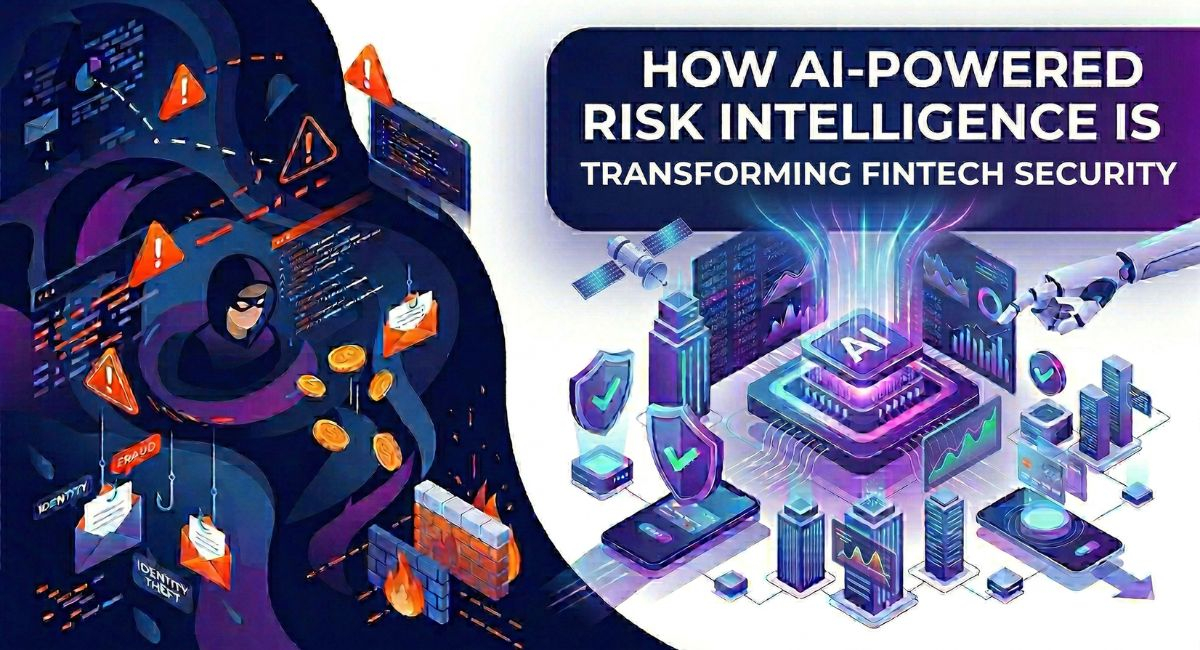
Fintech has always been a high-speed, high-stakes environment. But in 2026, the game has fundamentally changed. Fraud is no longer isolated, predictable, or manual. It’s automated, coordinated, and constantly evolving.
This creates a critical question for fintechs: How do you scale securely without slowing down growth?
This is where AI-powered risk intelligence in fintech is redefining the rules. It’s much more than detecting fraud. It’s about understanding risk in real time, at a device, transaction, and network level, before damage happens.
5 Ways AI-Powered Risk Intelligence Is Transforming Fintech Security
1. Real-Time Fraud Detection at Scale
Traditional fraud systems react after the fact. AI flips this model.
With real-time fraud detection in fintech, AI processes massive volumes of transactions instantly, flagging anomalies before they are completed.
For example:
A sudden high-value transaction from a new device in an unfamiliar location can be flagged within milliseconds, triggering step-up authentication or blocking the transaction altogether.
This shift from reactive to proactive security is what allows fintechs to grow without exposing themselves to exponential risk.
2. Device Intelligence as a Core Risk Signal
Credentials can be stolen. OTPs can be bypassed. But devices tell a deeper story.
Device intelligence in fintech enables AI to analyze:
-
Device fingerprints
-
OS, browser, and network configurations
-
Emulator or spoofing attempts
-
Device consistency across sessions
Instead of asking “Is this the right password?”, AI asks:
👉 “Is this the same trusted device, or a risky environment?”
This is especially critical in detecting:
-
Account takeovers
-
Multi-account fraud
-
Promo abuse and bot-driven attacks
Device-level insights turn every login and transaction into a high-confidence risk decision.
3. Behavioral Analytics That Go Beyond Credentials
AI learns behavior.
Through behavioral analytics in fraud detection, systems understand how genuine users interact with platforms:
-
Typing speed and patterns
-
Navigation flows
-
Transaction habits
Now imagine this:
A user logs in successfully, but their typing rhythm, session behavior, and navigation pattern don’t match historical data.
That’s a red flag.
AI identifies these subtle deviations instantly, making it extremely difficult for fraudsters to mimic legitimate users, even with stolen credentials.
4. Predictive Risk Intelligence (Stopping Fraud Before It Happens)
One of the biggest shifts in AI risk intelligence fintech security is moving from detection to prediction.
AI models analyze:
-
Historical fraud patterns
-
Device and network relationships
-
Transaction trends across users
This enables fintechs to:
-
Identify high-risk users before they transact
-
Detect coordinated fraud rings through graph analysis
-
Anticipate emerging attack patterns
Instead of waiting for fraud signals, fintechs can now pre-empt threats, reducing both financial loss and operational overhead.
5. Automated Decisioning with Explainability
Speed matters. But so does accountability.
Modern AI systems explain the decisions.
With explainable AI (XAI), fintech teams can understand:
-
Why was a transaction flagged
-
Which signals contributed to the risk score
-
How decisions align with compliance requirements
This is crucial for:
-
Regulatory reporting
-
Internal audits
-
Customer trust
The result? Faster decisions without sacrificing transparency, something legacy rule-based systems struggle to deliver.
How Fintechs Can Strengthen Security with AI-Powered Risk Intelligence in 2026
Adopting AI is no longer optional—but how you implement it makes all the difference.
Here’s what forward-thinking fintech leaders are doing:
1. Moving to a device-first risk approach
Shifting from identity-only checks to device + network intelligence ensures stronger fraud detection accuracy.
2. Investing in real-time risk infrastructure
Batch processing is outdated. Decisions must happen in milliseconds across every touchpoint.
3. Building multi-layered detection systems
Combining device intelligence, behavioral analytics, and transaction monitoring creates a robust defense system.
4. Leveraging AI as a strategic partner (not just a tool)
Modern fintechs are integrating AI deeply into their risk strategy, not treating it as an add-on.
5. Prioritizing scalability and adaptability
Fraud evolves fast. Your AI systems must continuously learn and adapt without manual intervention.
Conclusion
AI is redefining fintech security.
From real-time fraud detection to device intelligence and predictive risk modeling, AI-powered risk intelligence is enabling fintechs to scale faster while staying secure.
For fintechs, the takeaway is that the future of fintech security is about understanding risk in real time and acting on it instantly.
Those who adopt this approach will not only reduce fraud losses but also build the one thing fintech depends on the most—TRUST.
FAQs
What is AI-powered risk intelligence in fintech?
AI-powered risk intelligence uses machine learning and data analysis to assess, predict, and mitigate fraud risks in real time across fintech platforms.
How does AI detect fraud in fintech platforms?
AI analyzes transaction patterns, device data, and user behavior to identify anomalies and flag suspicious activity instantly.
How does device intelligence work with AI in fintech?
Device intelligence provides AI with data about devices, networks, and environments, helping detect spoofing, multi-accounting, and unauthorized access attempts.
Why is AI important for fraud prevention in fintech?
AI enables real-time detection, predictive insights, and automated responses—making fraud prevention faster, more accurate, and scalable.
 English
 Arabic
 French
 Spanish
 Portuguese
 Deutsch
 Turkish
 Dutch
Dutch
 Italiano
 Russian
 Romaian
 Portuguese (Brazil)
 Greek
Greek
