


 Pro Benefits
 Σχετικά
 Όρους
Όρους
 Ιδιωτικότητα
 Child Safety & Protection
 Ειδοποιήσεις
 Ayrush Global It Services Pvt Ltd
International Scuba Diving: Your Complete Guide to Certifications, Training Standards & Worldwide Diving
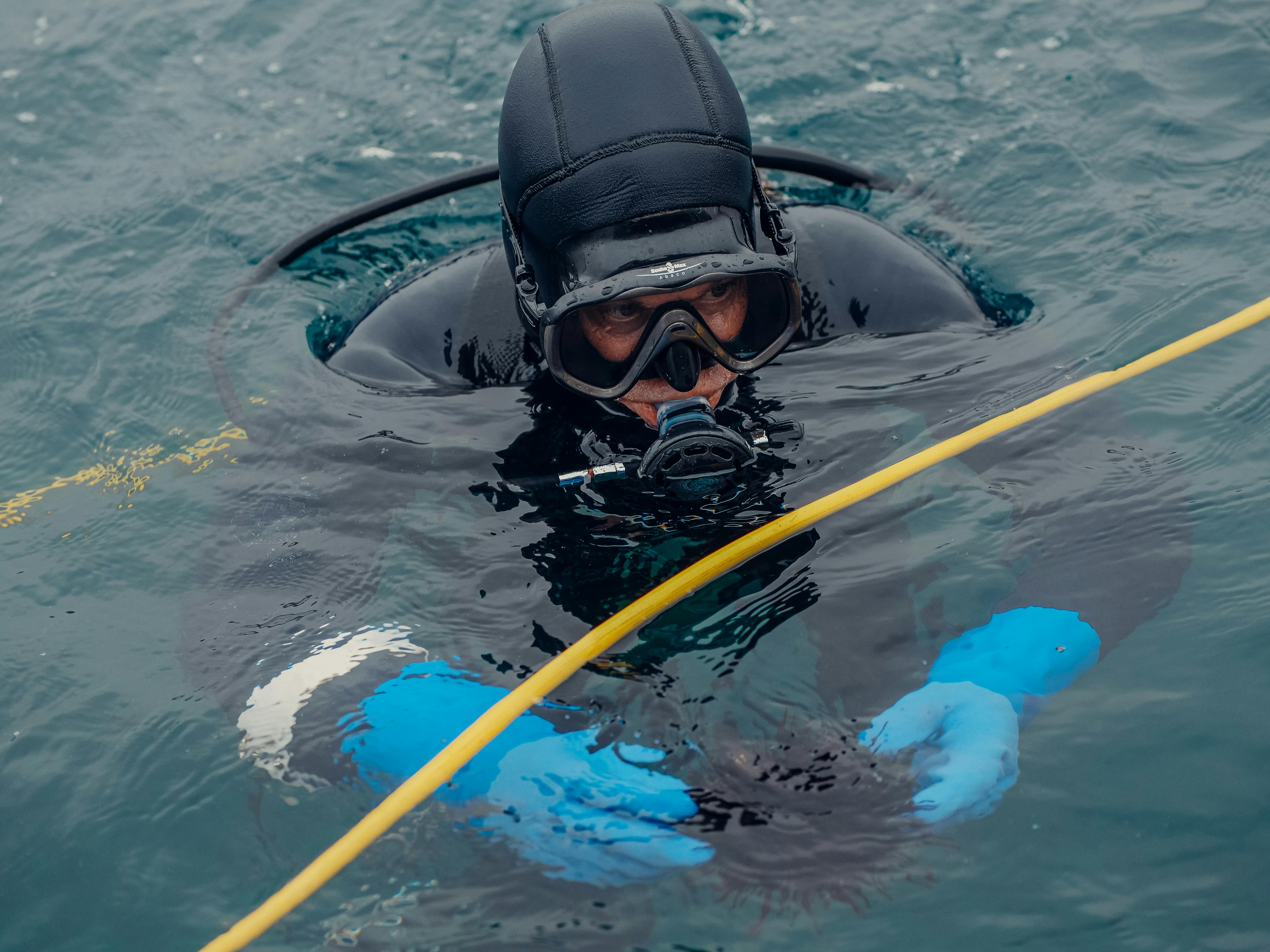
Planning to explore coral reefs in the Caribbean, dive with whale sharks in the Maldives, or discover shipwrecks in the Mediterranean? Your scuba certification needs to be recognized internationally, but with dozens of certification agencies claiming global acceptance, how do you know which training will actually open underwater doors worldwide?
This comprehensive guide explains exactly what makes a scuba certification internationally valid, compares major certification agencies, and provides a clear roadmap to getting certified for worldwide diving adventures. For divers who need clearer underwater vision during training and exploration, using a dive mask with a prescription can significantly improve safety and overall diving experience.
What Makes a Scuba Certification 'International'?
Understanding what makes your scuba diving certification valid worldwide starts with grasping the difference between marketing claims and actual international standards.
Understanding International Scuba Standards (ISO Certification)
The International Organization for Standardization (ISO) has established specific standards for recreational scuba diving that define competency levels recognized worldwide. The most important standard is ISO 24801, divided into three levels:
● ISO 24801-1: Supervised diver (entry-level certifications)
● ISO 24801-2: Autonomous diver (equivalent to Open Water Diver)
● ISO 24801-3: Dive leader (equivalent to Divemaster)
When a certification agency's training program is ISO-compliant, it means its courses meet internationally recognized minimum standards for knowledge, skills, and safety protocols. This ensures that a dive center in Thailand can trust that your PADI Open Water certification represents the same competency level as an SSI Open Water certification.
Reciprocity Between Certification Agencies
Beyond ISO standards, the diving industry has established reciprocity agreements through the World Recreational Scuba Training Council (WRSTC). Major certification agencies, including PADI, SSI, NAUI, and several others, are WRSTC members, which is why their certifications enjoy broad international acceptance.
However, some dive centers conduct checkout dives for divers they haven't worked with before, particularly for challenging dive sites. This isn't a reflection on your certification's validity but rather a safety practice to ensure you're comfortable with your skills and local conditions.
Major International Scuba Certification Agencies Compared
PADI (Professional Association of Diving Instructors)
PADI is the largest scuba diving certification agency globally, having certified over 30 million divers with a presence in more than 150 countries. PADI certifications are virtually universally recognized worldwide.
The PADI course structure follows a clear progression: Open Water Diver, Advanced Open Water Diver, Rescue Diver, and specialty certifications. PADI pioneered the eLearning approach, allowing you to complete knowledge development remotely at your own pace.
Typical PADI Open Water certification costs range from $350-$500 in the United States, though prices vary significantly by location.
Pros: Widest global recognition, most dive centers worldwide, extensive eLearning resources.
Cons: Can be slightly more expensive, and large class sizes at popular locations.
SSI (Scuba Schools International)
SSI has grown into PADI's primary competitor with approximately 3,300 training centers globally and a strong presence in Europe and Asia. They operate through affiliated dive centers and resorts, which ensures consistent training quality.
SSI has embraced a digital-first philosophy more aggressively than any other major agency. All materials and certifications are managed digitally, and your certification is available online immediately upon completion. SSI pricing is competitive, typically in the $300-$500 range for Open Water certification.
Pros: Excellent digital platform, competitive pricing, free digital materials.
Cons: Fewer locations than PADI, and must complete training through affiliated centers.
NAUI, SDI/TDI, and Alternative Agencies
NAUI (National Association of Underwater Instructors) is one of the oldest and most respected certification agencies with comprehensive, thorough training. SDI/TDI offers industry-leading training in technical diving. BSAC (British Sub-Aqua Club) is popular in the UK and Commonwealth countries.
The honest answer: the quality of your instructor matters more than the agency name. All major agencies offer ISO-compliant training that will be recognized worldwide. Your decision should prioritize local availability, travel destinations, specialty interests, and instructor quality.
Getting Your International Scuba Certification
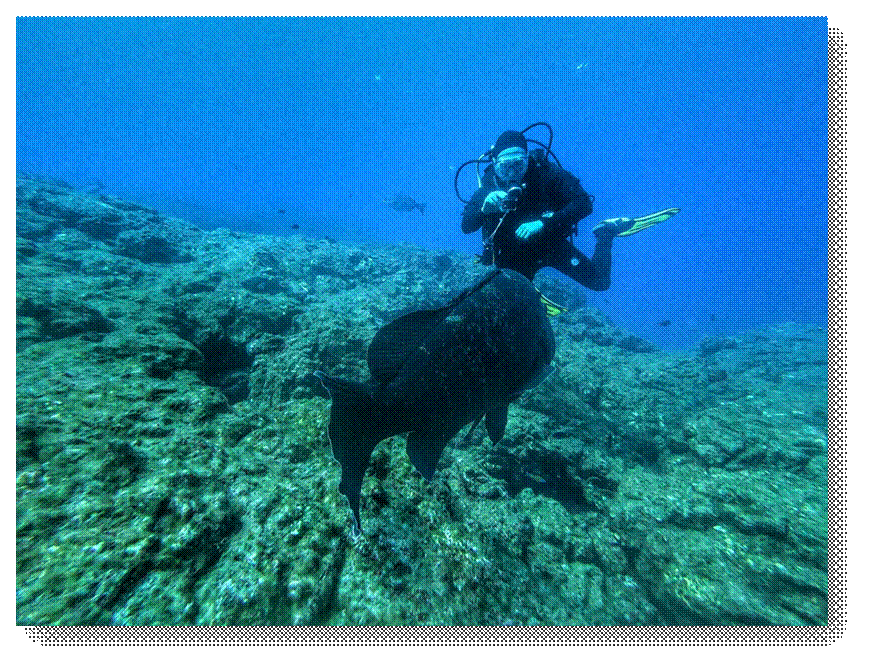
Open Water Diver Certification: Your Foundation
Your journey begins with the Open Water Diver certification, qualifying you to dive with a buddy to depths of 60 feet (18 meters) without professional supervision.
Knowledge development covers diving physics, physiology, equipment, environment, and dive planning through eLearning (15-25 hours) or traditional classroom sessions (4-6 classes). The knowledge portion concludes with a final exam.
Confined water training takes place in a pool over 5-7 training sessions where you'll practice essential skills, including equipment assembly, controlled descents and ascents, mask clearing, regulator recovery, buoyancy control, and emergency procedures. For divers with vision correction needs, properly fitted prescription dive masks are essential for clearly seeing instructor signals and reading gauges.
The open water dives (typically four dives over two days) are where you apply your skills in real diving conditions at maximum depths of 40-60 feet (12-18 meters).
Typical duration:
● Intensive courses: 3-4 consecutive days
● Weekend courses: 2-3 weekends
● Part-time courses: 2-4 weeks with evening/weekend sessions
Advancing Your Skills
Advanced Open Water Diver certification involves five specialty adventure dives that expand your depth limit to 100 feet (30 meters), opening access to more challenging dive sites worldwide. Typical cost: $250-$400.
Rescue Diver certification is perhaps the most valuable specialty available, teaching you to recognize and prevent diving emergencies and manage distressed divers. The course requires approximately 3-4 days and costs $300-$500.
Specialty certifications allow you to pursue specific interests, including deep diving, wreck diving, night diving, underwater photography, and nitrox diving. Each specialty typically costs $150-$300.
Maintaining Your Skills
If you haven't dived in 12 months or more, taking a refresher course (also called ReActivate) is strongly recommended. These courses review essential skills in a pool, typically requiring 2-3 hours and costing $75-$150.
Diving Internationally with Your Certification
Essential Documentation
Your certification card (physical or digital) proves you've completed recognized training. Your dive logbook proves recent diving experience, which becomes increasingly important for advanced dives or challenging conditions.
Dive insurance through organizations like Divers Alert Network (DAN) is essential. Regular travel insurance typically excludes scuba diving-related injuries. Basic DAN insurance starts around $35-$75 annually and covers hyperbaric chamber treatment, medical evacuation, and dive-specific medical coverage.
Equipment Considerations
Most divers bring personal items (mask, dive computer, wetsuit) and rent BCDs, regulators, and tanks locally. Always bring your own mask. Rental masks rarely fit perfectly. If you require vision correction, having your own custom prescription dive masks is non-negotiable for safe diving.
Dive computers are now affordable enough ($200-$400) that most certified divers invest in their own within the first year.
Top International Dive Destinations and Their Requirements
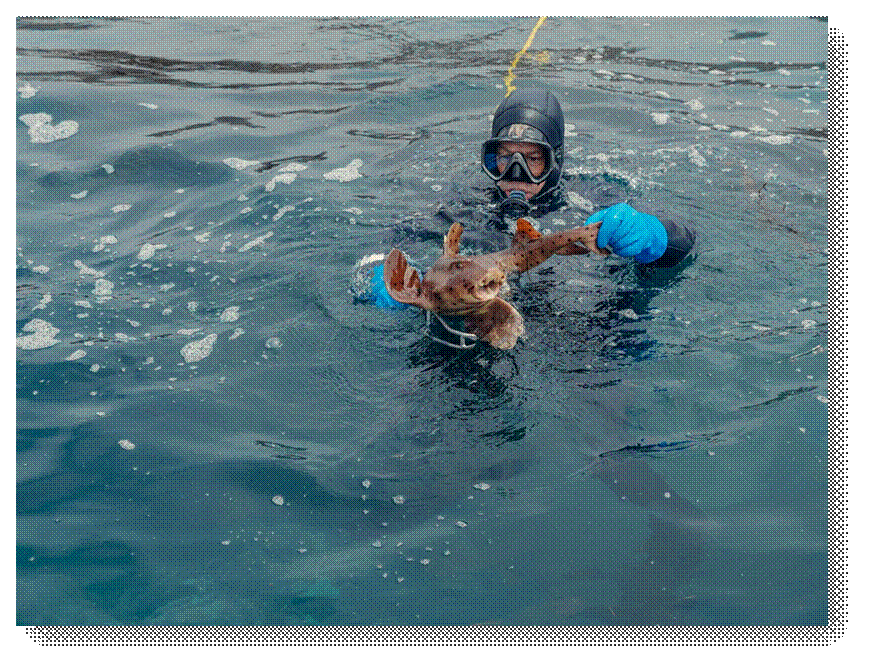
Caribbean destinations like the Cayman Islands, Cozumel, and Bonaire offer accessible diving where an Open Water certification suffices for most sites. Perfect for newer certified divers with 80°F water, 60-100 feet of visibility, and minimal currents.
Southeast Asia destinations, including Thailand, the Philippines, and Indonesia, deliver exceptional value and biodiversity. Advanced Open Water is recommended due to occasional strong currents. Some locations require a minimum logged dives (20-50 dives).
Red Sea (Egypt, Jordan) offers historical shipwrecks and dramatic underwater topography. Most sites accept Open Water divers, though famous wrecks require Advanced certification.
Pacific destinations like the Maldives and the Great Barrier Reef represent bucket-list diving. Maldives channel dives often require Advanced certification due to currents and depths exceeding 80 feet.
Always research specific dive site requirements before booking trips and contact dive operators directly to confirm prerequisites.
Costs and Maximizing Your Certification Value
Certification Costs by Location
Open Water Diver certification costs vary significantly:
● United States: $350-$500
● Caribbean resorts: $400-$600
● Thailand: $250-$350
● Philippines: $200-$300
● Egypt: $250-$350
Lower-cost locations aren't necessarily lower quality. Research dive centers carefully, regardless of location.
Ongoing Diving Costs
Annual diving budget for active recreational divers (2-3 international trips yearly):
● Local diving: $500-$1,000
● International dive trips: $2,000-$4,000
● Equipment maintenance: $200-$400
● Insurance: $50-$100
● Continuing education: $200-$500
Total annual budget: $3,000-$6,000
Maximizing Your Investment
Take refresher courses if needed, join local dive clubs for community and group rates, book dive packages during shoulder seasons, invest strategically in equipment starting with essentials, and combine certifications with travel to add value to trips you're already taking.
Safety and Choosing Quality Training
Evaluating Dive Centers and Instructors
Red flags to avoid: Unrealistically fast certification promises, large class sizes (more than 4-6 students per instructor), poorly maintained equipment, instructors who rush through skills, and dismissive attitudes toward safety.
Quality indicators: Small student-to-instructor ratios (1:4 maximum), well-maintained modern equipment, instructors who emphasize safety, flexible policies, positive recent reviews, and clear written expectations.
Key questions to ask: What's your maximum student-to-instructor ratio? What's included in the course fee? What's your policy if I need extra time? Can I speak with recent students?
Understanding Dive Safety
Scuba diving is statistically safe when practiced properly. According to Divers Alert Network, properly trained certified divers have extremely low accident rates (approximately 2-3 fatalities per 100,000 participants annually).
Most common accident factors: Rapid ascent, running out of air, diving beyond certification limits, pre-existing medical conditions, equipment malfunction, and diving alone.
Practical safety habits: Always dive with a buddy, plan your dive, monitor air supply constantly, make slow controlled ascents, perform safety stops, stay within certification limits, keep equipment maintained, stay hydrated, and never dive when feeling unwell.
Your Path to International Diving Adventures
International scuba certification opens a world of underwater exploration. By choosing ISO-compliant certification from a recognized agency, you ensure your credentials will be accepted at dive centers worldwide.
Your next steps:
1. Research certified dive centers in your area using agency locators and review sites
2. Schedule a discovery dive if you're uncertain about commitment
3. Select your certification agency based on local availability and travel goals
4. Invest early in vision correction if needed. Prescription dive masks ensure clear vision for safety and enjoyment
5. Purchase dive insurance through DAN before your first post-certification dives
6. Start planning your first international dive trip
The underwater world holds experiences that photos can't capture. Your certification is your invitation to this remarkable realm. The oceans are waiting. Take the first step.
 Greek
Greek
 English
 Arabic
 French
 Spanish
 Portuguese
 Deutsch
 Turkish
 Dutch
Dutch
 Italiano
 Russian
 Romaian
 Portuguese (Brazil)
