


 Pro Benefits
 About
About
 Termini e Condizioni
 Privacy
 Child Safety & Protection
 Notifiche
 Ayrush Global It Services Pvt Ltd
Career Opportunities After Completing a Data Analytics Course
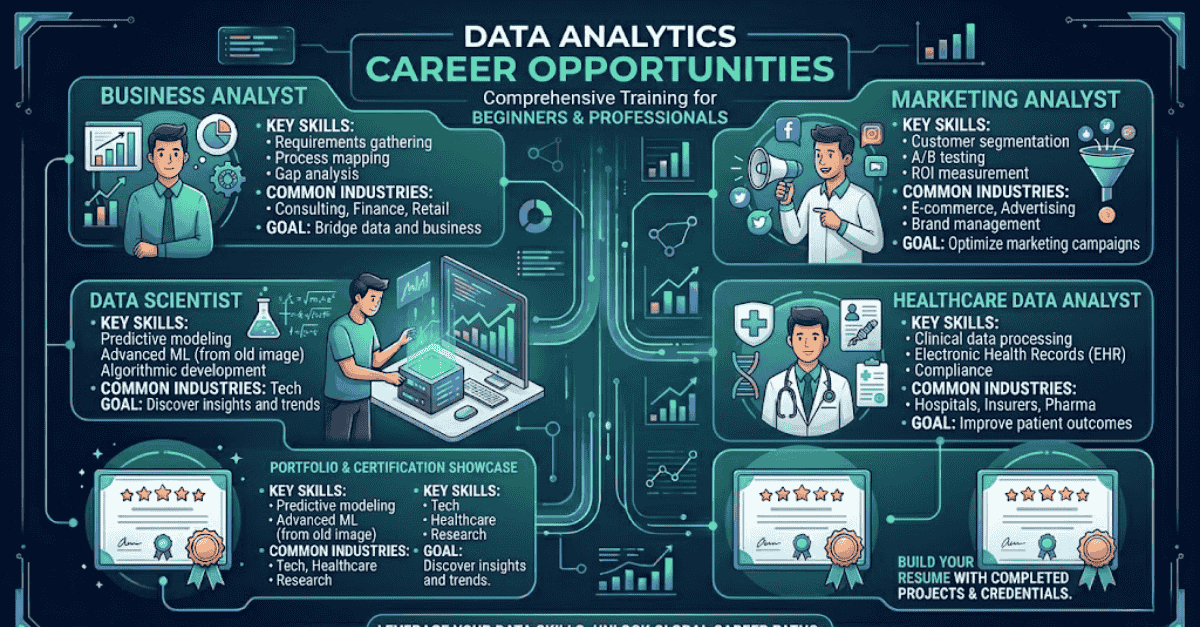
After completing a data analytics course, you can step into roles like data analyst, business analyst, or data visualization specialist, or even transition toward data science depending on the skills you build and the projects you’ve worked on.
That’s the short answer. But the real picture? It’s a bit more layered and, honestly, more interesting than most people expect.
To begin with, what changes can you expect after completing the course?
Let me be real for a second.
Finishing a data analyst course online doesn’t instantly turn you into a “job-ready” analyst. What it does give you is a toolkit:
- You start thinking in terms of data
- You notice patterns where others see noise
- You become comfortable asking, "Why is this happening?”
I remember after my first project, I couldn’t look at a simple sales chart the same way again. You start questioning everything: drops, spikes, and trends. It’s a weird shift, but a useful one.
1. Data Analyst (The Most Direct Path)
This role is where most people aim after an online data analyst certification.
What You’ll Actually Do:
- Clean messy datasets (this takes more time than you think)
- Analyze trends
- Build dashboards using tools like Power BI or Tableau
- Present findings to teams
Real-World Example
A retail company might ask:
“Why did sales drop last quarter in one region?”
Your job? Dig into the data, find patterns, and explain it in a way non-technical teams understand.
This role is still in high demand in 2026, especially with businesses relying more on data-driven decisions.
2. Business Analyst (Where Data Meets Decisions)
Not everyone wants to stay deep in technical work and that’s okay.
A business analyst role is a natural extension of a data analytics course, especially if you enjoy:
- Understanding business problems
- Communicating with stakeholders
- Translating data into strategies
What Makes It Different:
You’ll spend less time coding and more time:
- Interpreting insights
- Recommending actions
- Working closely with management
I’ve seen people from non-tech backgrounds (marketing, finance) move into this role after a data analyst course online and do really well.
3. Data Visualization Specialist
This role has quietly become more important over the past couple of years.
Why? Because raw data doesn’t help anyone unless it’s understandable.
What You’ll Focus On:
- Creating dashboards
- Designing reports
- Making data visually clear and engaging
Tools like Tableau and Power BI dominate here.
Honestly, this role suits people who enjoy a mix of logic and creativity. You’re not just analyzing you’re telling a story.
4. Junior Data Scientist (With Some Extra Learning)
This is where things get a bit more advanced.
An online data analyst certification can be a stepping stone toward data science, but you’ll usually need:
- Strong Python skills
- Statistics knowledge
- Machine learning basics
Current Trend (2026 Insight)
With AI tools becoming more common, companies are looking for analysts who can:
- Build simple predictive models
- Work alongside AI tools
- Interpret model outputs
So the line between analyst and data scientist is slowly blurring.
5. Marketing Analyst / Product Analyst (Specialized Roles)
This is where things get interesting.
Instead of staying general, many professionals now specialize.
Marketing Analyst
- Analyze campaign performance
- Track customer behavior
- Optimize conversions
Product Analyst
- Study user behavior in apps/products
- Improve user experience
- Work closely with product teams
I’ve noticed startups especially prefer specialists; they want someone who understands their domain, not just data in general.
6. Freelancing and Remote Opportunities
This wasn’t as common a few years ago, but in 2026, it’s growing fast.
After a data analytics course, you can:
- Take freelance projects
- Work with small businesses
- Build dashboards for clients
Platforms are full of companies needing help with:
- Data cleaning
- Report creation
- Visualization
It’s not always stable at the beginning, but it’s a solid option if you prefer flexibility.
7. The AI Factor (You Can’t Ignore This Now)
Let’s talk about what’s changed recently.
AI tools are now helping with:
- Automated data cleaning
- Quick insights generation
- Dashboard suggestions
At first, it feels like they might replace analysts. But in reality, they’re changing the role.
Companies still need people who can:
- Validate AI-generated insights
- Ask the right questions
- Understand business context
So if your data analyst course online includes exposure to AI tools, that’s a big plus.
What Employers Actually Look For (Honest Take)
This part matters more than job titles.
After completing a data analyst certification online, employers usually care about:
- Can you work with real datasets?
- Can you explain your findings clearly?
- Do you have projects to show?
A certificate alone won’t carry you but a strong portfolio will.
A Quick Career Path (Typical Journey)
Most people don’t jump straight into advanced roles.
It often looks like this:
- Entry-level Data Analyst
- Specialized Analyst (marketing/product/finance)
- Senior Analyst or Data Scientist
Of course, there are exceptions—but this path is pretty common.
Final Thoughts
Completing a data analytics course opens up more career paths than most people expect but it’s not a magic switch.
It’s more like a starting point.
What really shapes your career is
- The projects you build
- The problems you solve
- How curious you stay about data
If you keep practicing and applying what you learn, opportunities start showing up in places you didn’t even think about.
 Italiano
 English
 Arabic
 French
 Spanish
 Portuguese
 Deutsch
 Turkish
 Dutch
Dutch
 Russian
 Romaian
 Portuguese (Brazil)
 Greek
Greek
