


 Pro Benefits
 About
About
 Términos
 Privacidad
 Child Safety & Protection
 Notificaciones
 Ayrush Global It Services Pvt Ltd
What Is Baseline Testing in Software Testing?
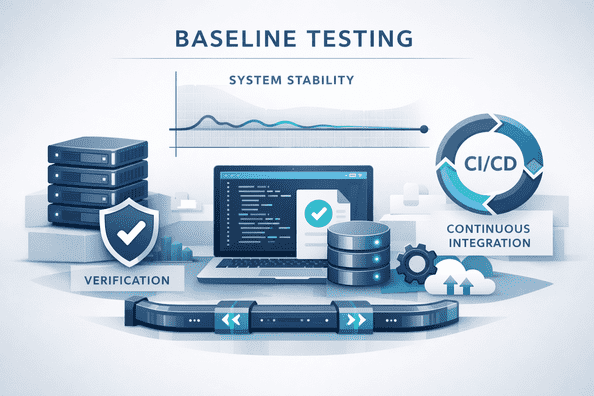
Ensuring that software behaves consistently across updates and releases is a critical goal of quality assurance. As applications evolve with new features and bug fixes, development teams must verify that the core functionality of the system remains stable. One method used to achieve this stability is baseline testing in software testing.
Baseline testing helps teams establish a reference point for system performance and functionality. By comparing future test results against this reference, testers can quickly identify whether recent changes have affected the behavior of the application.
Understanding Baseline Testing
Baseline testing in software testing refers to the process of validating a stable version of an application and using its results as a benchmark for future testing cycles. The baseline acts as a reference standard that represents the expected behavior of the system under normal conditions.
Once a baseline is established, testers can compare the outcomes of subsequent test executions against this reference. If the results differ significantly from the baseline, it may indicate that new changes have introduced defects or altered system behavior.
This comparison allows QA teams to quickly detect inconsistencies and maintain software stability across different development stages.
Purpose of Baseline Testing
The primary purpose of baseline testing in software testing is to provide a reliable point of comparison for evaluating future software changes. When teams introduce new features or updates, they need a way to confirm that the application still behaves as expected.
By comparing current results with baseline data, testers can determine whether system performance, functionality, or reliability has changed. This approach helps identify regressions and unexpected side effects introduced by recent updates.
Baseline testing also supports better decision-making during release cycles by providing measurable evidence of system stability.
When Baseline Testing Is Performed
Baseline testing is typically conducted when a stable version of the application is available. This version may represent a milestone build, a production-ready release candidate, or a version that has already passed initial testing phases.
Once the baseline is established, future builds can be tested and compared against it. This approach is particularly useful when systems undergo frequent updates or when development teams want to monitor the impact of ongoing changes.
Baseline testing is often performed during major releases, system upgrades, or when introducing significant architectural modifications.
How Baseline Testing Works
The process of baseline testing in software testing generally involves several steps that help establish and maintain the reference point.
First, QA teams identify a stable version of the software that can serve as the baseline. This version should represent the expected system behavior and meet predefined quality standards.
Next, testers execute a comprehensive set of test cases to validate the application's functionality and performance. The results of these tests are carefully documented and stored as the baseline data.
When new versions of the application are developed, testers run the same or similar test cases and compare the results with the baseline. Any differences or deviations are analyzed to determine whether they indicate defects or intended changes.
This structured comparison helps teams detect issues early and maintain consistency across releases.
Benefits of Baseline Testing
Baseline testing provides several advantages for development and QA teams working on evolving software systems.
One major benefit is improved defect detection. By comparing test results with a stable reference point, testers can quickly identify unexpected behavior introduced by new code changes.
Another advantage is better tracking of system performance and stability over time. Baseline comparisons allow teams to observe how the application behaves across different versions and identify patterns or recurring issues.
Baseline testing also helps maintain consistency in testing processes, ensuring that quality standards remain the same across development cycles.
Baseline Testing in Modern Development Environments
Modern software development often involves continuous integration, rapid feature updates, and frequent deployments. In such environments, maintaining system stability can be challenging.
Baseline testing in software testing helps teams manage these challenges by providing a consistent reference for evaluating application behavior. When integrated into automated testing pipelines, baseline comparisons can quickly detect anomalies after code changes are introduced.
This capability allows teams to maintain high software quality while supporting fast development and release cycles.
Challenges of Baseline Testing
Although baseline testing is valuable, it also has certain limitations. One challenge is ensuring that the baseline itself represents a truly stable version of the system. If the baseline contains undetected issues, future comparisons may lead to incorrect conclusions.
Another challenge is maintaining baseline data as the application evolves. As systems grow and requirements change, teams may need to update or redefine their baseline to reflect new functionality.
Proper documentation and careful version control are essential for managing baseline testing effectively.
Conclusion
Maintaining consistent software behavior across multiple releases is essential for delivering reliable applications. Baseline testing in software testing provides a structured method for establishing a reference point that allows teams to evaluate the impact of future changes.
By comparing new test results against a stable baseline, QA teams can detect defects earlier, track system stability over time, and make more informed release decisions. When used alongside other testing methods, baseline testing becomes an important tool for maintaining software quality in modern development environments.
 Spanish
 English
 Arabic
 French
 Portuguese
 Deutsch
 Turkish
 Dutch
Dutch
 Italiano
 Russian
 Romaian
 Portuguese (Brazil)
 Greek
Greek
