


 Pro Benefits
 About
About
 Terms
Terms
 Privacy
 Child Safety & Protection
 Notifications
 Ayrush Global It Services Pvt Ltd
DIY soundproofing tips for Malaysia: A Complete Guide
Living in Malaysia offers a vibrant, dynamic environment, but it also comes with a unique soundtrack. From the hum of expressway traffic in the Klang Valley to the sudden clash of a monsoon thunderstorm or the lively chatter from a nearby mamak stall, unwanted noise is a common challenge for homeowners. While a full-scale professional soundproofing renovation can be costly, there are numerous effective and budget-friendly DIY soundproofing tips you can implement yourself. This guide will walk you through practical, step-by-step solutions to create a quieter, more peaceful home without breaking the bank.
Understanding the Basics: Soundproofing vs. Sound Absorption
Before diving into DIY projects, it's helpful to understand a simple principle. Sound travels in waves and can be managed in two main ways: blocking it or absorbing it. Soundproofing aims to stop noise from entering or leaving a room, while sound absorption reduces echo and reverberation inside the room. A good DIY strategy often combines both. For instance, sealing gaps (blocking) and adding thick rugs (absorbing) work together to make a space feel quieter.
Top DIY Soundproofing Tips for Malaysian Homes
Here are some of the most effective and affordable DIY soundproofing solutions you can tackle.
1. Seal the Silent Invaders: Gaps and Cracks
Sound, like water, will find the smallest path to travel through. In many Malaysian homes, especially in older condominiums and terrace houses, tiny gaps around doors and windows are a primary source of noise leakage. This is often the most cost-effective first step.
-
Weather Stripping: Apply self-adhesive foam or rubber weather stripping around the frames of doors and windows. This fills the gaps when they close, creating a much tighter seal against airborne noise, such as traffic and conversations.
-
Door Sweeps: Install a door sweep at the bottom of your door. This simple device blocks the significant gap between the door and the floor, preventing noise from passing through.
-
Acoustic Caulk: For stationary gaps, like the joints between window frames and walls, use an acoustic sealant or silicone caulk to fill them in. This is a cheap and permanent fix.
2. Soft Furnishings: Your First Line of Absorption
Hard surfaces like bare walls, tile floors, and large windows reflect sound, creating echo and amplifying noise. Introducing soft furnishings is a simple way to absorb that energy.
-
Thick Curtains: Swap out lightweight blinds for heavy, dense curtains or drapes. This is a particularly effective DIY tip for reducing noise from outside, such as traffic or, famously in Malaysia, thunder. For best results, choose curtains labeled "blackout" or "thermal," as their dense weave also helps absorb sound.
-
Area Rugs and Carpets: If you have tiled or laminated flooring, which is common in Malaysia, adding large area rugs can dramatically reduce echo and dampen impact noise (like footsteps) from above or within the room. For an extra layer of acoustic protection, consider placing an acoustic underlay beneath the rug.
-
Cushions and Upholstered Furniture: Sofas, armchairs with fabric upholstery, and large floor cushions all act as sound absorbers. The more soft surfaces you have, the less echo your room will have.
3. Fortify Your Doors and Windows
Doors and windows are often the weakest points in a room's sound barrier.
-
Upgrade to Solid-Core Doors: If your budget allows for a small renovation, replacing a hollow-core door with a solid-core one makes a significant difference. Solid wood or composite doors are much denser and block far more sound. This is an excellent upgrade for a bedroom or home office facing a noisy street.
-
DIY Window Plug: For renters who cannot change the windows, a "window plug" is a brilliant DIY solution. Measure your window recess and cut a piece of medium-density fiberboard (MDF) or thick plywood to fit snugly inside. Wrap it in acoustic foam or heavy fabric and place it in the window recess at night. It's removable but highly effective at blocking sound.
4. Tackle Wall and Ceiling Weaknesses
If you share a wall with a noisy neighbour or live in a high-rise condo, sound can travel through the walls themselves.
-
Bookcases as Barriers: A large, floor-to-ceiling bookcase filled with books is a fantastic natural sound absorber. The dense, irregular mass of the books helps to dampen sound waves passing through a shared wall.
-
DIY Acoustic Panels: Instead of buying expensive pre-made panels, you can create your own stylish and effective sound absorbers. Purchase compressed rockwool or fiberglass acoustic insulation sheets (available at hardware stores) and frame them with simple timber. Wrap the frame and insulation with an aesthetically pleasing fabric (like muslin or hessian) and hang them on the wall. This is a popular and highly effective DIY project for home offices or entertainment rooms.
-
Add a Second Layer to Walls: For a more involved project, you can add a second layer of drywall (gypsum board) to an existing wall. To maximize its effect, place a layer of acoustic damping compound or mass-loaded vinyl between the two boards.
5. Don't Forget the Ceiling and Floor
In condominiums and apartments, impact noise from upstairs neighbours (footsteps, dropped objects) is a major issue.
-
Acoustic Underlay for Flooring: If you are planning to install new flooring, using an acoustic underlay is a must. Materials like polyethylene (PE) foam or rubber underlayment are designed to decouple the finished floor from the concrete slab, drastically reducing impact sound transmission to the unit below.
-
Resilient Channels for Ceilings: For a DIY renovation, if you have access to your ceiling, you can install resilient channels. These are metal strips that are attached to the ceiling joists, and the new drywall is screwed into them. This "decouples" the ceiling from the structure above, preventing vibrations from passing through.
Common DIY Mistakes to Avoid
-
Egg Cartons Are Useless: While a popular myth, egg cartons do not provide any meaningful soundproofing or absorption. They are not dense enough and pose a serious fire hazard.
-
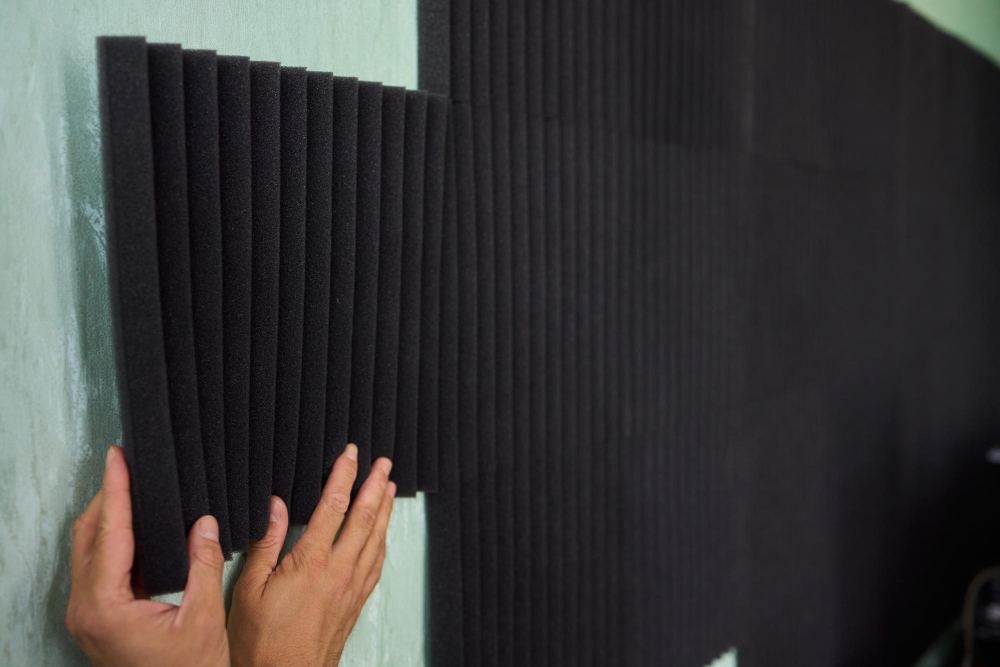
Acoustic Foam Isn't Soundproofing: Those foam panels you see in studios are for absorption to stop echo. They are too light to block sound from traveling through a wall.
-
Neglecting the Weakest Link: Upgrading your walls is pointless if you haven't sealed the gap under your door. Sound will always take the path of least resistance.
Conclusion
Creating a quiet sanctuary in the heart of bustling Malaysia is achievable, even on a tight budget. By understanding how sound travels and strategically applying these DIY soundproofing tips—from sealing gaps with weather stripping to adding thick curtains and building your own acoustic panels—you can significantly reduce unwanted noise. Start with the simplest and cheapest methods, and gradually work your way up to more involved projects. Your peaceful, serene home is just a few DIY steps away.
Frequently Asked Questions (FAQ)
1. How much noise reduction can I realistically achieve with DIY methods?
With a combination of sealing gaps, adding soft furnishings, and installing window or door treatments, you can achieve a noticeable reduction in noise—often cutting the perceived volume in half. However, achieving "complete silence" in a typical Malaysian urban setting is unrealistic without major structural renovations. DIY methods excel at making a space significantly quieter and more comfortable.
2. What is the most affordable DIY soundproofing tip?
Sealing air gaps with weatherstripping and door sweeps is by far the most affordable and effective first step. A trip to a local hardware store for these materials will cost less than RM50 and can make an immediate difference. Adding heavy curtains and rugs is the next most cost-effective measure.
3. Can I soundproof my home if I am renting an apartment?
Absolutely. Renters should focus on non-permanent, reversible solutions. These include using thick curtains, removable window plugs, door sweeps, area rugs, and placing bookshelves against shared walls. Avoid anything that requires drilling or permanent structural changes unless you have your landlord's permission.
4. Where can I buy soundproofing materials in Malaysia?
Many hardware stores and home improvement centers stock basic items such as weatherstripping, caulk, and rock wool insulation. For more specialized items like acoustic underlayment or mass-loaded vinyl, you can check online platforms like Lazada or Shopee. Specialist suppliers like RS Malaysia offer a range of acoustic foams and mats, while companies like Vibrant Echo or KW-Jwee provide a wider selection of acoustic panels for DIY projects.
5. Is it better to soundproof for traffic noise or neighbor noise?
The approach depends on the type of noise. For airborne noise like traffic or voices, focus on sealing gaps, adding mass to walls (e.g., a second layer of drywall), and upgrading windows and doors . For impact noise like footsteps from an upstairs neighbor, you need to address the floor or ceiling. If you are the upstairs neighbor, installing an acoustic underlay beneath your flooring is the most effective solution. If you are the downstairs neighbor, a decoupled ceiling with acoustic insulation is the best, albeit more complex, DIY route.
 English
 Arabic
 French
 Spanish
 Portuguese
 Deutsch
 Turkish
 Dutch
Dutch
 Italiano
 Russian
 Romaian
 Portuguese (Brazil)
 Greek
Greek
