


 Pro Benefits
 About
About
 Termeni
 Confidențialitate
 Child Safety & Protection
 Notificări
 Ayrush Global It Services Pvt Ltd
How to Design an Effective Regression Testing Plan?
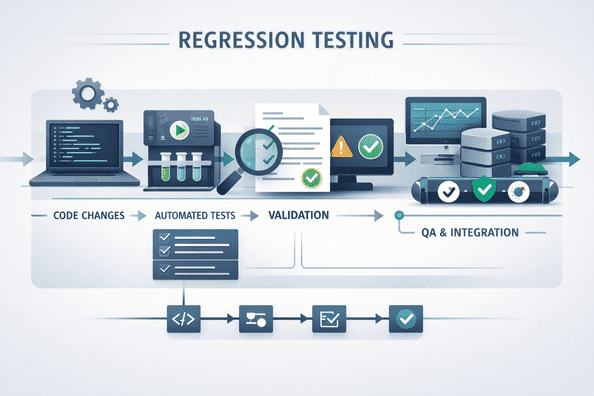
As software applications evolve through new features, bug fixes, and performance improvements, maintaining system stability becomes a major challenge for development teams. Even small code changes can unintentionally affect existing functionality. This is why regression testing is a critical part of modern software development.
A well-designed testing plan ensures that previously validated features continue to work as expected after changes are introduced. By structuring the testing process carefully, teams can detect defects early and maintain software reliability across releases.
Understand the Scope of Changes
The first step in designing an effective regression testing plan is understanding what has changed in the application. Every new feature, configuration update, or code modification can potentially impact other components.
QA teams should analyze the scope of changes and identify which parts of the system may be affected. This helps determine which test cases need to be executed during the regression cycle. Instead of running the entire test suite every time, teams can prioritize tests that are most relevant to recent changes.
This targeted approach improves testing efficiency while still maintaining coverage.
Identify Critical Test Scenarios
Not every test case carries the same level of importance. When designing a regression testing plan, it is essential to identify critical workflows that must always function correctly.
These workflows often include user authentication, payment processing, data storage, and core application features. If these functions fail, the user experience can be significantly affected.
By prioritizing these scenarios, teams ensure that the most important system functions are always validated during regression cycles.
Maintain a Structured Test Suite
A well-organized test suite is essential for effective regression testing. As applications grow, the number of test cases increases, making it harder to manage testing activities.
QA teams should group test cases into logical categories such as core functionality, integrations, user workflows, and edge cases. This structure allows testers to quickly select relevant test sets based on the type of code changes introduced.
Maintaining an organized test repository also simplifies updates when application requirements evolve.
Incorporate Risk-Based Testing
Risk-based testing focuses on areas of the application that are more likely to contain defects or cause significant issues if they fail. Components with frequent updates, complex logic, or high user interaction often carry higher risk.
By analyzing risk levels across the system, QA teams can prioritize regression tests that target the most sensitive components. This approach ensures that critical areas receive more attention during testing cycles.
Risk-based strategies help teams allocate testing resources more effectively.
Automate Repetitive Test Cases
Manual regression testing can become time-consuming as the number of test cases grows. Automating frequently executed tests helps reduce the time required to validate system stability.
Automation is particularly useful for repetitive workflows such as login validation, form submissions, and API responses. Once automated, these tests can run automatically whenever code changes occur.
Automated regression tests improve consistency and allow teams to execute large test suites quickly.
Schedule Regression Testing in Development Cycles
Regression testing should be integrated into the regular development process rather than treated as a final verification step. Many teams perform regression tests after feature development, bug fixes, or system integration.
Scheduling testing activities at key stages of the development cycle helps detect issues earlier. Early detection reduces the cost and complexity of fixing defects later in the process.
Regular testing cycles also ensure that system stability is maintained as the application evolves.
Use Different Testing Approaches When Needed
Depending on the complexity of the system and the nature of changes introduced, teams may apply different approaches to validate existing functionality. In some situations, testers may focus on partial regression for specific modules, while in others a full validation of the system may be necessary.
Understanding the different types of regression testing helps teams select the most appropriate strategy for each testing cycle. This flexibility allows organizations to maintain software stability while optimizing testing time and resources.
Continuously Review and Improve the Test Plan
A regression testing plan should evolve along with the application. As new features are added and system architecture changes, testing strategies must be updated to reflect these changes.
QA teams should regularly review their regression test suites to remove outdated tests, update existing cases, and add new scenarios when necessary. Continuous improvement ensures that the testing plan remains relevant and effective.
Regular evaluation also helps teams adapt to changing development requirements.
Conclusion
Designing an effective regression testing plan is essential for maintaining software stability in rapidly evolving applications. By understanding code changes, prioritizing critical workflows, organizing test cases, and incorporating automation, teams can build a reliable testing process.
A well-structured approach to regression testing allows organizations to detect defects early, maintain system reliability, and deliver high-quality software with confidence.
 Romaian
 English
 Arabic
 French
 Spanish
 Portuguese
 Deutsch
 Turkish
 Dutch
Dutch
 Italiano
 Russian
 Portuguese (Brazil)
 Greek
Greek
