


 Pro Benefits
 About
About
 Termeni
 Confidențialitate
 Child Safety & Protection
 Notificări
 Ayrush Global It Services Pvt Ltd
RA Cross Roller Bearing: Solving Light-Weight Precision Gaps
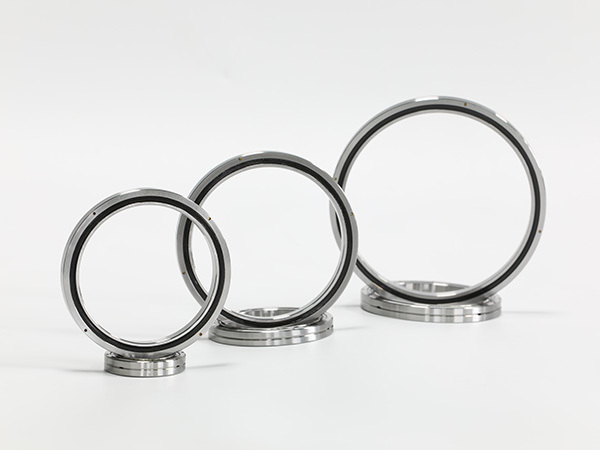
In the competitive landscape of 2026 automotive robotics and precision instrumentation, the mantra is "smaller, lighter, faster." However, engineers frequently hit a physical wall when trying to miniaturize rotating joints. Standard bearings often require a trade-off: you can have the rigidity of a large assembly, or the compact footprint of a thin-section ball bearing—but rarely both.
For many B2B manufacturers, this leads to the "Weight-Precision Paradox." Using a heavy, robust bearing increases the inertia of robotic end-effectors, slowing down cycle times. Conversely, opting for a lightweight ball bearing often results in radial play and axial deflection under load. If your robotic manipulators are struggling with "swing-back" or positional inaccuracy during high-speed tasks, the culprit is likely a bearing that cannot handle complex moment loads within a limited design envelope.
The strategic solution for these space-constrained, high-accuracy applications is the RA cross roller bearing.
The Problem: When "Thin" Isn't Rigid Enough
Traditional thin-section ball bearings rely on point contact. Under the dynamic, multi-directional forces typical of a robotic wrist or a medical swiveling unit, these points of contact experience elastic deformation.
-
The Result: "Micro-wobble" that degrades the repeatability of the arm.
-
The Cost: Increased scrap rates in precision electronics assembly and higher maintenance frequency due to uneven race wear.
The RA Series Advantage: High Rigidity in an Ultra-Thin Profile
The RA cross roller bearing is specifically designed to solve the rigidity issues inherent in compact designs. It features a unique "split outer ring" and an integrated inner ring. By arranging cylindrical rollers orthogonally (alternating at 90-degree angles) in a V-groove raceway, the RA series allows a single, ultra-slim unit to handle:
-
Radial Loads (Forces perpendicular to the shaft)
-
Axial Loads (Thrust from both directions)
-
Moment Loads (Tilting or tipping forces)
1. Radical Weight Reduction
The RA series reduces the thickness of the inner and outer rings to their absolute mechanical limits. This allows for a significantly lighter swiveling unit, which is critical for reducing the torque requirements on your servo motors and extending the battery life of mobile robotic platforms (AMRs).
2. Stable Rotational Torque
One of the primary failure points in precision bearings is "skewing"—where rollers tilt and create friction. The RA cross roller bearing utilizes specialized spacer retainers between the rollers. This prevents roller-to-roller friction and ensures a stable, low-starting torque, even when the bearing is preloaded for zero-backlash operation.
Technical Spotlight: RA vs. RB Series
For procurement managers, choosing between the RA and the standard RB series is a matter of prioritizing mass vs. absolute load.
| Feature | RA Cross Roller Bearing | RB Cross Roller Bearing |
| Ring Structure | Ultra-Thin / Lightweight | Standard Thickness |
| Outer Ring | Separable (Outer Ring Divison) | Separable |
| Best For | Robotic Hands / Small Manipulators | Heavy Rotary Tables / Machine Tools |
| Key Benefit | Maximum space savings | Maximum static load capacity |
Strategic Implementation in the Automotive Supply Chain
In 2026, the shift toward Software-Defined Vehicles (SDVs) and micro-assembly requires a new level of mechanical stability. Integrating RA series bearings into your production line offers three distinct ROI drivers:
-
Elimination of Secondary Bearings: Because one RA cross roller bearing handles combined loads, you can eliminate the need for a secondary thrust bearing, simplifying your Bill of Materials (BOM).
-
Improved Dynamic Response: Lower mass in the joints allows for higher acceleration and deceleration rates, directly increasing the Parts Per Hour (PPH) of your assembly line.
-
Maintenance Predictability: The high-purity chrome steel and precision-ground raceways of premium RA units reduce the risk of sudden fatigue failure, moving your plant closer to a true "Predictive Maintenance" model.
Expert Insight: When installing an RA bearing, the "separable" outer ring must be secured with a proper housing and flange. Since the outer ring is split, the precision of your housing bore is what ultimately determines the final accuracy of the bearing. Always ensure a "H7" or tighter fit for the housing.
Conclusion
Precision at the micron level is the foundation of modern manufacturing. The RA cross roller bearing provides the mechanical integrity needed for the most compact and demanding robotic applications in the automotive sector. By solving the problem of "mechanical play" in an ultra-thin footprint, you enable your machines to perform with the speed and accuracy that 2026 production targets demand.
 Romaian
 English
 Arabic
 French
 Spanish
 Portuguese
 Deutsch
 Turkish
 Dutch
Dutch
 Italiano
 Russian
 Portuguese (Brazil)
 Greek
Greek
