


 Pro Benefits
 About
About
 Términos
 Privacidad
 Child Safety & Protection
 Notificaciones
 Ayrush Global It Services Pvt Ltd
Implantable Sensor Market Breakdown by Sensor Type, Application, and End User Outlook to 2031
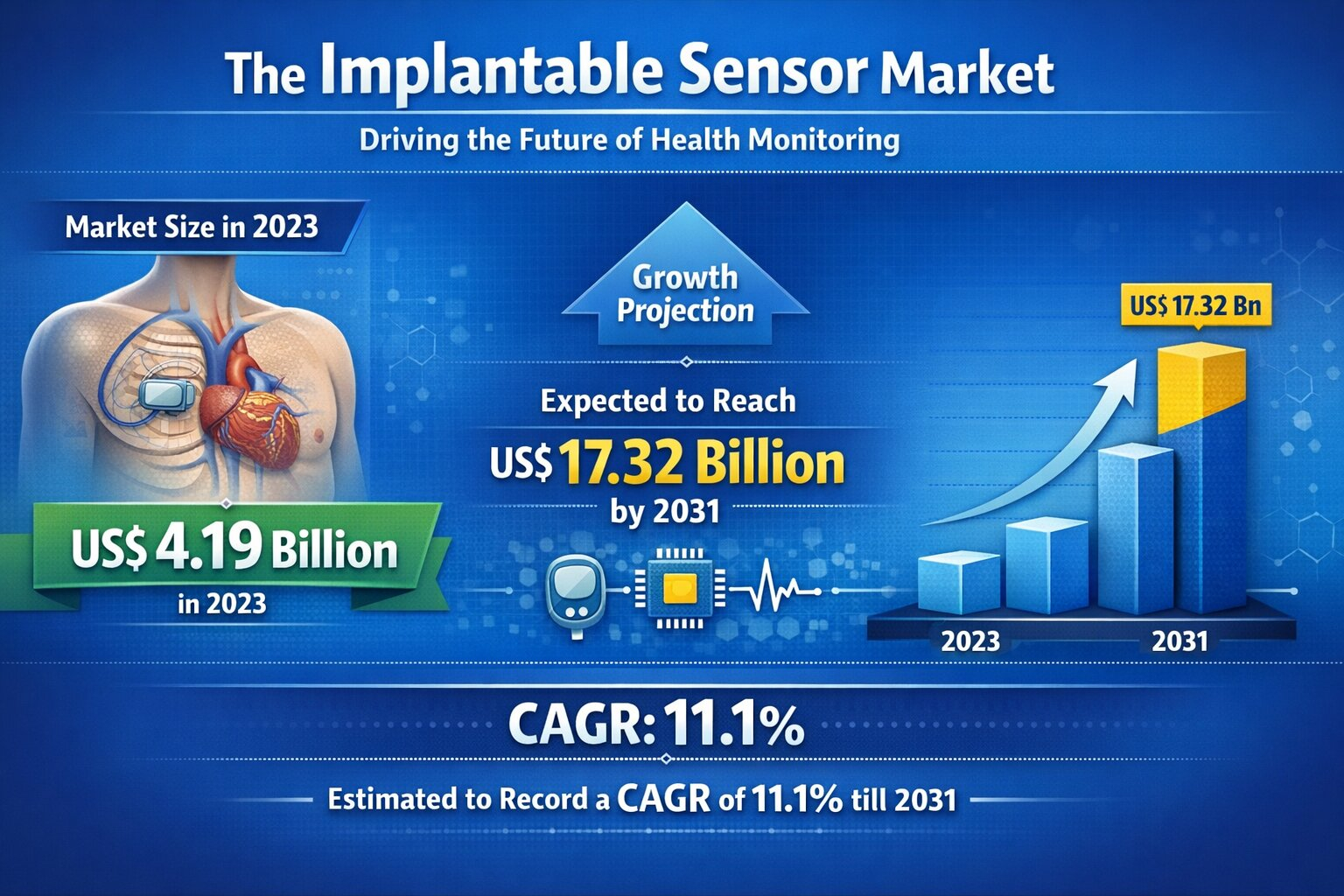
The Implantable sensor technology is transforming modern healthcare by enabling continuous monitoring of vital biological signals from inside the human body. These miniature devices are designed to provide accurate, real time data that supports improved diagnosis, treatment, and long term patient care.
Implantable Sensor Market: A Comprehensive Segmentation Analysis
The global Implantable Sensor Market is marked by significant technological diversity, with devices designed for specific physiological parameters and clinical applications. According to the latest report by The Insight Partners, the market is projected to grow from US$ 4.19 billion in 2023 to US$ 17.32 billion by 2031, at a CAGR of 11.1%.
A thorough understanding of the market requires analysis across its key segments: Sensor Type, Application, and End User. Each segment highlights distinctive growth drivers, adoption trends, and technological innovations shaping the internal diagnostics industry.
1. Analysis by Sensor Type
The sensor type defines the functional focus of the implantable device, influencing adoption and technological development.
Glucose Sensors: Currently the largest segment, driven by the global diabetes epidemic. These sensors provide long-term monitoring, typically ranging from 3 to 6 months, and deliver real-time data to smartphones or connected healthcare platforms. They are preferred for patients requiring strict glycemic control and continuous monitoring.
Oxygen Sensors: Expected to record the highest CAGR during the forecast period. These sensors are increasingly used to monitor tissue oxygenation post-surgery and in critical care settings, enabling early detection of localized hypoxia.
Pressure Sensors: Crucial in cardiovascular and ophthalmological applications, these devices monitor arterial pressure for heart failure patients and intraocular pressure for glaucoma management.
Temperature Sensors: Often integrated into other implantable devices, such as pacemakers or neurostimulators, these sensors help track internal thermal baseline and detect early signs of infection or systemic inflammation.
2. Analysis by Application
Implantable sensors serve multiple applications across medical diagnostics, therapy, and personal health management.
Medical Diagnostic: The largest application segment in 2023. These sensors enable early detection of health conditions before symptoms appear, providing clinicians with real-time biomarker data for timely intervention.
Clinical Therapy: In this segment, sensors integrate with therapeutic devices. For example, sensors in deep-brain stimulators (DBS) adjust electrical impulses in response to neural activity, optimizing treatment outcomes for neurological disorders such as Parkinson’s disease.
Personal Healthcare: Rapidly growing as patients increasingly manage their own health. Devices that sync with mobile apps allow users to track physiological trends, reducing dependence on clinical visits.
Imaging: Emerging applications involve sensors that provide real-time internal navigation during minimally invasive procedures, improving surgical accuracy and patient safety.
Download Sample PDF : https://www.theinsightpartners.com/sample/TIPRE00016982
3. Analysis by End User
The commercial and clinical impact of implantable sensors is largely determined by the end user.
Hospitals: Dominant end users of implantable sensors. Sterile environments, surgical expertise, and post-operative monitoring make hospitals the primary centers for implantation and data analysis.
Clinics and Diagnostic Centers: As implantation techniques become minimally invasive, outpatient clinics are gaining market share. These centers focus on chronic disease management and offer services for sensor monitoring and replacement.
Regional Summary: North American Dominance
North America remains the largest regional market, driven by the adoption of advanced medical technologies and the presence of key industry players such as Medtronic and Dexcom. The rising prevalence of chronic diseases, especially diabetes, has further reinforced this dominance.
The Asia-Pacific region is expected to witness the fastest growth over the forecast period, supported by increasing healthcare spending, expanding infrastructure, and a large patient population in countries like China and India. Europe, the Middle East, Africa, and South & Central America also contribute to market expansion through growing adoption of medical technologies and government support initiatives.
Key Players in the Implantable Sensor Market
-
Analog Devices, Inc.
-
DEXCOM, INC.
-
Glusense Ltd.
-
Honeywell International Inc.
-
Medtronic
-
NXP SEMICONDUCTORS N.V.
-
Pinnacle Technology Inc.
-
Sensirion AG
-
TE Connectivity
-
Texas Instruments Incorporated
These companies are focused on innovation, strategic collaborations, and geographic expansion to strengthen their market position.
Future Outlook
The implantable sensor market is expected to continue its robust growth trajectory. Advancements in artificial intelligence, wireless connectivity, and integration with mobile health platforms will enhance patient monitoring, reduce hospitalizations, and improve preventive healthcare. Growing applications in personal healthcare, increasing awareness of chronic disease management, and supportive government initiatives are likely to drive further innovation and adoption globally.
Browse Trending Reports :
About Us -
The Insight Partners provides comprehensive syndicated and tailored market research services in the healthcare, technology, and industrial domains. Renowned for delivering strategic intelligence and practical insights, the firm empowers businesses to remain competitive in ever-evolving global markets.
Contact Information -
Email: sales@theinsightpartners.com
Phone: +1-646-491-9876
Also Available in : Korean| German| Japanese| French| Chinese| Italian| Spanish
 Spanish
 English
 Arabic
 French
 Portuguese
 Deutsch
 Turkish
 Dutch
Dutch
 Italiano
 Russian
 Romaian
 Portuguese (Brazil)
 Greek
Greek
