


 Pro Benefits
 Sobre
Sobre
 Termos
 Privacidade
 Child Safety & Protection
 Notificações
 Ayrush Global It Services Pvt Ltd
How to Identify a Dead Animal Under Your House?
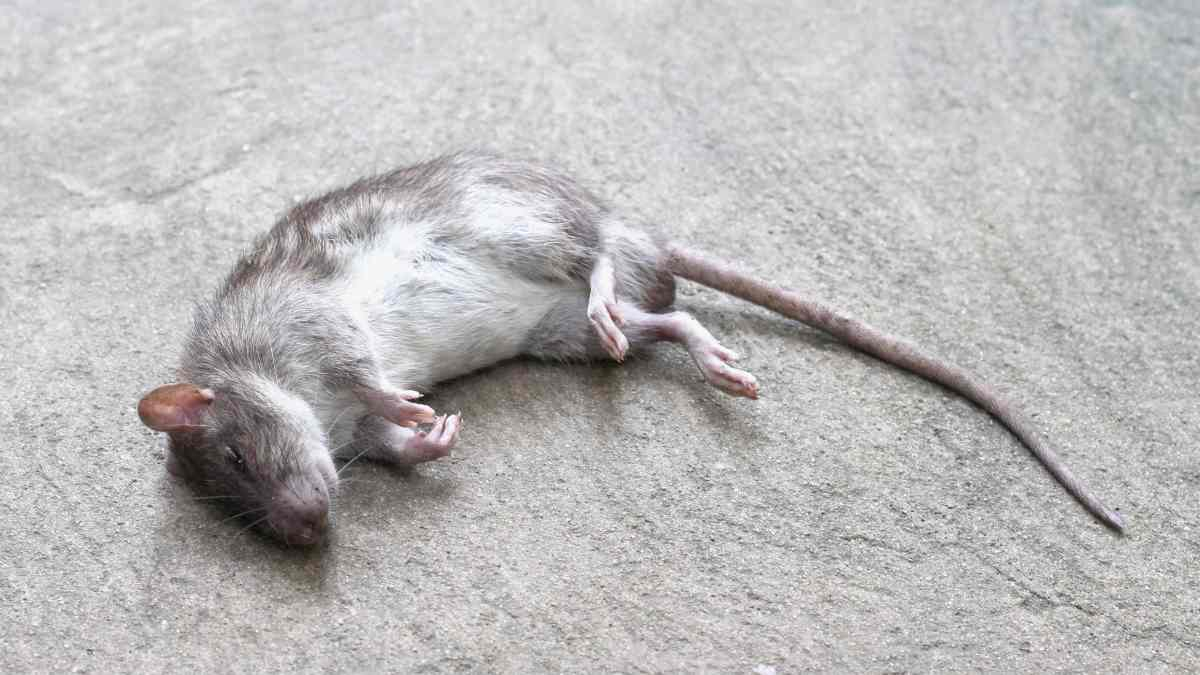
The subfloor space beneath an Australian home is one of the most overlooked — and most vulnerable — areas of any property. Dark, damp, and largely undisturbed, it offers exactly the kind of shelter that rodents, possums, feral cats, and other wildlife actively seek out. When one of these animals enters your subfloor and does not make it back out, the resulting decomposition can create a cascade of health, structural, and pest-related problems that affect the entire household. For homeowners in Melbourne's inner east, Dead Animal Removal Hawthorn professionals are called upon regularly to deal with exactly this scenario — and in almost every case, the homeowner wishes they had acted sooner.
Why Animals End Up Under Your House?
Before diving into how to identify the problem, it helps to understand why it happens in the first place. The subfloor of a home is appealing to animals for a number of reasons — it is sheltered from the elements, relatively warm in winter, and dark enough to feel safe from predators. For a pregnant rodent or an injured possum, it represents an ideal refuge.
Older Australian homes — particularly those built on stumps or piers common throughout Melbourne, Sydney, and Brisbane — often have subfloor spaces that are easily accessible through deteriorating mesh, broken vent covers, or gaps in the brickwork at ground level. Animals exploit these entry points without much difficulty, and once inside, they may become disoriented, trapped, or simply too ill or injured to leave.
Rodents, in particular, are known to seek out isolated, enclosed spaces when they are unwell or dying — a behaviour rooted in instinct. This means that if you have an active rodent problem in your home and have been using baits or traps, there is a real possibility that affected animals are retreating to your subfloor to die.
The Tell-Tale Signs of a Dead Animal Under Your House
Identifying a dead animal in your subfloor requires paying attention to a combination of sensory and visual cues. No single sign is definitive on its own, but when several appear together, the evidence becomes compelling.
1. A Persistent, Penetrating Odour
The most immediate and unmistakable sign is smell. The odour produced by a decomposing animal is unlike any other household smell — it is a heavy, sweet, and deeply unpleasant stench that seems to rise from the floor rather than emanating from any identifiable source at eye level. It tends to be strongest in the rooms closest to where the carcass is located and often seems worse first thing in the morning when the house has been closed overnight.
Unlike a bin that needs emptying or food that has spoiled, this smell does not go away with cleaning. It intensifies over the first several days before gradually fading over weeks — and by that point, the damage to your subfloor materials and the risk of secondary infestations is already well underway.
2. Unusual Concentration of Flies
Blowflies possess a remarkably acute sensitivity to the smell of decomposing matter and will locate a carcass well before most humans become aware of it. If you notice a sudden and unexplained increase in blowflies inside your home — particularly if they appear to be emerging from floor-level gaps, vents, or the spaces around pipes — this is a strong indicator that something has died beneath you.
Pay close attention to where the flies congregate. They will naturally gravitate towards the closest exit point above the carcass, which can help you narrow down the general location within the subfloor.
3. Dark Staining or Moisture on Floorboards
As a body decomposes, it releases fluids that seep downward into the subfloor and can also migrate upward through timber floorboards. If you notice unexplained dark staining, soft patches, or a damp feeling in a specific area of your floor — particularly in the absence of any plumbing leak — decomposition fluids from below could be the cause.
This kind of saturation can cause significant and lasting damage to timber flooring and structural joists if not addressed promptly, making early identification particularly important from a property maintenance perspective.
4. Increased Flea or Mite Activity
One of the most practically disruptive consequences of a dead animal under your house is the dispersal of the parasites that previously lived on it. Fleas, in particular, are highly mobile and will move upward through gaps in floorboards in search of new hosts. If you or your pets have suddenly developed unexplained flea bites — especially if you have not recently been in contact with other animals — a dead animal beneath the floor is a very plausible cause.
Mites are similarly mobile and can cause skin irritation and allergic reactions as they seek out new hosts. An unexplained skin reaction affecting multiple members of the household simultaneously is worth investigating in conjunction with the other signs listed here.
5. Rodent or Scavenger Activity Around the Perimeter
If you notice increased activity from rodents, feral cats, or birds of prey around the base of your home — sniffing along the foundation, digging near vents, or hovering in unusual patterns overhead — this can indicate that other animals have detected the scent of a carcass beneath your floor. Scavengers are drawn to decomposing matter and can detect it from impressive distances.
This secondary activity is a problem in its own right, as it can lead to further property damage and additional animals gaining access to your subfloor.
Confirming the Presence of a Dead Animal
Once you have identified two or more of the signs above, the next step is to confirm the presence of a carcass as specifically as possible before professional removal is arranged.
Begin by locating your subfloor access point — typically a small hatch or removable vent panel at the base of an external wall. Using a torch, carefully look into the accessible areas of the subfloor without entering the space yourself. In many cases, a carcass near the access point will be visible, and the smell upon opening the hatch will be immediately confirming.
If the carcass is not visible from the access point, do not attempt to enter and search the subfloor yourself. Subfloor spaces are confined, potentially hazardous environments with limited ventilation, and crawling through decomposition fluids or disturbing the remains without appropriate protective equipment puts you at direct risk of bacterial exposure.
This is where professional detection methods make a critical difference. Experienced technicians use thermal imaging cameras and borescope equipment to locate carcasses within subfloor spaces quickly and accurately without unnecessary intrusion.
Health Risks Specific to Subfloor Decomposition
A dead animal beneath your floor presents health risks that are in some ways more serious than those associated with carcasses in open outdoor areas. The enclosed nature of the subfloor concentrates gases, bacteria, and airborne particles, which then enter your living spaces through gaps in floorboards, ventilation openings, and the natural pressure differentials that occur between the subfloor and the interior of the home.
Prolonged exposure to hydrogen sulphide and ammonia — both byproducts of decomposition — can cause headaches, nausea, dizziness, and respiratory irritation. In homes where subfloor ventilation is poor, the build-up of these gases can be significant. For households with young children who spend time on the floor, or with elderly residents who may be more sensitive to air quality changes, the risk is amplified further.
Experienced Pest control Sydney operators frequently highlight subfloor decomposition events as among the most health-impactful pest scenarios they attend, precisely because the confined space means both the concentration of contaminants and the duration of exposure tend to be higher than in other situations.
What to Do Once You Have Identified the Problem?
Once you are reasonably confident that a dead animal is present under your house, act without delay. Time is genuinely critical — every additional day of decomposition means more fluid saturation of structural materials, more mould risk, more parasite dispersal, and a greater volume of airborne contaminants entering your home.
Do not attempt subfloor entry without full protective equipment. At minimum, this means a fitted P2 respirator mask, heavy-duty nitrile gloves, protective overalls, and eye protection. Even with this gear, locating and removing a carcass from a confined subfloor space is physically demanding and carries real risk if you are unfamiliar with the environment.
Call a licensed pest and animal removal professional as your first action. A qualified technician will locate the carcass efficiently, remove it safely, treat the affected area with appropriate disinfectants and deodorisers, and inspect the surrounding structure for evidence of saturation or mould development that requires further remediation.
Request an entry point audit as part of the service. Identifying and sealing the gaps and openings that allowed the animal access in the first place is the only way to prevent a recurrence.
Preventing Future Subfloor Animal Events
With the immediate problem resolved, prevention becomes the priority. The following measures are effective for the vast majority of Australian home types.
Inspect all subfloor vents and replace any that are damaged, missing, or fitted with mesh that has deteriorated. Metal mesh with openings no larger than one centimetre is the appropriate standard — anything larger can be exploited by rodents and small wildlife. Check the brickwork and concrete at the base of your external walls for cracks, gaps around pipes, or any opening that connects the exterior to the subfloor space, and seal them with appropriate materials.
If you have trees or dense shrubs adjacent to your home, trim them back to reduce the ease with which wildlife can access your roofline and, from there, find their way down into subfloor spaces. Address any active rodent problem inside your home with the help of a pest professional, using an integrated approach that goes beyond baiting alone to include exclusion and habitat modification.
Schedule an annual inspection of your subfloor with a licensed pest controller. Many of the entry points that allow animals into subfloor spaces develop gradually and are easy to miss during a casual visual check from outside the home.
Final Thoughts
Identifying a dead animal under your house early makes an enormous practical difference to the outcome. The signs — persistent odour rising from the floor, unusual fly activity, staining on floorboards, sudden flea problems, and increased scavenger presence around the home's perimeter — are your early warning system. Learning to read them accurately and respond without hesitation is the most effective thing you can do to protect your home and your family's health.
Do not wait for the smell to go away on its own. It will not — and by the time it does, the damage will already be done.
 Portuguese (Brazil)
 English
 Arabic
 French
 Spanish
 Portuguese
 Deutsch
 Turkish
 Dutch
Dutch
 Italiano
 Russian
 Romaian
 Greek
Greek
