


 Pro Benefits

 الشروط
 الخصوصية
 Child Safety & Protection
 الإشعارات
 Ayrush Global It Services Pvt Ltd
How a PVC Mixer Works: Components, Operation & Best Practices
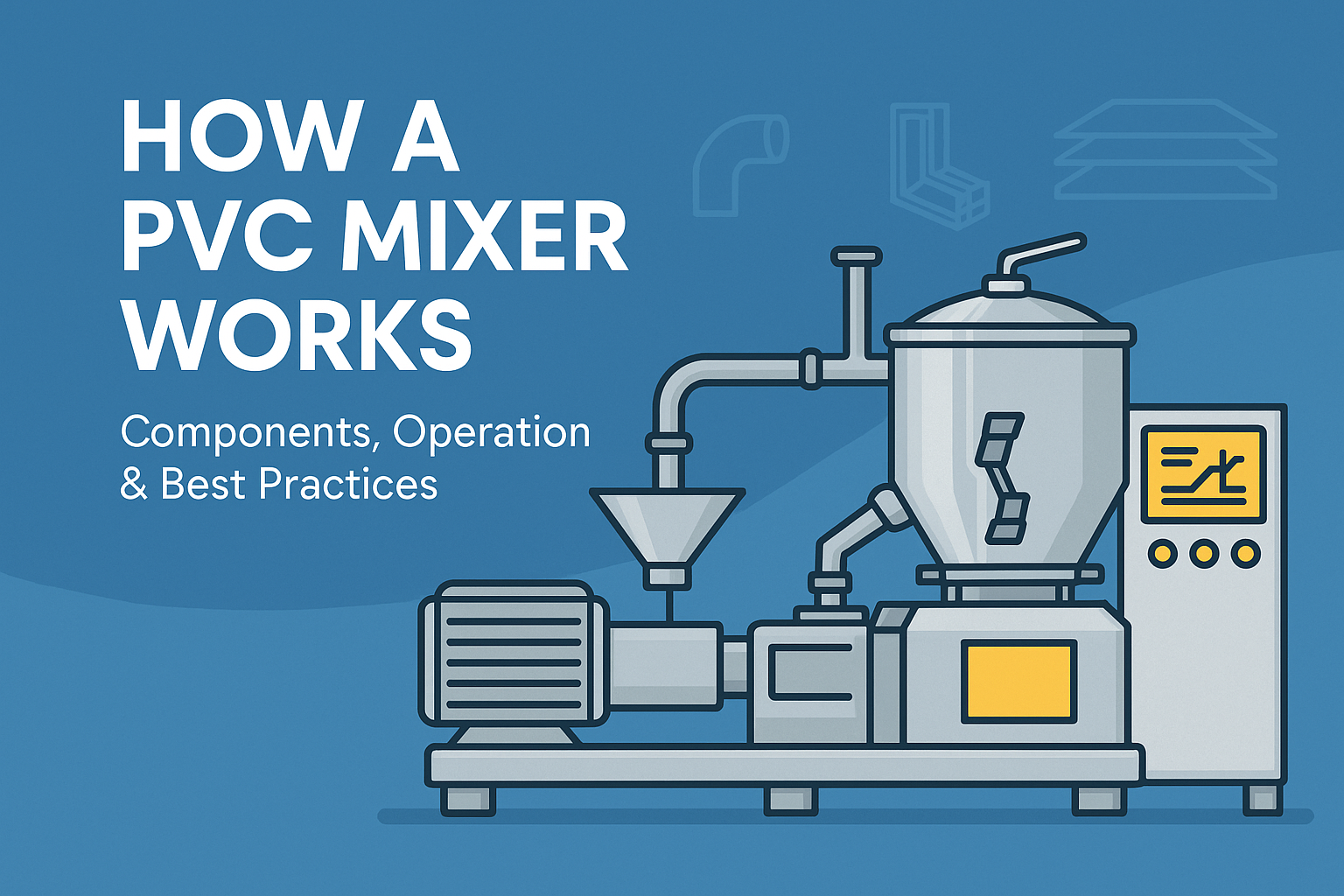
A PVC mixer is one of the most important machines in the plastics industry, especially for manufacturers working with pipes, profiles, panels, and sheets. It ensures that raw PVC powder and additives are blended into a consistent, high-quality compound before extrusion or molding. Without the right mixing process, the final product can suffer from uneven color, poor strength, or processing issues.
What is a PVC Mixer?
A PVC mixer is a specialized machine designed to mix raw PVC resin with stabilizers, plasticizers, pigments, and other additives. The goal is to achieve a uniform compound that can be processed smoothly in downstream equipment. Unlike general-purpose mixers, a PVC mixer is built to handle powders with high precision and efficiency.
Main Components of a PVC Mixer
- Mixing Chamber – A strong, heat-resistant vessel where the mixing takes place.
- Mixing Blades/Impellers – Rotating parts that disperse powders and additives evenly.
- Heating System – Ensures the mix reaches the right temperature for proper fusion of ingredients.
- Cooling System – Quickly cools the compound to prevent degradation and to stabilize the blend.
- Control Panel – Allows operators to monitor speed, temperature, and mixing time.
How Does It Work?
The process generally involves two stages:
- Heating Mixing – Raw PVC resin and additives are loaded into the mixer, where frictional heat and heating elements raise the temperature. This step ensures thorough dispersion of stabilizers and pigments.
- Cooling Mixing – The hot blend is then transferred to a cooling mixer. Cooling prevents the material from clumping and prepares it for extrusion or molding.
Best Practices for Using a PVC Mixer
- Correct Recipe – Always use the right ratio of resin and additives to achieve desired product quality.
- Temperature Control – Overheating can cause PVC to degrade, while underheating may leave additives unmixed.
- Regular Maintenance – Keep blades sharp and chambers clean to avoid contamination.
- Consistent Loading – Feeding the mixer with a uniform quantity ensures stable operation and repeatable results.
Why It Matters
A high-quality PVC mixer doesn’t just save time - it improves product strength, surface finish, and color consistency. For businesses producing PVC pipes, profiles, or sheets, investing in the right mixing technology is the first step to maintaining competitive quality in the market.
Conclusion:
The PVC mixer is the backbone of PVC production. By understanding its components, operation, and best practices, manufacturers can achieve reliable, cost-effective, and high-performance results. Whether you’re producing window profiles, panels, or pipes, the right mixer sets the foundation for success.
 Arabic
 English
 French
 Spanish
 Portuguese
 Deutsch
 Turkish
 Dutch
Dutch
 Italiano
 Russian
 Romaian
 Portuguese (Brazil)
 Greek
Greek
