


 Pro Benefits
 О нас
О нас
 Условия использования
 Конфиденциальность
 Child Safety & Protection
 Оповещения
 Ayrush Global It Services Pvt Ltd
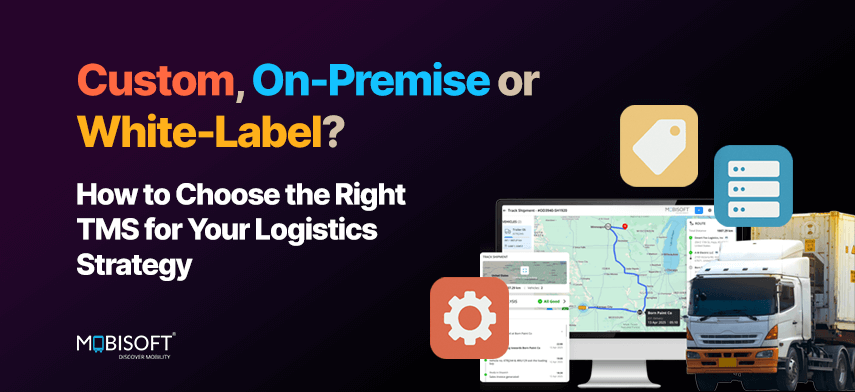
Custom, On-Premise, or White-Label? How to Choose the Right TMS for Your Logistics Strategy
The movement and logistics industry is becoming increasingly difficult. As companies grow and their supply chain management operations expand across broader geographic areas, managing freight effectively has become more challenging. Transporters and logistics providers are under constant pressure to ensure operations run at peak performance, often relying on outdated tools and manual processes.
This is where a Transportation Management System (TMS) adds value not as a luxury, but as a critical component of transportation and logistics systems in today’s digital age. A TMS is more than just a tool; it's an automated transportation management system that brings structure, speed, and visibility to the entire freight lifecycle from planning to execution, settlement, and transportation route optimization.
In this blog, we’ll explore what a TMS is, the problems it solves daily, and why companies are adopting custom transportation management systems, on-premise TMS software to stay agile and scalable in a fast-evolving logistics environment.
What Is a TMS? And Why Does It Matter in Modern Logistics?
A Transportation Management System (TMS) is a powerful piece of transportation management system software designed to streamline freight management operations. Whether you're moving freight domestically or globally, a TMS serves as the central hub to orchestrate, execute, track, and analyze transport-related tasks in real time.
Think of it as your logistics management system control tower, replacing spreadsheets, phone calls, and manual coordination with smart dashboards and automation. You can select carriers, automate updates, optimize delivery paths, and execute payments all within one platform.
A robust TMS:
-
Lowers Freight Costs
By optimizing load planning, automating carrier selection, and consolidating shipments, organizations can minimize fuel consumption, empty miles, and inefficient routing. These capabilities are core to any automated transportation management system, resulting in measurable operational savings.
-
Automates Manual Processes
A modern TMS eliminates redundant paperwork and manual intervention. From dispatch creation to digital proof of delivery and e-invoicing, everything is streamlined. This level of logistics automation significantly reduces errors and administrative overhead.
-
Improves Delivery Performance
With real-time tracking and automated alerts, your team can act proactively when disruptions occur. Delays can be detected and rerouted early. This ensures better SLA compliance and reliability, all enabled through a best transportation management system.
-
Enables Freight Audit and Billing Accuracy
Through its embedded verification and reconciliation functionalities, a TMS authenticates every invoice to properly capture services rendered. Hence, it minimizes the chances of overpayment, disputes, and loss of cash.
-
Integrates with ERPs, WMS, GPS, and E-invoicing Systems
A robust TMS is not standalone; it seamlessly connects to systems like SAP, Oracle, or Microsoft Dynamics, enabling smooth ERP WMS integration. This allows data to flow freely across procurement, inventory, and compliance, a must for organizations pursuing custom ERP TMS integration.
Ultimately, a modern TMS transportation management system empowers logistics teams to work smarter. Whether through automation or real-time insight, it allows businesses to maintain competitiveness, especially in an era defined by rising expectations and shrinking margins.
Real-World Logistics Challenges and How a TMS Solves Them
Logistics today is far from a one-size-fits-all affair. Companies, carriers, and distributors all have their own sets of operational issues, the majority of which stem from outdated transportation and logistics systems, legacy tools, and a lack of real-time visibility
Let's examine the issues in particular that each stakeholder has and how a Transportation Management System (TMS) provides particular, real-world solutions.
TMS Solutions For Enterprises
The Challenges
-
Manual freight booking and poor visibility
Supply chains in business usually rely on email, spreadsheets, or old ERP modules to plan and track freight. These outdated processes hinder effective supply chain management and lead to delays, missed shipments, and poor shipment tracking once products leave the warehouse.
-
Frequent discrepancies in billing
When freight information is dispersed across systems, payment of invoices against actual freight movement is time-consuming and prone to errors. Rate disputes, accessorials, or proof of delivery (POD) failures hold up payment and destroy vendor relationships.
-
Ineffective management of transporters, SLAs, or contracts
Businesses often deal with multiple carriers, each having different rate cards and SLAs. Without a centralized transportation management system software, enforcing compliance and tracking performance becomes almost impossible.
-
Fragmented data across multiple systems
Key data is scattered across ERPs, WMS platforms, Excel files, and shipment records. Without integrated ERP WMS integration, it’s impossible to consolidate a full view of performance, cost, and delivery schedules.
TMS Solutions
-
Centralized order-to-invoice visibility
A TMS gives you one dashboard to monitor orders from booking through billing. No more toggling between systems; stakeholders have visibility into freight status, delays, and cost information in one location.
-
SLA, contract, and rate card management
All transporter contracts and rate plans are kept electronically, with real-time compliance. The system notifies any violation of service level agreements or rate changes in real-time and helps procurement and logistics personnel to stay compliant.
-
Document workflows (LR, POD, e-invoice)
Create, distribute, and archive documents such as lorry receipts, delivery confirmation, and e-invoicing in the platform. It eliminates paperwork, accelerates reconciliation, and simplifies audit readiness.
-
End-to-end analytics and audit trail
Drill into historical performance data, carrier scorecards, and cost trends. Everything is mapped, so compliance and internal audits are simpler and quicker.
TMS Solutions for Transporters
The Challenges
-
No visibility into vehicle allocation, deliveries, or fuel
Fleet managers often lack tools to track vehicle movement, fuel efficiency, or load optimization. Without access to a track and trace TMS, optimization is based on guesswork.
-
Payment delays due to paperwork gaps
Invoices get delayed because of a lack of PODs, a lack of trip data, or improper route documentation. This impacts the transporter's cash flow as well as customer credibility.
-
No centralized record of drivers or vehicles
Manually tracking licenses, permits, and insurance often leads to compliance lapses and missed renewals. A digital logistics automation setup can prevent these issues.
Read More :
https://mobisoftinfotech.com/resources/blog/transportation-logistics/how-to-choose-right-tms
 Russian
 English
 Arabic
 French
 Spanish
 Portuguese
 Deutsch
 Turkish
 Dutch
Dutch
 Italiano
 Romaian
 Portuguese (Brazil)
 Greek
Greek
