


 Pro Benefits
 About
About
 Termini e Condizioni
 Privacy
 Child Safety & Protection
 Notifiche
 Ayrush Global It Services Pvt Ltd
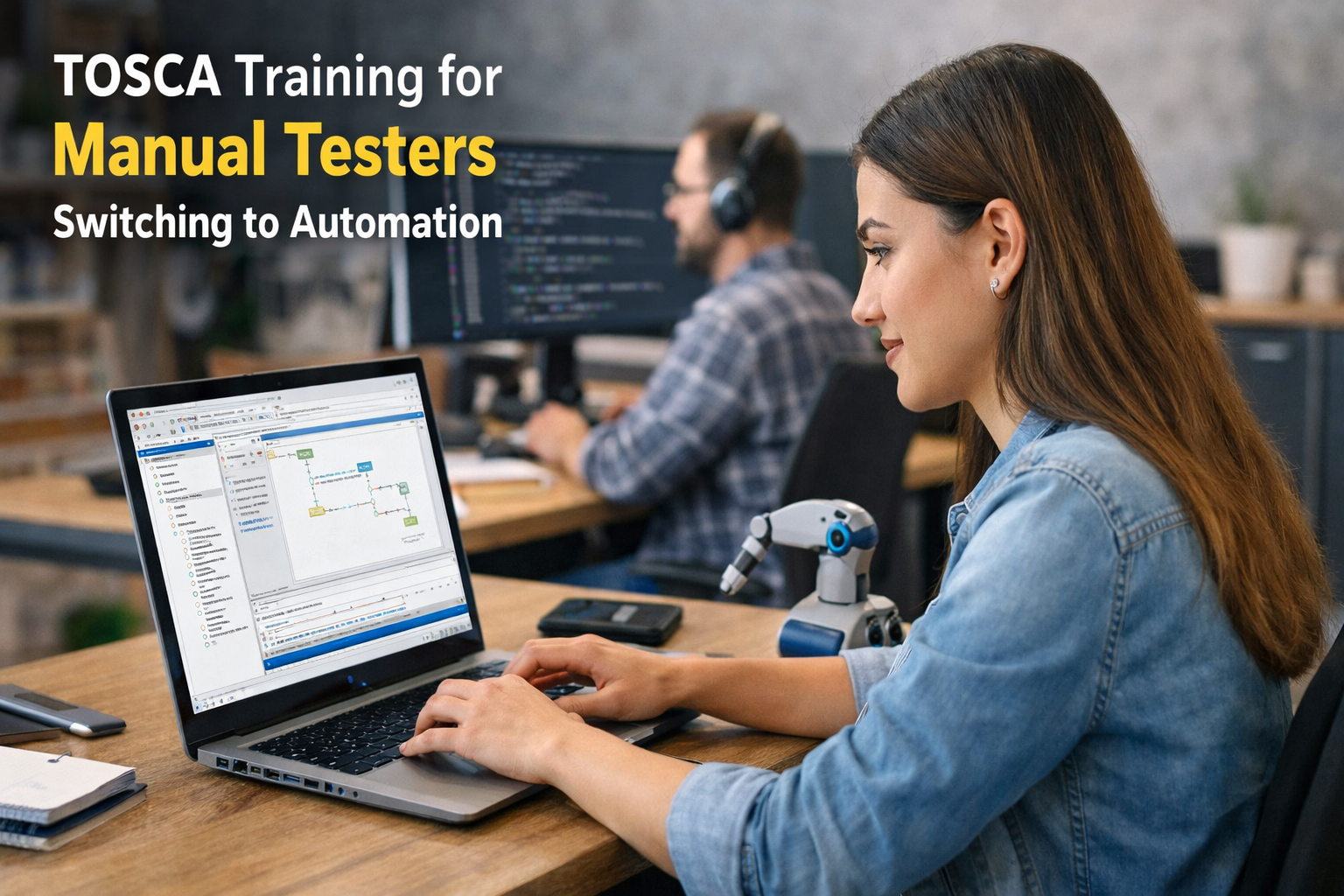
TOSCA Training for Manual Testers Switching to Automation
Introduction
Software testing has changed rapidly in recent years. Companies now release software updates more frequently than before. Agile and DevOps practices require faster testing cycles, and manual testing alone cannot meet this demand. Because of this shift, many manual testers now want to learn automation testing.
Many testers ask an important question: Can a manual tester move into automation without strong programming skills?
The answer is yes. Tools like Tricentis TOSCA make automation easier for testers who come from a manual testing background. TOSCA uses a model-based testing approach that reduces the need for complex coding.
Many professionals choose TOSCA Training Online to learn automation in a structured way. Many learners also prefer training programs like those offered at H2K Infosys, where manual testers learn automation concepts through real-world testing projects and guided practice.
This guide explains how manual testers can transition into automation through TOSCA Training, gain practical skills, and prepare for the TOSCA AS1 Certification.
Why Automation Testing Is Important Today
Modern development teams release software faster than ever. Continuous integration and continuous delivery require quick testing feedback. Automation testing helps teams meet these demands.
Faster Test Execution
Automation executes test cases much faster than manual testing. A regression test suite that takes several days manually can run in a few hours with automation tools.
Higher Test Coverage
Automation allows teams to test multiple features across different environments. This improves overall software quality.
Continuous Testing
Automation enables testing during every build cycle in CI/CD pipelines. This helps teams identify defects earlier.
Reduced Human Errors
Automation tools follow exact instructions every time. This reduces errors that occur during repetitive manual testing.
Industry reports show that many companies now automate 60% to 80% of their regression testing. This trend increases the demand for automation testers.
What Is Tricentis TOSCA
Tricentis TOSCA is an enterprise automation testing tool that many large organizations use for quality assurance.
Unlike traditional automation tools that require heavy scripting, TOSCA uses model-based test automation. This approach allows testers to design tests visually instead of writing complex scripts.
Key Features of Tricentis TOSCA
Scriptless Automation
Testers create automated tests without extensive programming.
Model-Based Testing
Testers create reusable test models that reduce maintenance effort.
Risk-Based Testing
Teams focus on critical business areas that carry the highest risk.
End-to-End Test Coverage
TOSCA supports web applications, APIs, enterprise applications, and mobile platforms.
DevOps Integration
Teams integrate TOSCA into CI/CD pipelines to support continuous testing.
Because of these capabilities, many professionals begin their automation journey through TOSCA Training.
Why TOSCA Is Ideal for Manual Testers
Manual testers often hesitate to learn automation because many tools require strong programming skills. Tools like Selenium often require knowledge of Java, Python, or C#.
TOSCA reduces this barrier by offering a scriptless automation approach.
Benefits for Manual Testers
Low Coding Requirement
Testers use drag-and-drop modules instead of writing code.
Faster Learning Curve
Manual testers can start building automation tests quickly.
Reusable Test Components
Modules created once can be reused across multiple test cases.
Enterprise Adoption
Large companies widely use TOSCA for enterprise software testing.
Certification Opportunities
The TOSCA AS1 Certification validates automation skills and improves job opportunities.
Because of these advantages, manual testers can transition into automation more easily with TOSCA.
Skills Manual Testers Already Possess
Manual testers already have many skills that support automation learning.
Test Case Design
Manual testers know how to design test cases based on requirements.
Functional Testing Knowledge
They understand how applications behave and how users interact with systems.
Defect Reporting
They know how to document defects clearly for development teams.
Requirement Analysis
They can convert business requirements into test scenarios.
These existing skills make it easier for manual testers to learn automation tools like TOSCA.
What You Learn in TOSCA Training
A structured TOSCA Training Online program usually includes both theory and hands-on practice.
Introduction to Automation Testing
Students learn the fundamentals of automation testing.
Topics include:
-
Automation testing concepts
-
Differences between manual and automation testing
-
Automation testing life cycle
-
Test strategy planning
This foundation helps testers understand when to automate tests.
Understanding TOSCA Architecture
Students learn the internal structure of TOSCA.
Key components include:
-
TOSCA Commander
-
Workspaces
-
Repositories
-
Test case management
Understanding these components helps testers manage automation projects.
Working with TOSCA Modules
Modules represent UI elements within an application.
Examples include:
-
Text fields
-
Buttons
-
Checkboxes
-
Navigation elements
Testers scan application screens and create modules that represent these elements.
These modules become reusable building blocks.
Creating Automated Test Cases
After creating modules, testers build automated test cases.
Example manual test case:
Step 1 Enter username
Step 2 Enter password
Step 3 Click login
In TOSCA, testers combine modules to automate this scenario.
Example automation structure:
Login Module
→ Username field
→ Password field
→ Login button
This visual approach reduces coding complexity.
Test Case Execution
After creating test cases, testers execute automation runs.
Execution tasks include:
-
Selecting test cases
-
Running execution lists
-
Monitoring results
-
Identifying failures
Automation allows teams to execute hundreds of tests quickly.
Test Data Management
Applications require multiple input combinations.
TOSCA provides tools for managing test data efficiently.
Students learn:
-
Data-driven testing
-
Test data repositories
-
Parameterized test cases
This approach allows the same test case to run with many data variations.
API Testing
Modern applications rely heavily on APIs.
TOSCA allows testers to automate API tests without heavy scripting.
Students learn:
-
API request creation
-
Response validation
-
API test automation
API testing skills help increase overall test coverage.
CI/CD Integration
Automation testing becomes more powerful when integrated into DevOps pipelines.
Students learn how TOSCA integrates with CI tools and automated build pipelines.
This enables continuous testing during every software release cycle.
Step-by-Step Guide for Manual Testers Learning TOSCA
Manual testers can follow a simple learning roadmap.
Step 1 Learn Automation Basics
Understand automation concepts, frameworks, and testing strategies.
Step 2 Learn TOSCA Fundamentals
Focus on workspaces, modules, and automation architecture.
Step 3 Practice Automation Scenarios
Practice automating real testing workflows such as login testing, form submission, and navigation testing.
Step 4 Build Automation Projects
Hands-on projects help testers understand real testing environments.
Examples include:
-
E-commerce automation testing
-
Banking application testing
-
CRM system testing
Step 5 Prepare for Certification
The final step is preparing for the TOSCA AS1 Certification exam.
Understanding the TOSCA AS1 Certification
The TOSCA AS1 Certification is the first certification level in the Tricentis certification path.
It validates a tester’s understanding of automation fundamentals.
Topics Covered in the Certification
The exam usually tests knowledge of:
-
TOSCA architecture
-
Module creation
-
Test case design
-
Automation concepts
-
Test execution
Benefits of Certification
Better Job Opportunities
Employers prefer certified automation professionals.
Higher Salary Potential
Automation testers typically earn higher salaries compared to manual testers.
Industry Recognition
Certification shows verified knowledge of automation testing.
Many professionals prepare for certification through structured TOSCA Training Online programs.
Real-World Example of TOSCA Automation
Consider a simple login test scenario.
Manual Testing Steps
1 Enter username
2 Enter password
3 Click login
4 Verify dashboard page
TOSCA Automation Approach
1 Create modules for login page fields
2 Combine modules to build a test case
3 Add validation checkpoints
4 Execute automated test cases
Once the automation test is created, it can run multiple times with different data sets.
This reduces repetitive manual effort.
Industry Demand for TOSCA Professionals
Many enterprise organizations use TOSCA for automation testing.
Industries using TOSCA include:
-
Banking
-
Healthcare
-
Insurance
-
Retail
-
Telecommunications
TOSCA also supports enterprise applications such as:
-
SAP
-
Salesforce
-
Oracle platforms
Because of this adoption, companies continue to seek automation testers with TOSCA skills.
Challenges Manual Testers May Face
Transitioning from manual testing to automation may involve some challenges.
Learning New Tools
Manual testers must become comfortable with automation platforms.
Understanding Automation Design
Automation requires structured test design and reusable components.
Handling Automation Failures
Automation scripts may fail due to environment changes or application updates.
Structured training helps overcome these challenges.
How Structured Training Helps
Professional training programs provide several advantages.
Guided Learning
Training programs follow a step-by-step learning structure.
Hands-On Practice
Students work on real testing scenarios and projects.
Expert Guidance
Experienced instructors explain automation concepts clearly.
Interview Preparation
Students learn common automation interview questions and practical testing scenarios.
Many professionals choose TOSCA Training Online programs because they allow flexible learning while gaining practical automation experience. Programs offered by H2K Infosys often focus on real-world projects to help learners develop job-ready skills.
Career Opportunities After TOSCA Training
Learning TOSCA opens multiple career opportunities.
Automation Test Engineer
Engineers create and maintain automated test scripts.
QA Automation Analyst
Analysts design automation strategies for testing teams.
Test Automation Architect
Architects design automation frameworks for enterprise systems.
DevOps Test Engineer
These professionals integrate testing automation into CI/CD pipelines.
Automation testing professionals often earn higher salaries than manual testers due to their specialized skills.
Key Takeaways
-
Automation testing plays a critical role in modern software development.
-
Manual testers can transition into automation without strong coding knowledge.
-
Tricentis TOSCA provides scriptless automation through model-based testing.
-
TOSCA Training teaches automation concepts and real-world testing practices.
-
TOSCA AS1 Certification validates automation expertise and improves career opportunities.
-
Structured TOSCA Training Online programs help learners gain practical project experience.
Conclusion
Automation testing continues to grow as companies demand faster and more reliable software releases. Manual testers can successfully move into automation with the right skills and training.
Start your journey with professional TOSCA Training Online and build the knowledge needed to achieve TOSCA AS1 Certification and advance your testing career.
 Italiano
 English
 Arabic
 French
 Spanish
 Portuguese
 Deutsch
 Turkish
 Dutch
Dutch
 Russian
 Romaian
 Portuguese (Brazil)
 Greek
Greek
