


 Pro Benefits
 About
About
 Termini e Condizioni
 Privacy
 Child Safety & Protection
 Notifiche
 Ayrush Global It Services Pvt Ltd
Why Redundant Power Interface Cards Are Critical in GE Control Systems
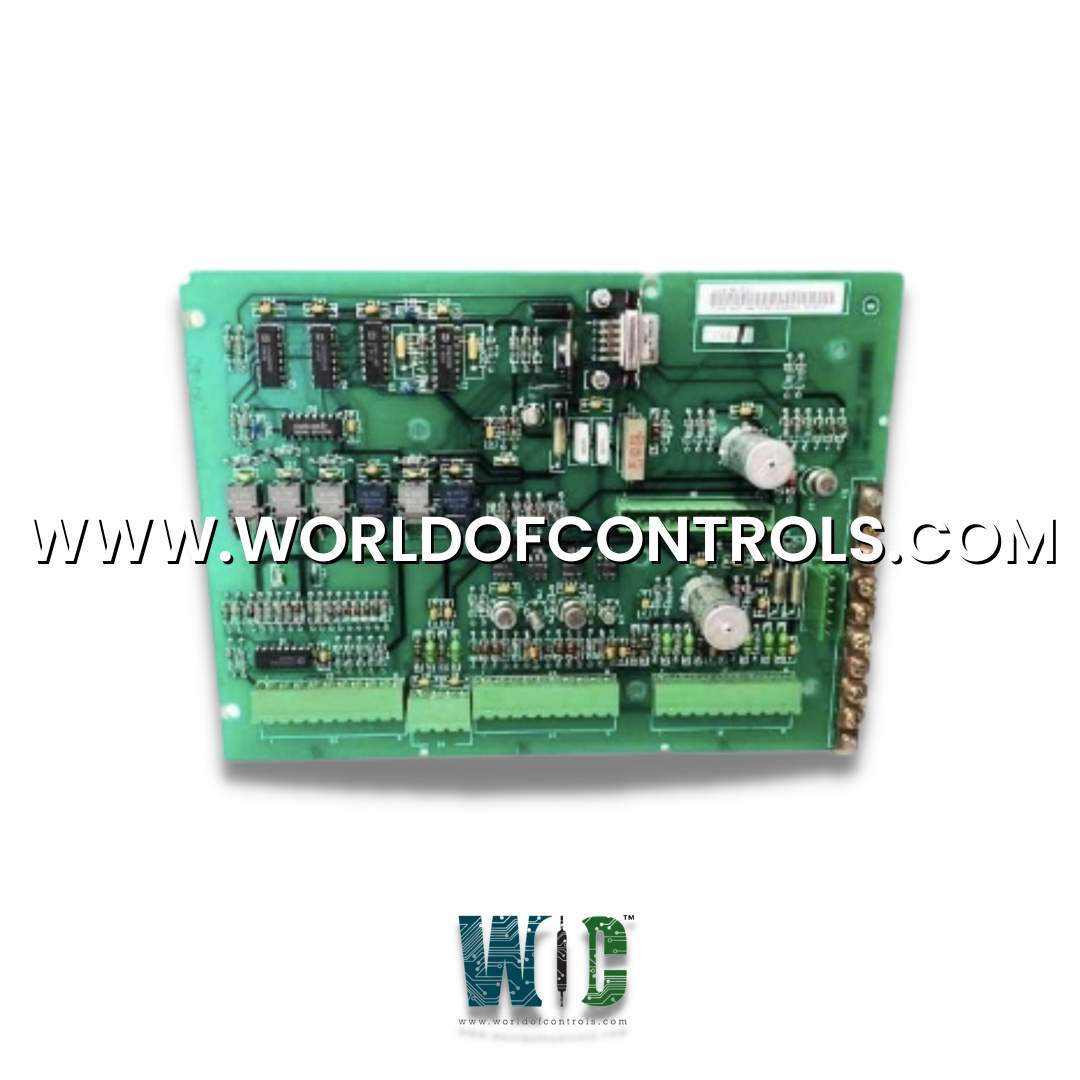
Introduction: Reliability at the Core of Turbine Operations
In the turbine industry, reliability is not optional—it is fundamental to safety, profitability, and grid stability. Gas and steam turbines operate in high-demand environments where even a brief disruption in control power can lead to costly shutdowns or equipment damage. For this reason, control systems designed by General Electric are built with redundancy at multiple levels, including their power architecture.
One of the most critical elements in this architecture is the redundant power interface card—a specialized module that ensures uninterrupted and stable power delivery to the control system.
Understanding Power Redundancy in Turbine Control Systems
What Is Power Redundancy?
Power redundancy refers to the use of multiple independent power sources to ensure continuous operation if one source fails. In turbine control systems, redundant power supplies feed essential components such as processors, I/O modules, communication networks, and protection circuits.
If a single power supply were to fail in a non-redundant setup, the entire control platform could shut down. In power generation and heavy industrial facilities, such a failure is unacceptable.
Why Turbine Systems Require It
Turbines operate under intense thermal and mechanical stress, often running continuously for extended periods. The control system must:
-
Maintain real-time operational monitoring
-
Execute precise fuel and speed control logic
-
Respond instantly to abnormal conditions
-
Manage safe startup and shutdown sequences
Any interruption in control power can compromise these critical functions. Redundant power interface cards prevent such disruptions by ensuring seamless power continuity.
The Role of Redundant Power Interface Cards
Redundant power interface cards act as intelligent intermediaries between dual power supplies and the control system backplane. They do far more than distribute voltage—they actively manage and monitor power inputs.
Their primary functions include:
-
Monitoring multiple DC power sources
-
Automatically switching to a healthy supply if one fails
-
Preventing reverse current or backfeeding
-
Isolating faults to protect downstream modules
-
Providing diagnostic signals to the control system
By eliminating single points of failure, these cards significantly increase overall system availability.
Integration Within GE Turbine Control Platforms
In GE turbine environments—such as those using the GE Mark VI control platform—redundant power interface cards are an essential part of the cabinet architecture.
Supporting High-Availability Design
The Mark VI and similar GE systems are engineered with layered redundancy, including:
-
Triple-redundant processors
-
Redundant communication paths
-
Dual power supplies
-
Redundant interface modules
The power interface card ensures that control boards receive clean, uninterrupted power even if one supply experiences instability or failure.
Real-World Turbine Scenarios
In turbine facilities, power disturbances can occur due to:
-
Grid voltage fluctuations
-
Generator synchronization events
-
Auxiliary power transitions
-
Maintenance-related interruptions
A redundant power interface card detects these irregularities and automatically maintains stable output without interrupting control logic. This seamless failover is critical to preventing nuisance turbine trips.
Reducing Downtime and Protecting Assets
Minimizing Operational Interruptions
Unplanned turbine shutdowns can result in:
-
Lost production revenue
-
Grid reliability issues
-
Thermal stress during restart
-
Increased maintenance expenses
By maintaining consistent control power, redundant power interface cards reduce the risk of shutdowns caused by electrical faults rather than mechanical problems.
Safeguarding High-Value Equipment
Industrial turbines represent significant capital investments. Stable control power protects:
-
Turbine protection systems
-
Vibration monitoring modules
-
Fuel control systems
-
Emergency shutdown logic
If control power is compromised, these protective layers may not function correctly. Redundant power interface cards help ensure that safety systems remain operational even during supply disturbances.
Enhancing Diagnostics and Maintenance Efficiency
Modern redundant power interface cards also improve visibility into system health. They provide:
-
Status indicators for active power sources
-
Fault detection and reporting
-
Early warning of supply degradation
-
Integration with system diagnostics
This level of transparency enables maintenance teams to identify and resolve issues before they escalate into operational disruptions.
Conclusion: A Small Component with a Major Impact
In turbine control systems, redundant power interface cards play a vital role in maintaining operational stability. By managing dual power sources, isolating faults, and ensuring seamless failover, they eliminate one of the most significant risks in industrial automation—loss of control power.
Within GE control platforms, these modules are fundamental to achieving high availability, protecting critical assets, and ensuring compliance with industry reliability standards. In an industry where uptime directly impacts revenue and safety is paramount, redundant power interface cards remain indispensable to modern turbine control architecture.
 Italiano
 English
 Arabic
 French
 Spanish
 Portuguese
 Deutsch
 Turkish
 Dutch
Dutch
 Russian
 Romaian
 Portuguese (Brazil)
 Greek
Greek
