


 Pro Benefits
 About
About
 Términos
 Privacidad
 Child Safety & Protection
 Notificaciones
 Ayrush Global It Services Pvt Ltd
What Is an Amnesty Scheme? Meaning, Benefits, and Latest Updates
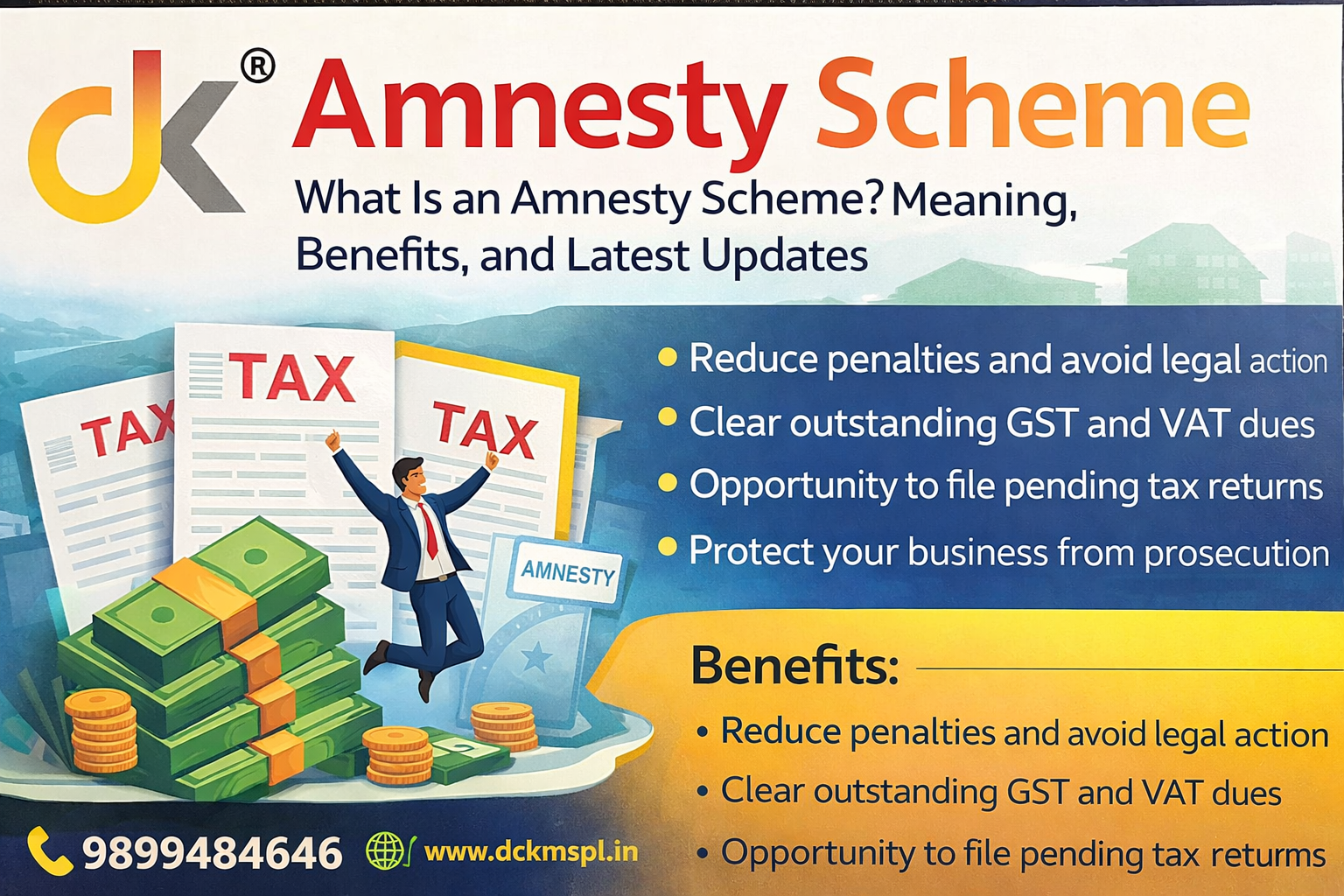
An amnesty scheme is a government-backed relief program that allows individuals or businesses to declare undisclosed income, file pending returns, or clear outstanding tax dues with reduced penalties and legal consequences. These schemes are typically introduced to increase tax compliance, recover revenue, and give defaulters a second chance to regularize their financial records without facing strict prosecution.
In recent years, governments across the world have introduced various forms of amnesty programs, particularly in indirect taxation such as the amnesty scheme for GST, amnesty scheme for VAT, and the GST amnesty scheme. These initiatives are designed to reduce litigation, encourage voluntary compliance, and improve the overall tax ecosystem.
In this detailed guide, we will explain the meaning of an amnesty scheme, how it works, its key benefits, eligibility criteria, and the latest updates you should know about.
Meaning of Amnesty Scheme
The term “amnesty” means forgiveness. In taxation and legal terms, an amnesty scheme provides forgiveness in the form of reduced penalties, waived interest, or protection from prosecution for past non-compliance.
An amnesty scheme generally applies to:
-
Unfiled tax returns
-
Undisclosed income or assets
-
Outstanding tax liabilities
-
Late filing penalties
-
Interest on delayed payments
The main objective of an amnesty scheme is not punishment but compliance. Governments use these schemes as a corrective tool to bring defaulters back into the formal tax system.
Why Governments Introduce Amnesty Schemes
Governments introduce amnesty schemes for several important reasons:
1. Increase Revenue Collection
Many taxpayers delay payments due to heavy penalties. By reducing penalties, governments encourage voluntary payment of outstanding dues.
2. Reduce Legal Disputes
Tax-related cases often remain pending for years. Amnesty schemes help settle disputes quickly and reduce litigation burden.
3. Improve Compliance Culture
When taxpayers are given a second chance, they are more likely to comply in the future.
4. Strengthen the Economy
Regularizing undeclared income increases transparency and improves the financial system.
How an Amnesty Scheme Works
Although specific rules vary from country to country, most amnesty schemes follow a similar structure:
-
Announcement by Government – The scheme is officially announced with detailed guidelines.
-
Defined Time Period – Taxpayers are given a limited window to apply.
-
Declaration of Dues – Applicants declare pending returns or unpaid taxes.
-
Reduced Penalty or Interest – The government offers relief on fines or legal action.
-
Payment and Settlement – Once payment is made, the case is closed.
Failure to apply within the specified period may result in regular penalties and legal action.
Amnesty Scheme for GST
The amnesty scheme for GST is one of the most discussed relief measures in recent years. Under GST (Goods and Services Tax), businesses are required to file regular returns and pay taxes on time. However, many small and medium enterprises struggle with compliance due to technical or financial difficulties.
Key Features of Amnesty Scheme for GST
-
Waiver or reduction of late filing fees
-
Relief from penalties on delayed returns
-
Opportunity to file pending GST returns
-
Settlement of disputes with reduced interest
The GST amnesty scheme is especially beneficial for businesses that failed to file returns during initial GST implementation phases or economic disruptions.
Who Can Benefit?
-
Small business owners
-
MSMEs
-
Traders and service providers
-
Businesses with pending GST returns
By applying under the amnesty scheme for GST, taxpayers can regularize their compliance without facing harsh penalties.
GST Amnesty Scheme: Latest Trends
Governments periodically announce new GST amnesty schemes to address compliance gaps. Recent trends show:
-
Reduced late fees for specific return periods
-
Extended deadlines for filing old returns
-
Special provisions for cancelled GST registrations
-
Simplified application procedures
It is important for businesses to monitor official notifications to avoid missing deadlines.
Read More - SCOMET Export Licence Explained: Meaning, Process & Requirements
Amnesty Scheme for VAT
Before GST was introduced in many countries, VAT (Value Added Tax) was the primary indirect tax system. Many businesses still have unresolved VAT disputes or pending dues from the pre-GST era.
The amnesty scheme for VAT allows taxpayers to:
-
Clear old VAT liabilities
-
Settle disputes without litigation
-
Pay reduced interest and penalties
-
Close long-pending cases
This scheme is particularly helpful for businesses transitioning from VAT to GST systems.
Benefits of an Amnesty Scheme
An amnesty scheme provides multiple advantages for both taxpayers and governments.
Benefits for Taxpayers
-
Reduced Financial Burden
Lower penalties and interest mean significant savings. -
Avoid Legal Action
Protection from prosecution reduces stress and uncertainty. -
Business Continuity
Regularized compliance allows smooth operations. -
Improved Creditworthiness
Clean tax records enhance reputation with banks and investors. -
Peace of Mind
Settling past dues brings financial clarity.
Benefits for Government
-
Faster revenue recovery
-
Reduced administrative costs
-
Lower litigation backlog
-
Improved tax compliance rate
-
Strengthened economic transparency
Eligibility Criteria for Amnesty Schemes
Eligibility varies depending on the specific scheme, but common criteria include:
-
Pending tax returns within a specified period
-
Outstanding tax dues before a cut-off date
-
No serious criminal proceedings initiated
-
Compliance within the scheme’s time window
Some schemes exclude cases involving fraud or deliberate tax evasion.
Important Documents Required
When applying for an amnesty scheme, taxpayers may need:
-
Tax registration details
-
Pending return statements
-
Outstanding tax calculation
-
Identity and business verification documents
-
Payment proof
Ensuring proper documentation helps avoid rejection.
Common Mistakes to Avoid
While applying for an amnesty scheme, avoid these errors:
-
Missing the deadline
-
Incorrect calculation of dues
-
Failure to submit complete documents
-
Ignoring official notifications
-
Assuming automatic eligibility
Professional consultation may help ensure accurate compliance.
Impact of Amnesty Schemes on Businesses
An amnesty scheme can significantly impact business operations:
-
Restores cancelled registrations (in some GST amnesty scheme cases)
-
Improves vendor and supplier relationships
-
Enables participation in government tenders
-
Boosts investor confidence
For small businesses, especially under the amnesty scheme for GST, this relief can be financially transformative.
Latest Updates on Amnesty Schemes
Recent updates in various regions show increased focus on:
-
Digital filing systems
-
Simplified application processes
-
Extended deadlines due to economic challenges
-
Special relief for MSMEs
Tax authorities are increasingly using online portals to process applications quickly and efficiently.
It is advisable to regularly check official tax department websites for updates related to the GST amnesty scheme and amnesty scheme for VAT.
Is an Amnesty Scheme Worth It?
For most taxpayers with genuine compliance gaps, the answer is yes. An amnesty scheme provides:
-
Legal safety
-
Financial relief
-
Opportunity to reset compliance
-
Closure of long-standing disputes
However, businesses should carefully review scheme conditions to ensure they meet all requirements.
Conclusion
An amnesty scheme is a powerful compliance tool designed to help taxpayers correct past mistakes without facing severe penalties. Whether it is an amnesty scheme for GST, an amnesty scheme for VAT, or a broader GST amnesty scheme, these initiatives provide a second chance to individuals and businesses to regularize their tax obligations.
By understanding the meaning, benefits, eligibility criteria, and latest updates, taxpayers can make informed decisions and avoid unnecessary financial and legal risks. Since these schemes are usually time-bound, staying informed and acting promptly is crucial.
If you have pending tax returns or outstanding dues, exploring available amnesty schemes could be a strategic step toward financial stability and compliance.
Frequently Asked Questions
1. What is the main purpose of an amnesty scheme?
The main purpose of an amnesty scheme is to encourage voluntary compliance by allowing taxpayers to clear pending dues with reduced penalties and protection from legal action. It helps governments recover revenue while giving taxpayers a second chance.
2. Who can apply for the GST amnesty scheme?
Businesses or individuals with pending GST returns, unpaid taxes, or cancelled registrations (subject to scheme conditions) can apply for the GST amnesty scheme. Eligibility depends on the specific guidelines announced by tax authorities.
3. What is the difference between amnesty scheme for GST and amnesty scheme for VAT?
The amnesty scheme for GST applies to issues under the Goods and Services Tax system, such as pending GST returns and late fees. The amnesty scheme for VAT applies to older cases related to the Value Added Tax system before GST implementation. Both aim to reduce penalties and settle outstanding dues, but they apply to different tax frameworks.

 English
 Arabic
 French
 Portuguese
 Deutsch
 Turkish
 Dutch
Dutch
 Italiano
 Russian
 Romaian
 Portuguese (Brazil)
 Greek
Greek
