


 Pro Benefits
 Environ
 Conditions générale de vente
 Confidentialité
 Child Safety & Protection
 Notifications
 Ayrush Global It Services Pvt Ltd
Taxi App for End-to-End Ride Booking and Fleet Oversight
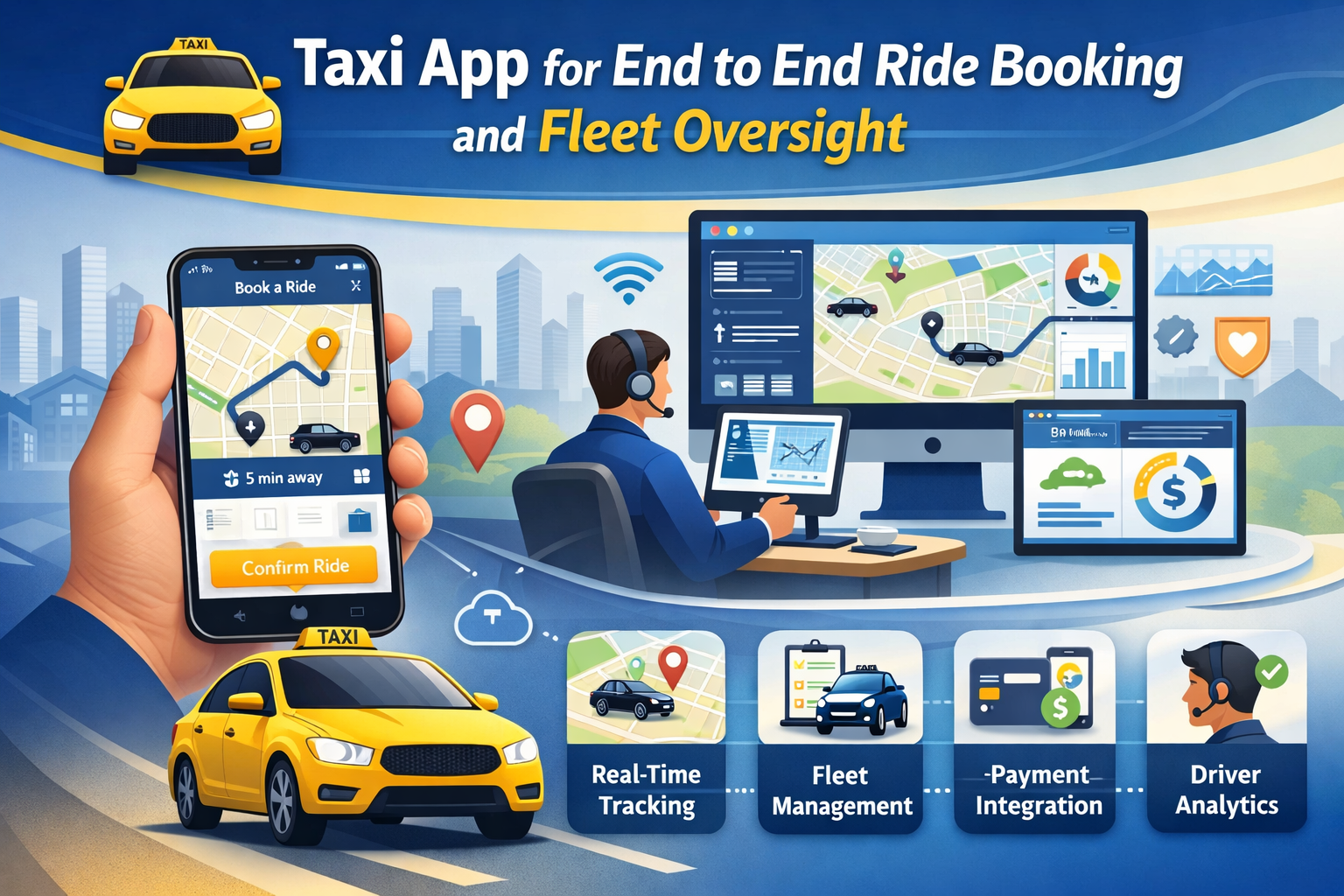
Urban mobility has evolved rapidly as digital platforms reshape how passengers connect with drivers and fleet operators manage daily operations. A modern taxi app must go beyond simple ride booking to deliver seamless dispatching, real-time tracking, automated payments, and comprehensive fleet visibility. Businesses entering this sector must evaluate technology architecture, compliance requirements, operational workflows, and long-term scalability. Whether launching a new platform or modernizing an existing system, understanding the structural components of an end-to-end solution is essential for sustainable and efficient mobility services.
Understanding the Modern Taxi App Ecosystem and Fleet Operations
The taxi application ecosystem is a multi-layered digital infrastructure that connects passengers, drivers, fleet managers, and administrators within a unified platform. Unlike traditional dispatch systems, modern solutions rely on real-time data processing, cloud-based servers, and mobile-first interfaces to enable frictionless coordination.
An effective ecosystem typically includes:
-
A passenger mobile application
-
A driver mobile application
-
A web-based administrative dashboard
-
Fleet management and analytics modules
-
Secure payment gateway integrations
These interconnected layers ensure that ride requests are matched accurately, routes are optimized dynamically, and operational data is recorded continuously. Businesses exploring taxi app development must consider how these layers interact, especially when scaling across multiple cities or service categories.
Additionally, market competition has accelerated the adoption of modular platforms such as a white label taxi app, which allows companies to deploy pre-built frameworks while customizing branding and feature sets. However, operational depth remains the defining factor of long-term viability.
Core Features Required for End to End Booking and Dispatch Management
End-to-end ride booking demands more than a request-and-accept workflow. A robust taxi application integrates booking, dispatch, payment, communication, and reporting within a synchronized environment.
Essential booking and dispatch features include:
-
User Registration and Authentication
Secure sign-up using phone, email, or social authentication with OTP verification. -
Real-Time Ride Matching
Intelligent algorithms that assign drivers based on proximity, availability, vehicle type, and traffic patterns. -
Dynamic Fare Calculation
Pricing models based on distance, time, demand multipliers, and waiting charges. -
In-App Navigation
Integrated GPS routing for both passengers and drivers with live tracking. -
Multiple Payment Methods
Support for digital wallets, cards, cash, and corporate billing. -
Trip History and Invoicing
Automatic ride logs with downloadable receipts for transparency. -
Cancellation and Refund Logic
Automated policies to handle late cancellations or no-shows.
For organizations implementing a white label taxi app, these features must be configurable to accommodate regional regulations and pricing models. Custom workflows are often required for airport transfers, scheduled rides, pooled services, or corporate contracts.
Fleet Oversight Tools for Real Time Visibility and Compliance Control
Fleet oversight is the backbone of operational efficiency. Without centralized monitoring, ride quality, driver performance, and asset utilization can deteriorate quickly.
Fleet management modules typically provide:
-
Live vehicle tracking across geographic zones
-
Driver activity monitoring and shift management
-
Vehicle maintenance scheduling alerts
-
Fuel consumption tracking
-
Performance analytics dashboards
Real-time visibility enables dispatch optimization, reduced idle time, and improved driver accountability. Compliance tools are equally important, especially in regions with strict licensing and insurance regulations.
For fleet operators using a white label taxi app, oversight tools must support:
-
Multi-fleet administration
-
Role-based access control
-
Automated document expiration alerts
-
Incident reporting workflows
Data-driven fleet supervision reduces operational risk while increasing service reliability.
Architecture and Technology Stack Considerations for Scalable Platforms
Technology architecture determines the resilience and scalability of a taxi platform. Poor architectural decisions often lead to latency, downtime, and security vulnerabilities.
Key architectural considerations include:
Backend Infrastructure
Microservices architecture enables independent scaling of booking, payments, notifications, and analytics modules. Cloud deployment ensures elasticity during peak demand.
Frontend Frameworks
Native mobile development offers performance advantages, while cross-platform frameworks reduce development timelines.
Real-Time Communication
WebSockets or similar protocols facilitate instant updates between drivers and passengers.
Database Management
High-availability databases with real-time replication ensure data consistency and fault tolerance.
API Integrations
Payment gateways, SMS services, mapping providers, and analytics engines must integrate seamlessly.
When evaluating a white label taxi app, businesses should examine whether the architecture supports long-term expansion into additional services such as food delivery or logistics.
Comparing Custom Builds and White Label Models in Mobility Services
Organizations entering the mobility sector typically choose between custom-built applications and pre-developed frameworks. Each model offers distinct advantages and trade-offs.
Custom Development
A fully bespoke solution allows complete control over architecture, features, and scalability. It supports unique business models and deep customization but requires significant investment in development time and technical oversight.
Pre-Built Frameworks
A white label taxi app provides a ready-made foundation that can be rebranded and configured. Deployment timelines are shorter, and upfront costs are often lower. However, flexibility may be limited depending on the provider’s architecture.
When comparing models, decision-makers should evaluate:
-
Long-term scalability requirements
-
Integration complexity
-
Maintenance responsibilities
-
Upgrade cycles
-
Total cost of ownership
Strategic alignment with long-term business objectives is more important than initial savings.
Key Factors Influencing Cost and ROI Analysis for Taxi Platforms
Financial planning is critical before launching a ride-booking platform. The cost to build taxi app solutions varies based on features, geographic coverage, regulatory requirements, and integration complexity.
Primary cost drivers include:
-
Development Scope
Number of features, platforms supported, and customization level. -
Infrastructure Expenses
Cloud hosting, data storage, and bandwidth usage. -
Third-Party Integrations
Mapping services, payment gateways, SMS notifications, and analytics tools. -
Security and Compliance
Data encryption, penetration testing, and regulatory certifications. -
Ongoing Maintenance
Updates, bug fixes, server monitoring, and customer support.
Return on investment depends on factors such as ride volume, commission structure, subscription models, and fleet utilization efficiency. Businesses should perform scenario-based forecasting before finalizing development pathways.
Steps to Hire Skilled Development Teams for Product Delivery Success
Selecting the right technical team directly influences product stability and scalability. Companies planning to hire taxi app developers should evaluate both technical expertise and domain knowledge.
A structured evaluation process should include:
-
Portfolio assessment of similar mobility platforms
-
Code quality review and architectural discussions
-
Understanding of data security standards
-
Familiarity with regulatory compliance requirements
-
Post-launch support capabilities
Communication protocols, documentation standards, and agile methodologies should also be clarified before engagement. Whether developing from scratch or customizing an existing framework, disciplined project management ensures predictable delivery timelines and quality assurance.
Organizations may consider in-house teams, outsourcing partners, or hybrid models depending on budget and internal technical maturity.
Security Compliance and Data Governance Needs in Ride Booking Systems
Ride-booking platforms process sensitive personal and financial data. Therefore, security and compliance mechanisms must be embedded at every layer of the system.
Key security measures include:
-
End-to-end encryption for data transmission
-
Secure authentication and session management
-
Role-based access controls
-
Regular vulnerability assessments
-
Audit logging and anomaly detection
Compliance frameworks vary by jurisdiction but typically involve data protection laws, transportation licensing rules, and payment security standards.
Data governance policies should address:
-
Data retention schedules
-
Cross-border data transfers
-
User consent management
-
Incident response protocols
White label app solutions must be evaluated for built-in security standards and adaptability to evolving regulatory landscapes. Data breaches or compliance failures can lead to severe financial and reputational damage.
Conclusion
A comprehensive taxi application requires careful alignment between technology architecture, operational workflows, regulatory compliance, and financial planning. End-to-end ride booking systems must integrate passenger convenience with fleet transparency, security safeguards, and scalable infrastructure. Whether organizations choose custom development or adaptable frameworks, success depends on disciplined execution, robust oversight mechanisms, and long-term strategic clarity. By focusing on structural integrity, data governance, and operational efficiency, mobility providers can build resilient digital ecosystems that support sustainable growth in an increasingly competitive transportation landscape.
 French
 English
 Arabic
 Spanish
 Portuguese
 Deutsch
 Turkish
 Dutch
Dutch
 Italiano
 Russian
 Romaian
 Portuguese (Brazil)
 Greek
Greek
