


 Pro Benefits
 About
About
 Termeni
 Confidențialitate
 Child Safety & Protection
 Notificări
 Ayrush Global It Services Pvt Ltd
Understanding the Difference Between Diesel and Petrol Engines
Introduction
Choosing the right car engine is one of the most important decisions for vehicle owners in India. Among the most common options are diesel and petrol engines, and understanding the difference between a diesel and petrol engine is essential to make the best choice. Each engine type offers distinct advantages and drawbacks, and knowing these differences can help buyers make informed decisions regarding fuel efficiency, performance, maintenance costs, and insurance considerations.
This guide explores the characteristics, advantages, disadvantages, and practical insights for diesel and petrol engines, helping you determine which engine type is most suitable for your driving needs and lifestyle.
What is a Petrol Engine?
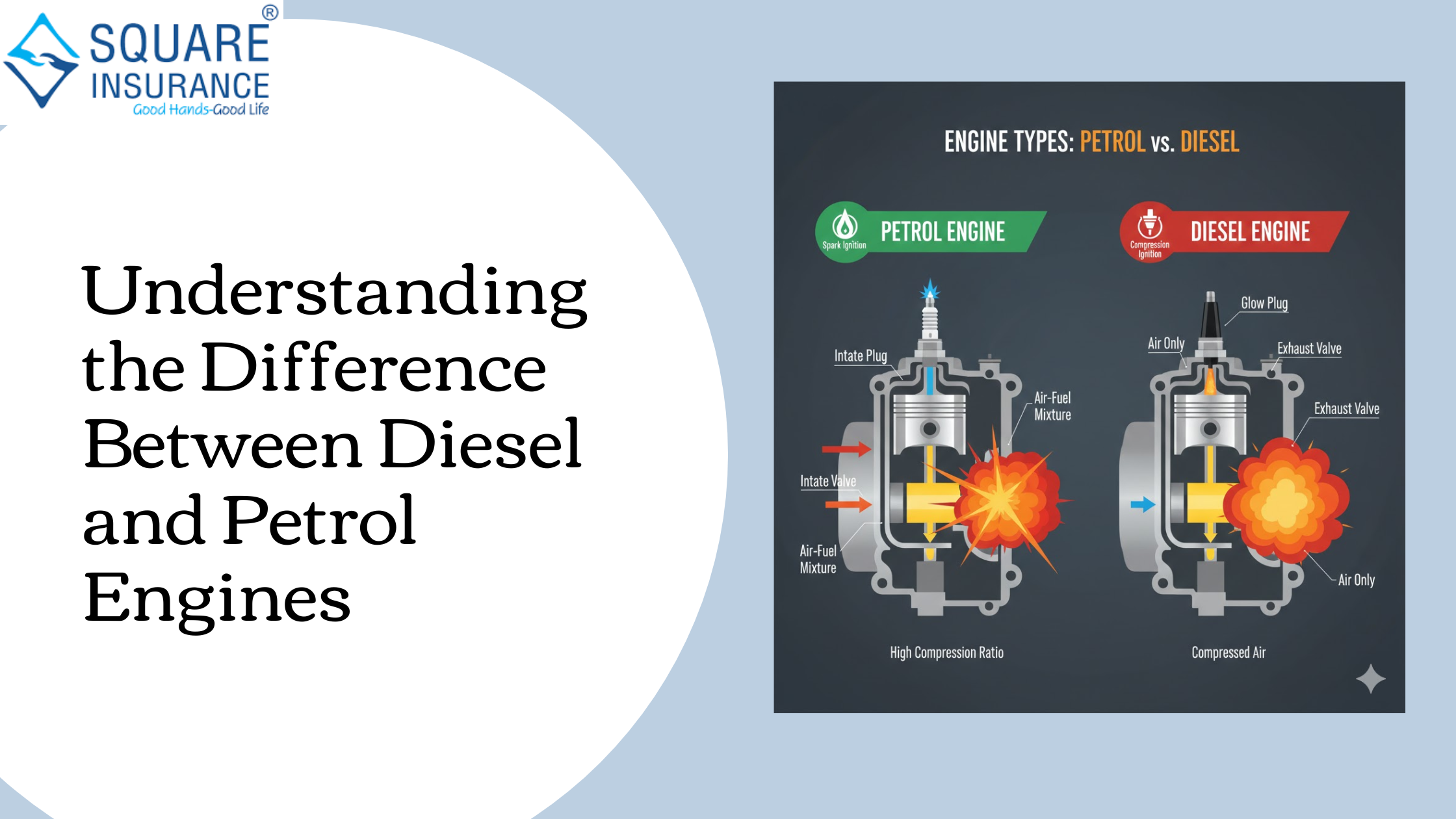
A petrol engine, also known as a gasoline engine, runs on petrol fuel and operates using spark ignition. In a petrol engine, air and fuel are mixed in the correct ratio, compressed, and ignited by a spark plug. This controlled combustion generates power to move the vehicle.
Key characteristics of petrol engines include:
- Higher RPM Capability: Petrol engines generally offer higher revolutions per minute (RPM), providing smoother acceleration.
- Lower Torque: They produce less torque compared to diesel engines, making them more suitable for city driving and lighter vehicles.
- Lightweight Construction: Petrol engines tend to be lighter than diesel engines, contributing to a slightly better handling experience.
- Fuel Type: Uses petrol, which is lighter and has a faster ignition rate.
Petrol engines are popular in hatchbacks, sedans, and smaller SUVs, offering a balance of performance, refinement, and lower initial cost.
What is a Diesel Engine?
Diesel engines operate differently, using compression ignition instead of spark ignition. Diesel engines compress air at a much higher ratio than petrol engines, generating heat, and then inject diesel fuel, which ignites due to the high temperature.
Key characteristics of diesel engines include:
- Higher Torque: Diesel engines produce more torque at lower RPMs, making them ideal for heavy vehicles, SUVs, and commercial transportation.
- Fuel Efficiency: Diesel fuel has higher energy content, providing better mileage and lower fuel consumption over long distances.
- Durability: Diesel engines are built with stronger components to withstand high compression, resulting in a longer lifespan.
- Fuel Type: Runs on diesel, which is denser and delivers more energy per liter than petrol.
Diesel engines are preferred for long-distance travel, load-bearing vehicles, and heavy-duty applications due to their efficiency and power delivery.
Key Differences Between Diesel and Petrol Engines
Understanding the differences helps vehicle owners choose the right engine type for their needs:
1. Performance and Power:
Petrol engines excel in smooth acceleration and higher RPM performance, making them ideal for city driving and short trips. Diesel engines, on the other hand, produce higher torque at low RPMs, offering better pulling power and stability for larger vehicles and long-distance travel.
2. Fuel Efficiency:
Diesel engines are more fuel-efficient than petrol engines, covering longer distances with less fuel. Petrol engines consume more fuel per kilometer, but the cost of petrol is generally lower than diesel in India, which can balance the overall expense for small daily-use vehicles.
3. Maintenance and Repairs:
Petrol engines are simpler in construction and usually cost less to maintain. Diesel engines require more robust components and frequent maintenance checks, making servicing slightly costlier over the long term.
4. Noise and Vibration:
Petrol engines are quieter and produce less vibration, which contributes to a smoother driving experience. Diesel engines are generally noisier, though modern diesel technologies have reduced noise levels significantly.
5. Initial Cost:
Cars with petrol engines typically have a lower purchase price than diesel variants due to the simpler engine design and lighter components. Diesel variants, while costlier upfront, often provide savings in fuel over the long term.
6. Environmental Impact:
Diesel engines emit higher levels of nitrogen oxides (NOx) and particulate matter, whereas petrol engines emit more carbon monoxide and hydrocarbons. Recent emission norms have improved diesel engine compliance, but environmental considerations may influence engine choice.
Advantages of Petrol Engines
- Lower Initial Cost: Petrol cars are more affordable, making them accessible to a larger audience.
- Quieter Operation: Less noise and vibration enhance driving comfort.
- Lightweight and Responsive: Petrol engines allow smoother handling and better acceleration for city driving.
- Easier Maintenance: Components are simpler and repairs are generally cheaper.
Advantages of Diesel Engines
- Better Fuel Efficiency: Diesel engines cover longer distances per liter, making them cost-effective for frequent long drives.
- Higher Torque: Excellent for SUVs, commercial vehicles, and vehicles carrying heavy loads.
- Durability: Diesel engines are built for longevity and can handle higher mileage.
- Cost-Effective for High Mileage: Over long-term usage, diesel engines can offer lower running costs despite higher initial investment.
Choosing Between Diesel and Petrol Engines
When deciding between a diesel or petrol engine, consider the following factors:
- Driving Habits: Petrol engines suit short trips and city driving, while diesel engines are ideal for long-distance commuting or load-bearing tasks.
- Budget: Petrol cars have lower initial costs; diesel cars may save money on fuel over time but have higher upfront and maintenance costs.
- Vehicle Type: Smaller cars benefit from petrol engines, whereas SUVs and commercial vehicles perform better with diesel engines.
- Environmental Preference: Petrol engines generally have lower particulate emissions, whereas diesel engines comply with newer emission standards but may produce more NOx.
Following these considerations helps ensure that the choice of engine aligns with both performance needs and financial planning.
Insurance Considerations
Engine type also affects car insurance considerations:
- Insured Value: Diesel cars often have higher market values due to higher initial costs, affecting the premium for comprehensive insurance.
- Engine Protection Add-Ons: Comprehensive motor insurance can include add-ons for engine and fuel system protection, useful for high-performance petrol or diesel vehicles.
- Maintenance Compliance: Insurance claims may require proof of proper maintenance, which is more critical for diesel vehicles due to their more complex engines.
Choosing the right insurance and adhering to engine-specific recommendations ensures smooth claims and financial protection.
Conclusion
Understanding the difference between diesel and petrol engines is essential for vehicle owners in India. Petrol engines offer quieter operation, smoother acceleration, and lower initial costs, making them ideal for city commuting and short trips. Diesel engines provide higher torque, better fuel efficiency, and long-term durability, which is advantageous for SUVs, commercial vehicles, and long-distance driving. By evaluating driving habits, budget, and vehicle type, buyers can make an informed choice that balances performance, efficiency, and cost.
At Square Insurance, we provide comprehensive motor insurance solutions tailored to both petrol and diesel vehicles, ensuring complete protection and peace of mind regardless of your engine type.
Frequently Asked Questions
1. What is the main difference between diesel and petrol engines?
Diesel engines use compression ignition, producing higher torque and better fuel efficiency, while petrol engines use spark ignition and offer smoother acceleration.
2. Which engine type is more fuel-efficient?
Diesel engines are generally more fuel-efficient and cover longer distances per liter of fuel.
3. Are diesel cars more expensive than petrol cars?
Yes, diesel cars have higher upfront costs and slightly higher maintenance costs but may save fuel over long distances.
4. Which engine is better for city driving?
Petrol engines are better suited for city driving due to their lighter weight, smoother acceleration, and quieter operation.
5. How does engine type affect car insurance?
Diesel vehicles often have higher insured values due to cost, and engine protection add-ons may be more relevant for both diesel and high-performance petrol vehicles.
6. Can I switch between diesel and petrol for my vehicle?
No, engines are specifically designed for their fuel type, and switching fuels can damage the engine and violate insurance terms.
 Romaian
 English
 Arabic
 French
 Spanish
 Portuguese
 Deutsch
 Turkish
 Dutch
Dutch
 Italiano
 Russian
 Portuguese (Brazil)
 Greek
Greek
