


 Pro Benefits

 الشروط
 الخصوصية
 Child Safety & Protection
 الإشعارات
 Ayrush Global It Services Pvt Ltd
Firestorm Labs: Redefining Aerospace Innovation
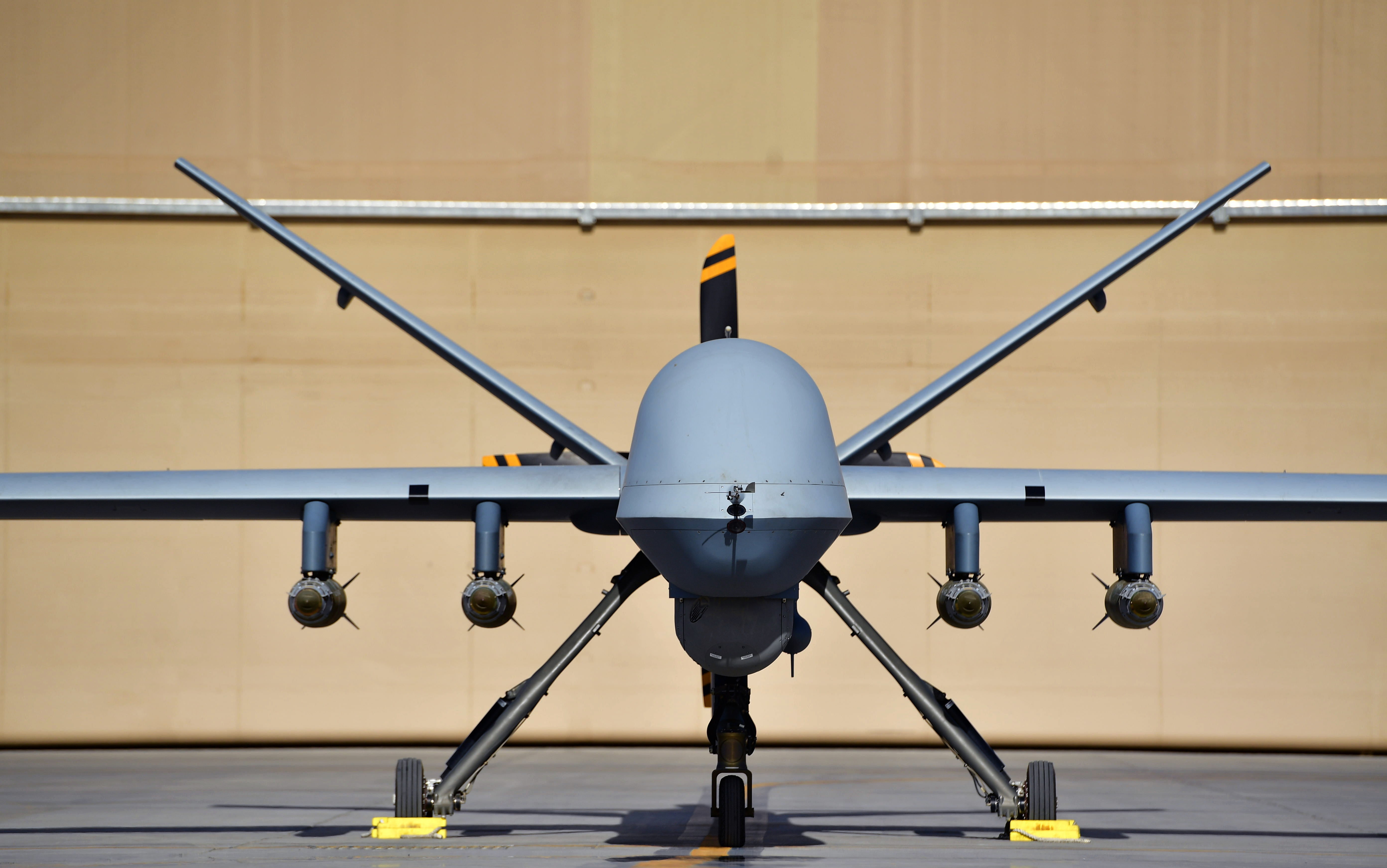
The traditional way we build aircraft is slow. It usually involves massive factories, decade-long development cycles, and supply chains that stretch across oceans. While that model worked for the 20th century, the modern world moves at a different speed. Whether it is a humanitarian crisis or a rapidly shifting defense situation, waiting weeks for a replacement part or months for a new fleet of aircraft is no longer an option. This is where Firestorm Labs enters the picture, and they are doing so with a philosophy that feels more like a Silicon Valley startup than a legacy aerospace giant.
Based in San Diego, California, Firestorm Labs was founded with a singular, ambitious goal: to democratize the air. They are not just interested in building drones; they are interested in building the ability to manufacture those drones anywhere, at any time, for a fraction of the cost. By combining advanced additive manufacturing with modular design, they are turning hardware into something that feels as flexible and upgradable as a piece of software.
The Problem of the "Long Logistics Tail"
To understand why Firestorm Labs is making waves, you first have to understand the bottleneck of modern logistics. In professional circles, people often say that "amateurs talk tactics, but professionals talk logistics." If you are in a remote area and your equipment breaks, you are at the mercy of a shipping schedule. You have to wait for a specific part to be boxed up in a central warehouse and flown halfway around the world.
Firestorm Labs is effectively cutting that "tail" off. Instead of shipping the finished product, they are enabling people to ship the digital files and the raw materials. It is a shift from centralized manufacturing to distributed production. This approach means that the person on the front lines—whether they are a first responder or a soldier—can have the exact tool they need for a specific mission without ever leaving their base of operations.
The Micro-Factory in a Container
The centerpiece of this revolution is something called the xCell. Imagine a high-tech factory that has been shrunken down and ruggedized until it fits inside one or two standard 20-foot shipping containers. This isn't just a workshop; it is a semi-automated production hub.
Inside these containers, Firestorm has integrated industrial-grade 3D printing technology. These machines don't just print prototypes; they produce flight-ready airframes using high-strength polymers. Because the xCell can operate off-grid using generators or battery arrays, it can be dropped into a desert, a jungle, or a disaster zone and be fully operational within 24 hours. It turns the idea of a factory from a permanent building into a mobile asset that follows the mission.
Hardware as a Service
One of the most interesting aspects of the Firestorm philosophy is how they treat their aircraft. Their flagship model, the Tempest, is designed with a "building block" mentality. It features a patent-pending interconnecting design that allows a single operator to assemble or reconfigure the drone in under ten minutes.
Drone technology has traditionally been very rigid—you buy a surveillance drone, and that is all it can do. But with Firestorm’s modular architecture, you can swap the nosecone for a different camera, change the wings for a longer flight time, or even switch the engine from a quiet propeller to a high-speed turbojet. This modularity is governed by their "OCTRA" flight controller, a universal brain that can manage vehicles ranging from 10 pounds to over 1,000 pounds. This prevents "vendor lock-in" and ensures that as new sensors or software are developed, the existing hardware can be updated instantly.
Scaling for the Future
The numbers behind this approach are staggering. Firestorm claims that they can produce aircraft at one-fifth the cost of traditional methods and ten times the speed. A single xCell unit is capable of churning out up to 50 mission-ready Group 2 aircraft per month. When you multiply that by a network of xCells distributed globally, you start to see a path toward "Affordable Mass"—the ability to deploy hundreds or thousands of low-cost systems that are effective but also replaceable.
This hasn't gone unnoticed by the heavy hitters. Firestorm Labs recently secured a $100 million contract with the U.S. Air Force and has received significant backing from investors like Lockheed Martin Ventures and Google’s parent company, Alphabet. They are working with groups like the Air Force Special Operations Command to prove that this "print-on-demand" model is ready for the toughest environments on Earth.
Beyond the Battlefield
While much of the initial focus is on defense, the civilian applications for this technology are equally profound. In the aftermath of a massive earthquake or hurricane, traditional supply lines are often the first things to collapse. An xCell unit dropped into a disaster zone could be used to manufacture medical delivery drones, specialized tools for clearing debris, or even components to repair local water systems on the spot.
By moving the point of production to the point of need, Firestorm is creating a more resilient world. They are proving that we don't have to be limited by what is currently in the warehouse. If you can dream it, and you have the digital file, you can build it right where you stand.
Conclusion
Firestorm Labs is a perfect example of what happens when you stop looking at old problems with old eyes. They realized that the future of the sky isn't just about better flight; it is about better building. By merging 3D printing, modular design, and mobile factories, they have created a system that is faster, cheaper, and more adaptable than anything that came before it. As we move further into 2026, it is clear that the "Firestorm way" of distributed manufacturing is no longer just an experiment—it is the new standard for an age that demands speed above all else.
Frequently Asked Questions
-
What is the "Tempest" drone?
The Tempest is Firestorm’s flagship modular aircraft. It has a seven-foot wingspan, can carry up to ten pounds of payload, and is designed to be launch-ready in under ten minutes. Its biggest advantage is that its airframe can be 3D printed in about nine hours. -
How does the xCell factory work?
The xCell is a "factory-in-a-box" housed in shipping containers. It uses semi-automated 3D printing and robotic assembly to produce drones and spare parts on-site, allowing for manufacturing "at the edge" without a traditional supply chain. -
What is OCTRA?
OCTRA stands for "One Chip To Rule Them All." It is Firestorm’s universal flight controller and mission computer. It is designed to be open-architecture, meaning it can easily integrate with third-party software and sensors from different companies. -
Is 3D printing strong enough for an airplane?
Yes. Firestorm uses industrial-grade additive manufacturing (specifically HP’s Multi Jet Fusion technology) to create airframes from high-performance polymers. These materials are incredibly durable and can withstand the stresses of high-speed flight and harsh weather. -
Who owns Firestorm Labs?
Firestorm Labs is a private company founded by Dan Magy and a team of aerospace experts. It is backed by several prominent venture capital firms, including Lockheed Martin Ventures and NEA.
 Arabic
 English
 French
 Spanish
 Portuguese
 Deutsch
 Turkish
 Dutch
Dutch
 Italiano
 Russian
 Romaian
 Portuguese (Brazil)
 Greek
Greek
