


 Pro Benefits
 Σχετικά
 Όρους
Όρους
 Ιδιωτικότητα
 Child Safety & Protection
 Ειδοποιήσεις
 Ayrush Global It Services Pvt Ltd
What Is Bike Mileage and How Is It Calculated
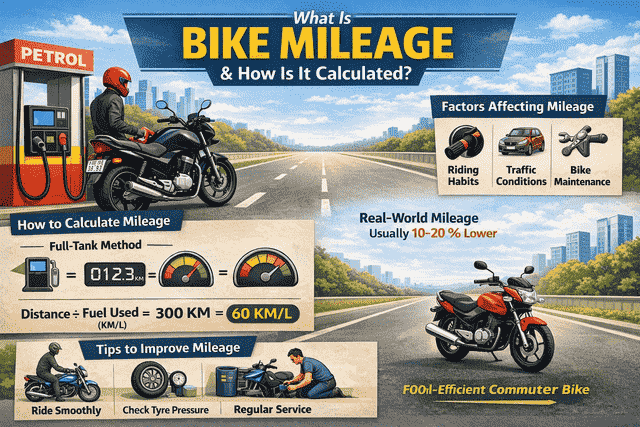
Bike mileage refers to the distance a motorcycle can travel using one litre of fuel. It is usually measured in kilometres per litre (km/l) and is one of the most important factors buyers consider, especially for daily commuting. In a country like India, where fuel prices and traffic conditions directly affect running costs, good mileage often matters more than speed or design.
Mileage figures shared by manufacturers are tested under controlled conditions. However, real-world mileage can vary depending on riding style, road conditions, traffic, and maintenance. Understanding how mileage works helps riders set realistic expectations and manage fuel expenses better over time.
How to Calculate Bike Mileage in Real Life
To Calculate Mileage of Bike, the most practical method is the full-tank technique. Start by filling the fuel tank completely and reset the trip meter or note the odometer reading. Ride the bike as you normally would. After some distance, refill the tank and note how many litres of fuel were used along with the distance covered. Dividing the distance by the fuel consumed gives you the mileage.
For example, if your bike travels 300 kilometres and consumes 5 litres of petrol, the mileage comes out to 60 km/l. Repeating this process over multiple fuel cycles gives a more accurate average. This method reflects actual riding conditions, unlike laboratory-tested figures.
Factors That Affect Bike Mileage
Several elements influence how much mileage a bike delivers. Engine capacity is a major factor—smaller engines generally consume less fuel. Riding habits also matter a lot. Aggressive acceleration, riding at very high speeds, and frequent braking reduce fuel efficiency.
Traffic conditions play a role too. Stop-and-go city traffic lowers mileage compared to steady highway riding. Bike maintenance is equally important. Proper tyre pressure, clean air filters, timely oil changes, and a well-lubricated chain all contribute to better fuel efficiency. Even extra weight, such as heavy luggage or accessories, can slightly reduce mileage.
Claimed Mileage vs Real-World Mileage
Manufacturers test bikes under ideal conditions, which is why claimed mileage often looks higher. In real usage, mileage is usually 10–20% lower depending on how and where the bike is ridden. This difference is normal and not a defect. Riders should focus on real-world owner reviews and long-term usage data rather than only brochure numbers.
When people search online for Which Bike Has Highest Mileage, the answer usually points to low-capacity commuter motorcycles designed specifically for efficiency. These bikes are tuned for smooth power delivery, lightweight construction, and relaxed riding, all of which help maximise fuel economy in everyday use.
Tips to Improve Bike Mileage
Improving mileage does not always require changing the bike. Simple habits make a big difference. Riding at a steady speed, avoiding sudden throttle inputs, and shifting gears smoothly can noticeably improve fuel efficiency. Keeping the engine in the optimal RPM range instead of revving too high helps conserve fuel.
Regular servicing ensures that the engine runs efficiently. Checking tyre pressure every few weeks, using the recommended engine oil, and replacing worn-out parts on time all support consistent mileage. Planning routes to avoid heavy traffic where possible can also reduce fuel wastage.
Mileage Considerations for Second-Hand Buyers
Mileage becomes even more important when evaluating Used Bikes in India. A bike with poor maintenance history may deliver much lower mileage than expected, even if the model is known for efficiency. Prospective buyers should test ride the bike, check service records, and if possible, calculate mileage over a few days before making a decision.
A well-maintained used bike can still offer excellent fuel economy and low running costs, making it a smart choice for budget-conscious riders. Paying attention to mileage helps ensure that long-term expenses remain manageable.
Conclusion
Bike mileage is not just a number—it directly affects your daily fuel spending and overall ownership experience. By understanding what mileage means, how it is calculated, and what factors influence it, riders can make informed decisions and adopt habits that improve efficiency. Whether buying a new motorcycle or evaluating used options, keeping mileage in focus ensures better value and smoother rides in the long run.
 Greek
Greek
 English
 Arabic
 French
 Spanish
 Portuguese
 Deutsch
 Turkish
 Dutch
Dutch
 Italiano
 Russian
 Romaian
 Portuguese (Brazil)
