


 Pro Benefits
 О нас
О нас
 Условия использования
 Конфиденциальность
 Child Safety & Protection
 Оповещения
 Ayrush Global It Services Pvt Ltd
Understanding Aircraft-to-Ground VHF Communication
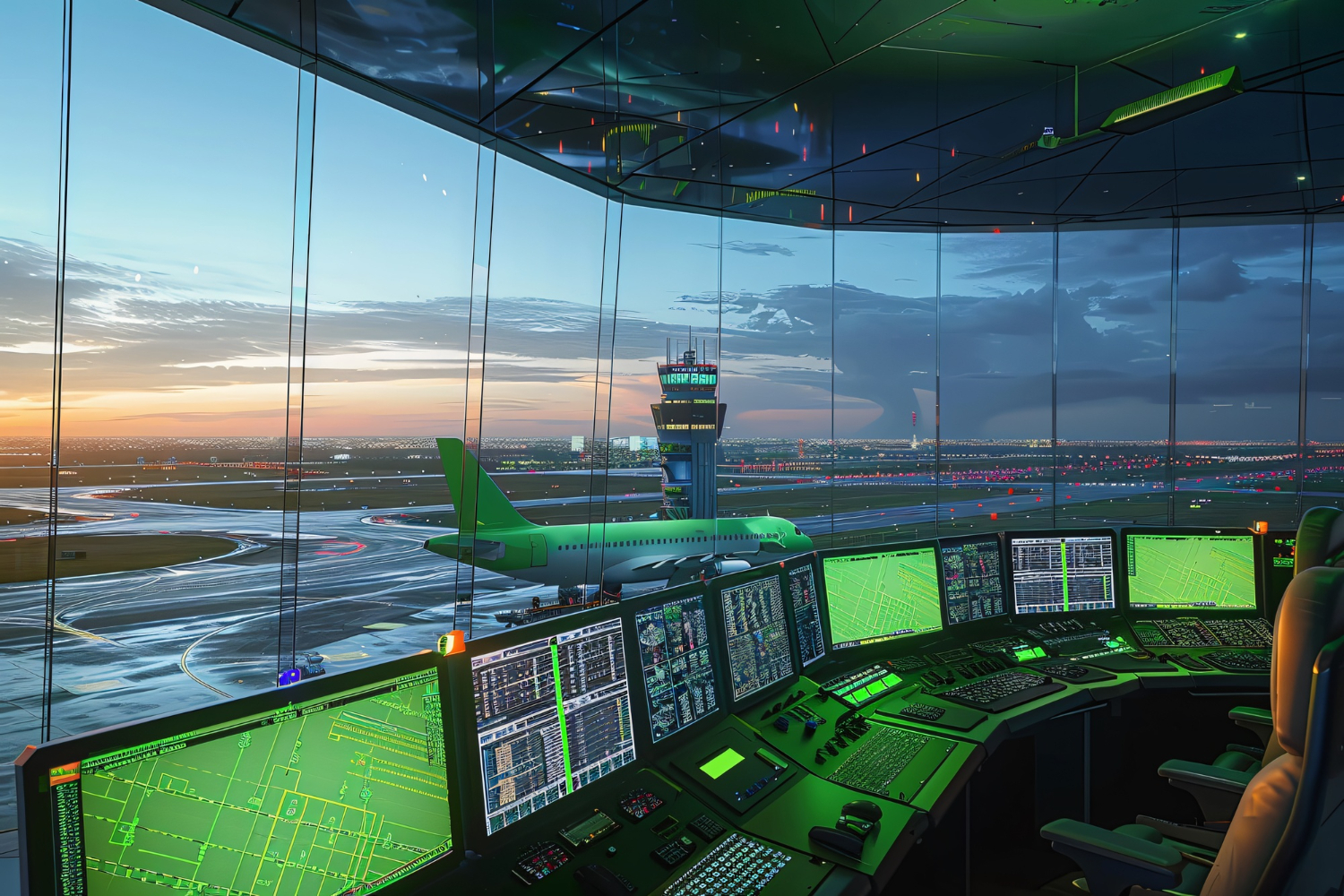
From the moment an aircraft pushes back from the gate until it arrives at its destination, a constant stream of conversation connects the pilots to the ground. This dialogue, happening over Very High Frequency (VHF) radio, is the invisible force that ensures safety and order in the skies. It is the primary way air traffic controllers manage the complex dance of thousands of flights every single day.
While modern aviation is filled with high-tech satellite navigation and digital data links, this voice communication system remains the cornerstone of air traffic management. Its principles are straightforward, yet its application is critical for flight safety. Understanding how it works provides a fascinating look into the operational heart of the aviation industry.
This article will break down the essentials of aircraft-to-ground VHF communication. We will explore the technology behind VHF in Aviation, its role in air traffic control, and its line-of-sight limitations. We will also examine how this vital system is meticulously planned and executed in the demanding environment of Airport engineering Qatar.
What is VHF Communication?
VHF stands for Very High Frequency, referring to the band of radio waves between 30 and 300 megahertz (MHz). For aviation, a specific slice of this band—from 118.000 to 136.975 MHz—is reserved exclusively for voice communication. This band is divided into thousands of channels, each assigned to a specific air traffic control sector or airport service.
When a pilot tunes their radio, they are selecting one of these channels to speak with a specific controller. For instance, an airport might use one frequency for ground control (directing planes on taxiways), another for the tower (clearing flights for takeoff and landing), and a third for the Automated Terminal Information Service (ATIS), which provides a looped broadcast of weather and runway information.
The system uses Amplitude Modulation (AM). Unlike the FM radio in your car, AM has a unique safety feature: if two people transmit at once, the signals clash and create a loud squeal. This alerts everyone on the frequency that a message was blocked, preventing a weaker emergency call from being silently overridden by a stronger one.
The Principle of Line-of-Sight
The most important characteristic of VHF in Aviation is that its radio waves travel in a straight line. This is called line-of-sight propagation. For a pilot to talk to a controller, there must be an unobstructed path between the aircraft’s antenna and the ground station’s antenna.
This physical limitation has significant implications for communication range. An aircraft on the ground might only be able to communicate with a tower a few miles away before the curvature of the Earth blocks the signal. However, an aircraft at a high altitude has a much farther horizon and can "see" a ground antenna from hundreds of miles away. The higher you fly, the farther you can talk.
This line-of-sight limitation is actually a major advantage for global air traffic management. Because the signals do not travel over the horizon, the same frequencies can be reused by different airports around the world without interfering with one another. This "frequency reuse" is essential for making the limited number of available channels work for a global industry.
The Role in Air Traffic Management (ATM)
Aircraft-to-ground communication is the lifeblood of ATM. The system is designed to provide seamless control as an aircraft travels through different phases of flight and regions of airspace. Each region, or "sector," is managed by a controller using a dedicated VHF frequency.
The journey involves a series of handoffs:
- Ground Control: The pilot requests permission to push back and taxi to the runway.
- Tower Control: As the aircraft approaches the runway, the pilot is handed off to the tower controller, who provides clearance for takeoff.
- Departure/TRACON: Once airborne, the pilot contacts the departure controller (often located at a Terminal Radar Approach Control facility, or TRACON), who guides the aircraft through the busy airspace around the airport.
- En Route Control (Center): For the long-haul portion of the flight, the pilot communicates with a series of en route controllers at Air Route Traffic Control Centers (ARTCC), each managing a large sector of airspace.
- Approach and Landing: As the aircraft nears its destination, the process reverses, moving from Center to Approach, and finally to the destination Tower and Ground controllers.
This structured communication ensures that every aircraft is under positive control, with a controller responsible for maintaining safe separation from other planes at all times. The instant nature of voice communication is critical for issuing immediate instructions to avoid traffic or respond to changing weather.
A Focus on Infrastructure: Airport Engineering in Qatar
While the principles of VHF are universal, deploying a flawless system in one of the world's most congested airspaces requires exceptional engineering. The work done in the field of Airport engineering Qatar provides a powerful case study in designing and implementing a robust communications network for a major international hub like Hamad International Airport (HIA).
Qatar's location at a global crossroads means its airspace handles a high density of traffic. For engineers, this translates into a need for a communication system with 100% reliability and zero gaps in coverage.
Designing for Total Coverage
On a large, complex airport surface like HIA's, terminal buildings, hangars, and other structures can create "radio shadows," blocking VHF signals. A pilot in a dead spot would be unable to receive critical taxi instructions, creating a serious safety risk.
To prevent this, engineers in Qatar utilize advanced radio frequency (RF) propagation modeling software. This allows them to simulate how VHF signals will travel across the airport and identify potential dead zones before construction even begins. Based on these models, they strategically place multiple interconnected antenna sites around the airport to guarantee seamless coverage across every inch of the aprons and taxiways.
Integrating VHF with Advanced Systems
The control tower at HIA is a hub of technological integration. While controllers still use a microphone to talk, their VHF systems are part of a larger digital ecosystem. The Voice Communication and Control System (VCCS) is a touch-screen interface that combines all radio and telephone functions.
This system is integrated with radar and flight plan data. When a controller selects an aircraft on their screen, the VCCS can automatically highlight the correct frequency for that flight, reducing workload and minimizing the chance of human error. This level of integration, a key focus of Airport engineering Qatar, ensures that controllers can manage high traffic loads efficiently and safely.
Building for Unfailing Reliability
In aviation, system failure is not an option. A loss of communication, even for a few seconds, can have dire consequences. Therefore, the VHF infrastructure is designed with multiple layers of redundancy.
- Backup Systems: Every main radio has a "hot standby" backup that can take over instantly and automatically if a fault occurs.
- Power Resilience: The entire communication network, including remote antenna sites, is powered by uninterruptible power supplies (UPS) and backup generators, ensuring it remains fully operational during a city-wide power outage.
This focus on resilience ensures that the vital link between pilots and controllers is never broken.
Conclusion
Aircraft-to-ground communication is a perfect example of a technology that is simple in principle but profound in its importance. The system of VHF in Aviation, with its line-of-sight properties and structured use, is the fundamental safety layer that allows for the orderly flow of global air traffic. It provides the immediate, unambiguous connection needed to manage the dynamic environment of the sky.
As demonstrated by the sophisticated work in Airport engineering Qatar, the effectiveness of this technology relies on meticulous planning and robust infrastructure. By designing for total coverage, integrating systems, and building in layers of redundancy, engineers ensure that in the world of aviation, the human voice—the most critical tool for safety—is always heard loud and clear.
 Russian
 English
 Arabic
 French
 Spanish
 Portuguese
 Deutsch
 Turkish
 Dutch
Dutch
 Italiano
 Romaian
 Portuguese (Brazil)
 Greek
Greek
