


 Pro Benefits
 Über
Über
 Bedingungen
 Datenschutz
 Child Safety & Protection
 Benachrichtigungen
 Ayrush Global It Services Pvt Ltd
Organic Farming in India: Growth, Opportunities, and Constraints
Agriculture has always been the backbone of the Indian economy, supporting a large portion of the population and contributing significantly to national income. Over the years, the excessive use of chemical fertilizers, pesticides, and synthetic inputs has led to serious concerns such as soil degradation, water pollution, declining biodiversity, and health issues. In response to these challenges, organic farming has emerged as a sustainable alternative. Organic farming focuses on natural methods of cultivation that maintain ecological balance and promote long-term agricultural sustainability.
Organic farming in India has gained momentum due to increasing awareness among consumers, farmers, and policymakers about the benefits of chemical-free food and environmentally friendly farming practices. This blog explores the growth of organic farming in India, the opportunities it presents, and the constraints that hinder its widespread adoption.
Understanding Organic Farming
Organic farming is an agricultural system that relies on natural inputs and ecological processes rather than synthetic chemicals. It emphasizes the use of organic manures, compost, green manure, crop rotation, biological pest control, and traditional farming knowledge. The primary objective of organic farming is to enhance soil fertility, protect the environment, and produce healthy, nutritious food.
In India, organic farming is deeply rooted in traditional agricultural practices that were followed for centuries before the introduction of chemical-based farming during the Green Revolution. Today, organic farming combines traditional wisdom with modern scientific knowledge to create a balanced and sustainable agricultural system.
Growth of Organic Farming in India
The growth of organic farming in India has been significant over the past two decades. Several factors have contributed to this growth, including rising health consciousness, environmental concerns, and supportive government initiatives. India ranks among the top countries in terms of the number of organic producers, with millions of farmers practicing organic agriculture either fully or partially.
States such as Sikkim, which became the first fully organic state in India, have demonstrated the potential of organic farming at a large scale. Other states like Maharashtra, Madhya Pradesh, Rajasthan, Karnataka, and Kerala have also made notable progress in promoting organic agriculture. The expansion of domestic and international markets for organic products has further encouraged farmers to adopt organic methods.
Organic farming in India has also gained recognition due to its role in addressing climate change. Organic practices improve soil carbon content, reduce greenhouse gas emissions, and enhance resilience to extreme weather conditions. These benefits have positioned organic farming as a key component of sustainable agricultural development.
Government Support and Policy Framework
The Indian government has introduced various schemes and programs to promote organic farming across the country. Initiatives such as the Paramparagat Krishi Vikas Yojana (PKVY), Mission Organic Value Chain Development for North Eastern Region (MOVCDNER), and National Programme for Organic Production (NPOP) aim to support farmers through training, certification, and financial assistance.
These policies focus on cluster-based organic farming, capacity building, and market linkages. Certification systems have also been established to ensure the quality and authenticity of organic products. While government support has played an important role in the growth of organic farming in India, effective implementation and awareness at the grassroots level remain crucial.
Read More - 🧠 How Can a Teacher Training Course Help You Become a Certified Educator?
Opportunities in Organic Farming in India
Environmental Sustainability
One of the greatest opportunities offered by organic farming is environmental protection. Organic practices reduce soil erosion, improve water retention, and promote biodiversity. The use of natural inputs minimizes pollution and helps restore ecological balance. In a country like India, where land and water resources are under severe pressure, organic farming offers a sustainable solution.
Health and Nutrition
Organic food is free from harmful chemical residues, making it safer and healthier for consumption. With increasing concerns about lifestyle diseases and food safety, consumers are showing a growing preference for organic products. This shift in consumer behavior creates new opportunities for organic farming in India.
Economic Opportunities for Farmers
Organic farming can reduce dependency on costly chemical inputs, thereby lowering production costs in the long run. Premium prices for organic products in domestic and export markets can improve farmers’ income. Additionally, organic farming encourages diversification through mixed cropping, livestock integration, and value-added products, which can enhance financial stability.
Employment Generation
Organic farming is labor-intensive compared to conventional farming. It creates employment opportunities in rural areas through activities such as compost preparation, farm management, processing, certification, and marketing. This makes organic farming a valuable tool for rural development and livelihood generation.
Export Potential
India has strong potential in the global organic market due to its diverse agro-climatic conditions and traditional farming practices. Organic products such as cereals, pulses, spices, tea, coffee, and fruits are in high demand internationally. Strengthening organic farming in India can help the country expand its presence in global markets.
Constraints of Organic Farming in India
Despite its benefits, organic farming in India faces several challenges that limit its widespread adoption.
Low Initial Yields
During the transition period from conventional to organic farming, farmers often experience lower yields. This can discourage small and marginal farmers who depend on immediate returns for their livelihood. The lack of awareness about long-term benefits further adds to this challenge.
Certification Challenges
Organic certification is essential for marketing products as organic, but the process can be complex, time-consuming, and costly. Small farmers often find it difficult to comply with certification requirements, which restricts their access to premium markets.
Limited Market Access
While demand for organic products is increasing, organized markets and supply chains are still underdeveloped in many regions. Farmers may struggle to find reliable buyers, leading to price fluctuations and income uncertainty.
Knowledge and Training Gaps
Successful organic farming requires specialized knowledge and skills related to soil management, pest control, and crop planning. Many farmers lack access to proper training and technical guidance, which affects productivity and confidence in organic practices.
Infrastructure and Input Availability
The availability of quality organic inputs such as compost, bio-fertilizers, and bio-pesticides is limited in some areas. Inadequate infrastructure for storage, processing, and transportation further constrains the growth of organic farming in India.
Read More - Operation Theatre Tech: Is This Your Dream Job
Role of Education and Training
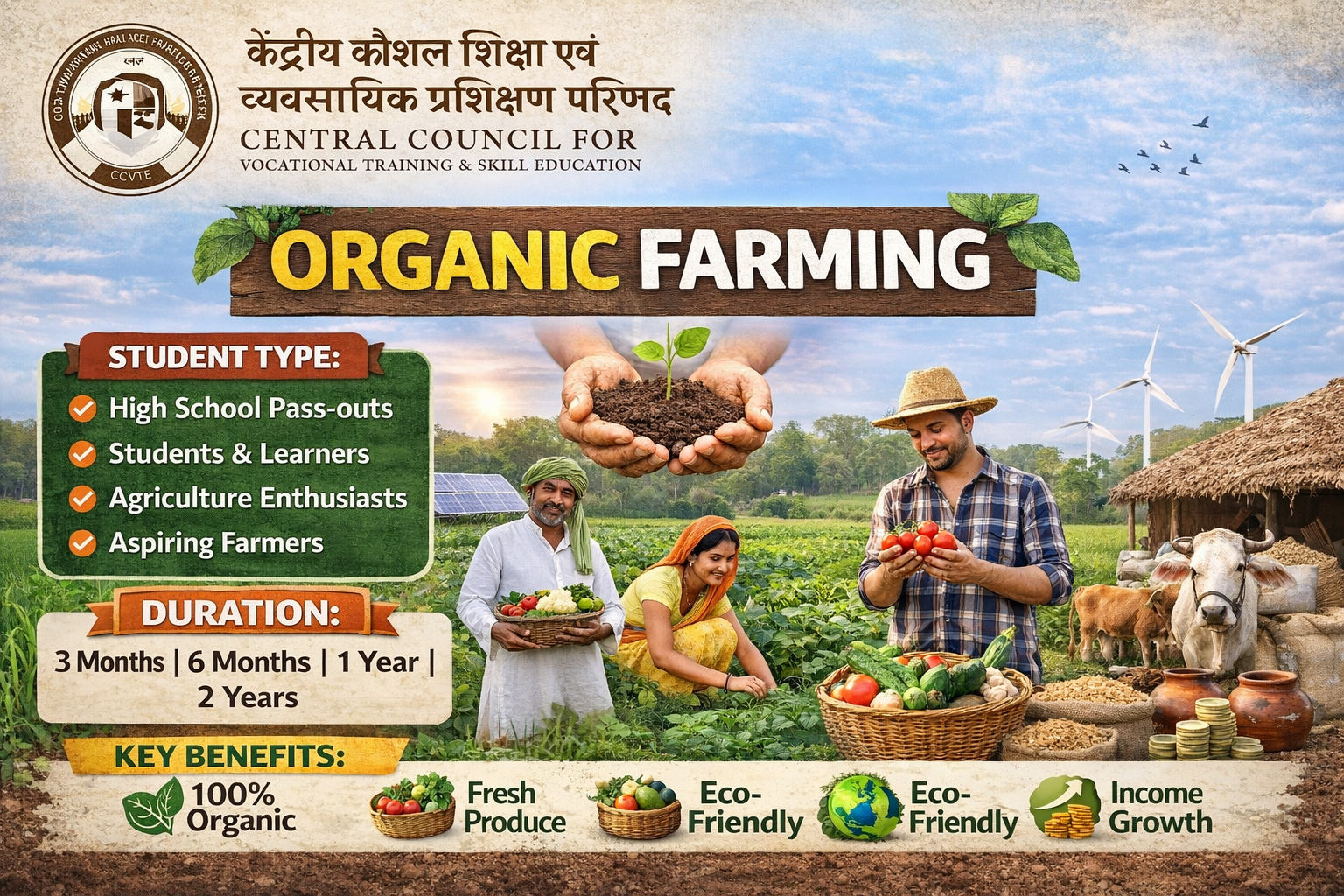
Education and training play a crucial role in overcoming the challenges of organic farming. Structured learning programs help individuals understand organic principles, farming techniques, and sustainability concepts. Courses related to organic farming are often designed with flexible learning durations such as 3 months, 6 months, 1 year, and 2 years to suit different learning needs.
Eligibility for such programs is generally open to candidates who have completed High School, making them accessible to a wide audience including students, farmers, and agriculture enthusiasts. Knowledge gained through education empowers learners to adopt organic farming practices effectively and responsibly.
Future Prospects of Organic Farming in India
The future of organic farming in India appears promising. Growing consumer awareness, supportive policies, and environmental concerns are likely to drive further expansion. Technological advancements in organic inputs, digital marketing platforms, and farmer cooperatives can help address existing constraints.
Integrating organic farming with sustainable development goals can strengthen food security, environmental conservation, and rural livelihoods. With proper planning, research, and collaboration among stakeholders, organic farming in India can become a mainstream agricultural practice.
Conclusion
Organic farming represents a sustainable pathway for Indian agriculture by balancing economic, environmental, and social objectives. The growth of organic farming in India highlights its potential to address pressing challenges such as soil degradation, climate change, and food safety. While opportunities in terms of health, income, and environmental protection are substantial, constraints related to certification, market access, and knowledge must be addressed.
By investing in education, training, infrastructure, and policy support, organic farming can play a transformative role in shaping the future of agriculture in India.
Frequently Asked Questions (FAQs)
1. What is the main objective of organic farming in India?
The main objective of organic farming in India is to promote sustainable agriculture by improving soil health, conserving natural resources, protecting the environment, and producing safe and nutritious food without the use of synthetic chemicals.
2. What challenges do farmers face when adopting organic farming?
Farmers face challenges such as low initial yields during the transition period, certification difficulties, limited market access, lack of technical knowledge, and inadequate infrastructure for organic inputs and marketing.
3. Who is eligible to learn about organic farming through structured programs?
Structured learning programs related to organic farming are generally open to candidates who have completed High School. These programs are available in flexible durations such as 3 months, 6 months, 1 year, and 2 years, making them suitable for learners with different goals and time commitments.

 English
 Arabic
 French
 Spanish
 Portuguese
 Turkish
 Dutch
Dutch
 Italiano
 Russian
 Romaian
 Portuguese (Brazil)
 Greek
Greek
