


 Pro Benefits
 About
About
 Termeni
 Confidențialitate
 Child Safety & Protection
 Notificări
 Ayrush Global It Services Pvt Ltd
How Scrum Master Training and Placement Can Boost Your Job Prospects
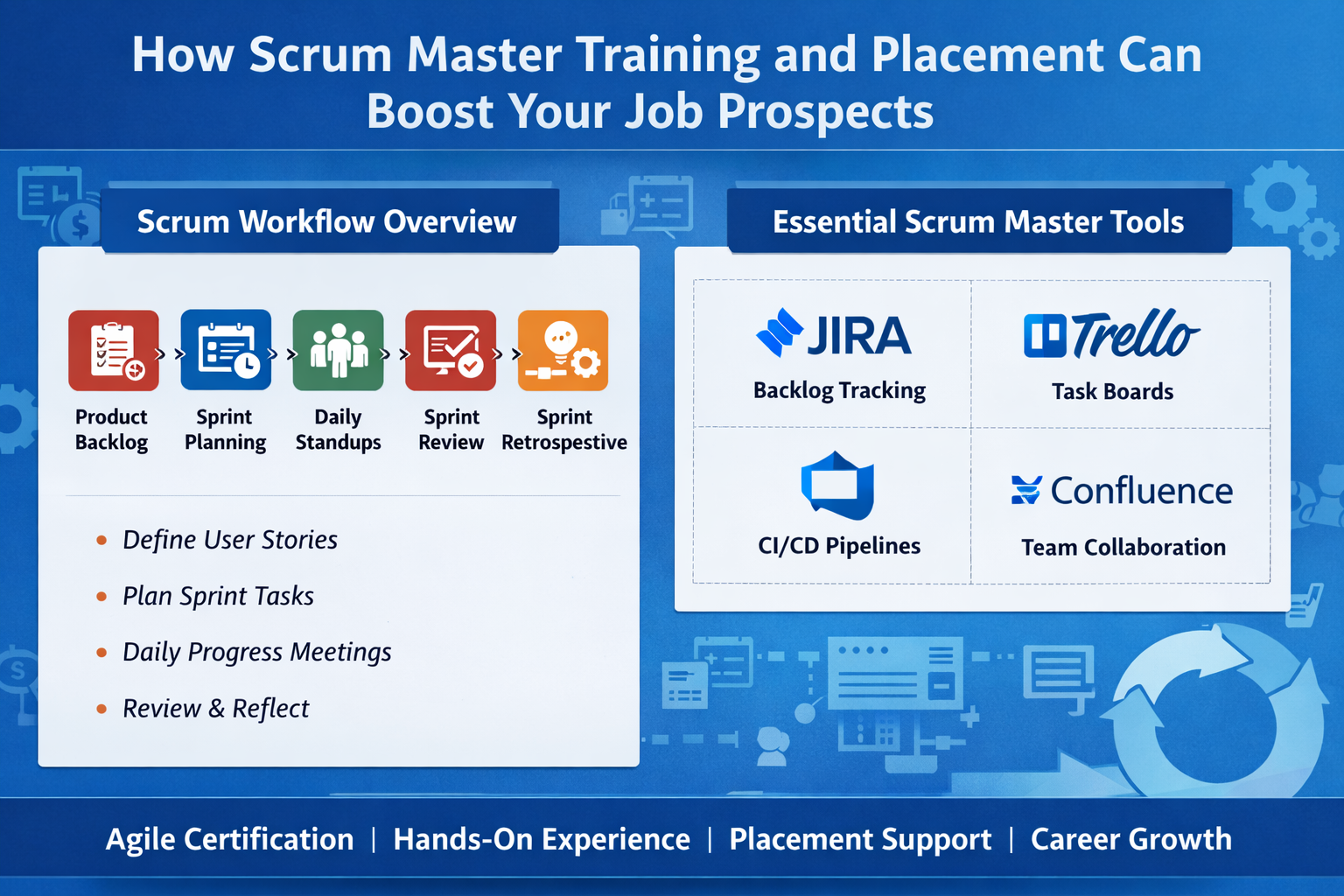
Scrum Master training and placement programs equip IT professionals with the knowledge and practical skills required to lead Agile projects. A Scrum Master facilitates Agile team processes, ensures adherence to Scrum principles, removes impediments, and supports product delivery. Such training provides structured learning, hands-on exercises, and placement assistance, increasing employability in enterprise environments that implement Agile frameworks. Completing Agile Scrum certification demonstrates validated expertise to employers, improving job prospects in IT and business domains.
What is Scrum Master Training?
Scrum Master training is a structured educational program designed to teach the principles, practices, and responsibilities of a Scrum Master within an Agile framework.
Key components of Scrum Master training include:
-
Understanding Scrum Frameworks: Roles, artifacts, and ceremonies.
-
Agile Principles: Lean thinking, iterative development, continuous improvement.
-
Project Facilitation Skills: Sprint planning, daily standups, sprint reviews, and retrospectives.
-
Team Coaching: Guiding teams in self-organization and effective communication.
-
Practical Tools: Usage of Jira, Trello, Azure DevOps, and Confluence for Agile project tracking.
Participants typically gain both theoretical knowledge and hands-on practice through simulations and real-world project exercises.
How Does Agile Scrum Work in Real-World IT Projects?
In enterprise IT projects, Agile Scrum is used to manage iterative development cycles and foster collaboration. Scrum Masters coordinate team activities, track progress, and remove blockers.
A typical workflow includes:
-
Backlog Creation: Product Owner defines user stories in the product backlog.
-
Sprint Planning: Scrum team commits to a set of tasks for a 2–4 week sprint.
-
Daily Standups: Brief meetings to track progress and address impediments.
-
Sprint Review: Demonstration of completed work to stakeholders.
-
Sprint Retrospective: Reflection on improvements for subsequent sprints.
Scrum Master training equips learners to handle these workflows efficiently, ensuring that Agile principles are properly applied.
Why is Scrum Master Training Important for Working Professionals?
Scrum Master training is important because it bridges the gap between theoretical Agile knowledge and practical enterprise implementation. Benefits include:
-
Enhanced Employability: Agile Scrum certification demonstrates verified skills to employers.
-
Structured Career Path: Supports transition into roles such as Scrum Master, Agile Coach, or Project Manager.
-
Improved Team Efficiency: Teaches facilitation and communication techniques used in real projects.
-
Exposure to Industry Tools: Provides hands-on experience with Jira, Rally, Trello, and Confluence.
-
Adaptability Across Industries: Widely applicable in finance, healthcare, IT services, and product development.
This training provides actionable skills that make professionals effective contributors in Agile environments.
What Skills Are Required to Learn Agile Scrum Master?
To effectively benefit from Scrum Master training, learners should develop the following skills:
|
Skill Category |
Examples |
|
Agile Knowledge |
Scrum framework, Kanban principles, Agile manifesto |
|
Facilitation Skills |
Leading standups, sprint reviews, retrospectives |
|
Project Tools |
Jira, Trello, Azure DevOps, Confluence |
|
Soft Skills |
Communication, conflict resolution, coaching |
|
Analytical Skills |
Metrics tracking, burn-down charts, sprint velocity calculation |
Acquiring these skills through Scrum master classes and practical exercises prepares learners for real-world project management challenges.
How is Agile Scrum Used in Enterprise Environments?
Enterprises use Agile Scrum to deliver software projects efficiently, adapt to changing requirements, and maintain high collaboration between teams. Typical applications include:
-
Software Development: Iterative delivery of features using sprints.
-
Product Management: Prioritizing features based on business value and feedback.
-
Process Improvement: Retrospectives identify workflow enhancements.
-
Cross-Functional Team Coordination: Aligning developers, testers, and stakeholders.
Industry-standard tools such as Jira and Confluence support backlog management, sprint tracking, and reporting metrics. Scrum Master training ensures professionals can navigate these enterprise processes effectively.
What Job Roles Use Agile Scrum Daily?
Several roles benefit from Scrum Master expertise:
-
Scrum Master: Facilitates Scrum ceremonies and ensures adherence to Agile principles.
-
Project Manager / Agile Coach: Guides teams across multiple projects.
-
Product Owner: Prioritizes product backlog and interacts with the development team.
-
Business Analyst: Works with Scrum Masters to refine requirements.
-
Software Developer / QA Engineer: Participates in Agile sprints, reviews, and retrospectives.
Understanding these roles and their interdependencies is a key outcome of Scrum Master training and placement programs.
What Careers Are Possible After Learning Scrum Master Training and Placement?
Completing Scrum Master training and earning Agile Scrum certification opens opportunities in several domains:
|
Career Role |
Description |
|
Certified Scrum Master (CSM) |
Manages Agile teams and implements Scrum practices |
|
Agile Coach |
Trains teams and organizations in Agile methodologies |
|
Project Manager |
Oversees multiple Agile projects and ensures timely delivery |
|
Product Owner |
Defines product vision and prioritizes backlog items |
|
Business Analyst |
Bridges business requirements with Agile project execution |
These roles are commonly found in IT services, product companies, finance, healthcare, and consultancy environments. Scrum Master training with placement support helps professionals transition into these positions more effectively.
How Scrum Master Training and Placement Improves Job Prospects
Scrum Master training with placement provides both skill development and career support. Benefits include:
-
Validated Expertise: Agile Scrum certification signals competency to recruiters.
-
Hands-On Experience: Real project simulations enhance practical understanding.
-
Placement Assistance: Partnerships with enterprises facilitate job interviews.
-
Networking Opportunities: Connect with mentors, trainers, and peers in Agile communities.
-
Continuous Skill Development: Ongoing access to learning materials ensures skill currency.
These factors collectively improve employability, helping professionals secure roles with competitive responsibilities and compensation.
Frequently Asked Questions (FAQ)
Q1: What is the best certification for Scrum Master?
A: The Certified Scrum Master (CSM) and Professional Scrum Master (PSM) certifications are widely recognized. Both validate knowledge of Agile principles, Scrum framework, and practical facilitation skills.
Q2: How long does Scrum Master training take?
A: Typical courses range from 2–5 days for classroom or online sessions, followed by hands-on practice and project exercises.
Q3: Are Agile Scrum classes suitable for beginners?
A: Yes, most beginner-friendly courses cover foundational Agile concepts and progressively introduce practical Scrum practices.
Q4: Can Scrum Master skills be applied outside IT?
A: Absolutely. Agile principles are adopted in finance, healthcare, marketing, and operations to manage iterative workflows and team collaboration.
Q5: Does Scrum Master training guarantee a job?
A: While training enhances skills and employability, placement assistance supports job search. Actual employment depends on market demand, interview performance, and candidate experience.
Q6: What tools are commonly taught in Scrum Master classes?
A: Jira, Trello, Azure DevOps, and Confluence are widely included for backlog management, sprint tracking, and reporting.
Key Takeaways
-
Scrum Master training equips professionals with practical skills to lead Agile teams.
-
Agile Scrum certification validates expertise for potential employers.
-
Hands-on experience with industry tools like Jira, Trello, and Confluence is essential.
-
Training and placement programs enhance job readiness and career transition.
-
Scrum Master roles are applicable across IT, finance, healthcare, and product management.
Explore H2K Infosys courses to gain hands-on experience and career support for Agile Scrum Master roles. Enroll now to advance your job prospects.
 Romaian
 English
 Arabic
 French
 Spanish
 Portuguese
 Deutsch
 Turkish
 Dutch
Dutch
 Italiano
 Russian
 Portuguese (Brazil)
 Greek
Greek
