


 Pro Benefits
 Sobre
Sobre
 Termos
 Privacidade
 Child Safety & Protection
 Notificações
 Ayrush Global It Services Pvt Ltd
Advances in Cesium Carbonate Research
Introduction to Cesium Carbonate Research
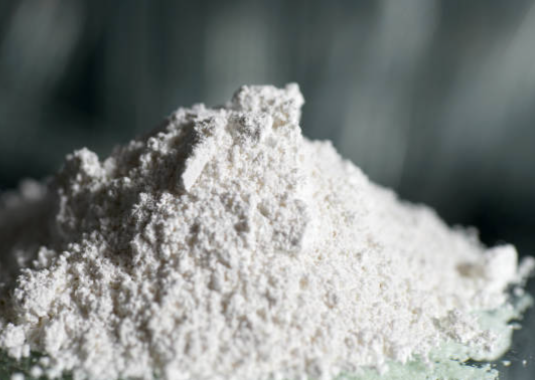
Cesium Carbonate is a versatile inorganic compound with a wide range of applications in chemistry and industry. Its chemical formula, Cs₂CO₃, reflects the combination of cesium and carbonate ions, which give it unique properties such as high solubility, strong basicity, and thermal stability. Recent research has expanded our understanding of Cesium Carbonate and revealed new ways to utilize it in organic synthesis, catalysis, and material science.
One major focus of modern studies is the role of Cesium Carbonate as a catalyst and base in organic reactions. Scientists have been exploring more efficient reaction mechanisms, novel catalytic systems, and environmentally friendly processes. Its ability to stabilize reactive intermediates and facilitate high-yield reactions has made it a topic of interest for both academic and industrial research.
In addition to traditional applications, Cesium Carbonate is now being investigated for innovative uses in electronics, energy storage, and sustainable chemical manufacturing. Researchers are also examining its environmental impact, safety, and potential for green chemistry applications, which highlights its relevance in modern scientific developments.
Chemical Properties Driving Research
Strong Basicity: Enables efficient deprotonation in diverse reactions.
High Solubility: Improves homogeneity in solution-phase reactions.
Thermal Stability: Maintains performance under high temperatures.
Eco-Friendly Potential: Offers safer alternatives to more hazardous bases in green chemistry initiatives.
These properties make Cesium Carbonate an attractive subject for ongoing scientific investigation and industrial application.
Recent Advances in Organic Synthesis
1. Enhanced Coupling Reactions
Cesium Carbonate has been shown to improve selectivity and yield in coupling reactions, including:
Suzuki-Miyaura Coupling
Heck Reactions
Sonogashira Coupling
Advanced studies have optimized solvent systems, reaction temperatures, and stoichiometry, demonstrating Cesium Carbonate’s effectiveness as a base and stabilizer in complex organic synthesis.
2. Novel Catalytic Systems
Research has explored its incorporation into both homogeneous and heterogeneous catalytic systems:
Supports high-efficiency catalysis in fine chemical production.
Reduces side reactions and improves product purity.
Integrates with advanced catalysts for multistep pharmaceutical syntheses.
3. Multistep Synthesis of Pharmaceuticals
Recent studies emphasize Cesium Carbonate’s role in preserving functional group integrity during multistep reactions. This makes it indispensable in synthesizing pharmaceutical intermediates and other high-value organic compounds.
Material Science and Electronic Applications
1. Glass and Ceramics
Advances in material science research show that Cesium Carbonate improves thermal resistance, transparency, and structural integrity in specialty glass and ceramics. Its inclusion in formulations enables higher-quality, durable products for industrial and technological applications.
2. Electronics and Optoelectronics
Innovative research explores Cesium Carbonate’s role in:
Organic light-emitting diodes (OLEDs)
Photocathodes for photoelectric devices
Energy storage devices and sensors
These studies highlight its ability to enhance electron transport and device efficiency, demonstrating its growing importance in modern electronics.
Environmental and Green Chemistry Research
Modern research emphasizes sustainable applications of Cesium Carbonate:
Enables reactions under milder conditions, reducing energy consumption.
Minimizes chemical waste, improving eco-efficiency.
Serves as a safer alternative to stronger, more hazardous bases.
These advances align with the increasing focus on environmentally conscious chemical practices and industrial sustainability.
Mechanistic Insights and Innovations
Deprotonation Efficiency: Facilitates formation of reactive intermediates in organic transformations.
Stabilization of Intermediates: Reduces side reactions and improves selectivity.
Thermal and Solvent Compatibility: Allows reactions under diverse conditions, expanding its practical applications.
Mechanistic studies are continuously improving our understanding of Cesium Carbonate’s role in chemical reactions, which aids in designing more efficient and sustainable synthetic processes.
Future Directions in Cesium Carbonate Research
Development of novel catalytic systems for high-value chemicals.
Exploration in organic electronics, optoelectronic materials, and energy storage.
Application in green chemical processes with minimal environmental impact.
Integration with advanced synthetic methodologies for pharmaceuticals and specialty materials.
Ongoing research ensures that Cesium Carbonate remains a key compound for innovation in both chemistry and industry.
FAQs About Cesium Carbonate Research
Q1: What are the latest uses of Cesium Carbonate in research?
A1: It is being used in advanced catalysis, organic synthesis, electronics, and green chemistry.
Q2: Why is Cesium Carbonate important for pharmaceutical synthesis?
A2: Its strong basicity and ability to stabilize intermediates make it ideal for multistep synthesis without degrading sensitive functional groups.
Q3: Is it environmentally safe to use Cesium Carbonate?
A3: When handled properly, it is safer than many other strong bases, and research focuses on sustainable applications.
Q4: How does it improve electronic devices?
A4: It enhances electron transport in devices like OLEDs, photocathodes, and sensors, improving performance and efficiency.
Conclusion
Research on Cesium Carbonate has significantly advanced our understanding of its applications in chemistry and industry. Its unique properties, including strong basicity, solubility, and thermal stability, make it a powerful tool in organic synthesis, catalysis, material science, and electronics. Recent innovations emphasize sustainable and environmentally friendly applications, demonstrating its versatility. By exploring new mechanisms, processes, and industrial uses, Cesium Carbonate continues to play a critical role in modern chemical research and technological advancement.

 English
 Arabic
 French
 Spanish
 Deutsch
 Turkish
 Dutch
Dutch
 Italiano
 Russian
 Romaian
 Portuguese (Brazil)
 Greek
Greek
