


 Pro Benefits
 About
About
 Termini e Condizioni
 Privacy
 Child Safety & Protection
 Notifiche
 Ayrush Global It Services Pvt Ltd
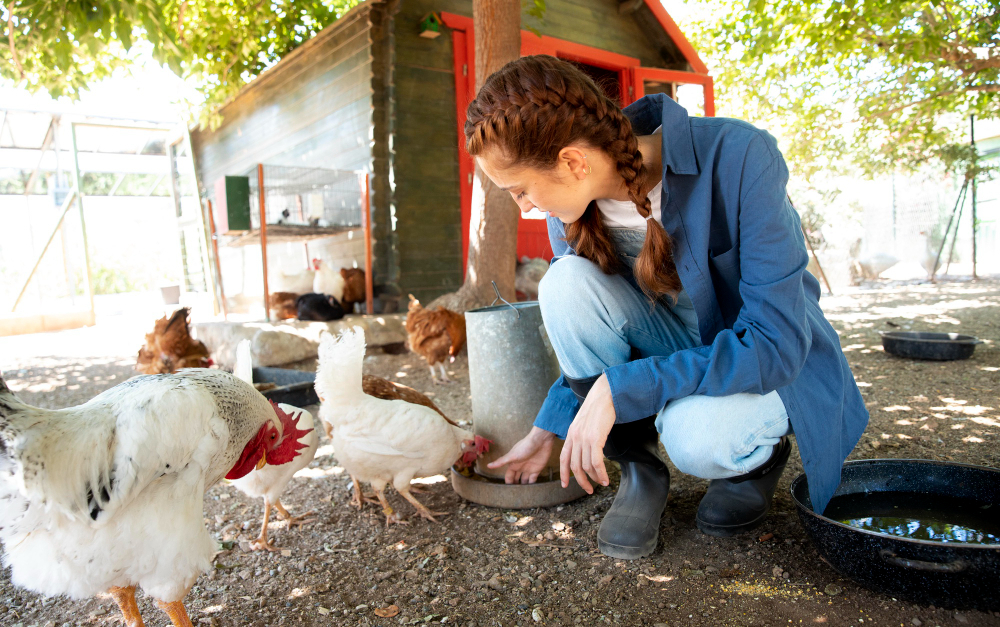
The poultry industry plays a vital role in meeting the global demand for affordable animal protein. However, poultry farmers today face increasing pressure from rising feed prices, labor shortages, disease risks, and higher energy and water costs. Traditional farming methods often struggle to keep up with these challenges, resulting in reduced efficiency and lower profit margins. To remain competitive, poultry producers must adopt smarter and more efficient practices. Modern poultry farming solutions have emerged as a practical answer, helping farms increase productivity while controlling operational expenses. By integrating technology, automation, and data-driven management, these solutions are transforming poultry farming into a more sustainable and profitable business.
What Are Poultry Farming Solutions?
Poultry farming solutions refer to a range of modern systems and practices designed to optimize every aspect of farm operations. These include improved housing infrastructure, automated feeding and watering systems, health management protocols, and digital monitoring tools. Unlike traditional approaches that rely heavily on manual labor and reactive decision-making, modern systems focus on prevention, precision, and efficiency. When combined as part of broader poultry solutions, these innovations create a more structured and predictable production environment. This integrated approach allows farmers to reduce waste, improve flock health, and maintain consistent performance throughout the production cycle.
Improved Housing and Environmental Control Systems
Housing conditions have a direct impact on bird health, growth rates, and feed efficiency. Modern poultry houses are designed with advanced environmental control systems that regulate temperature, humidity, ventilation, and lighting. By maintaining optimal conditions, birds experience less stress and better overall health, leading to improved weight gain and lower mortality rates. Energy-efficient ventilation and insulation also help reduce electricity and fuel costs. Automated lighting schedules support natural growth patterns, further enhancing productivity. These improvements not only boost output but also significantly lower the long-term operational costs associated with poor housing conditions.
Automated Feeding and Water Management for Cost Efficiency
Feed and water account for a large portion of poultry production expenses, making efficient management essential. Automated feeding systems ensure precise distribution of feed, reducing spillage and preventing overfeeding. This precision improves feed conversion ratios, meaning birds gain more weight using less feed. Similarly, modern watering systems deliver clean, consistent water while minimizing leakage and contamination. Automation reduces the need for manual labor and constant supervision, allowing farm staff to focus on higher-value tasks. Over time, these systems result in measurable cost savings and more predictable production outcomes.
Disease Prevention and Biosecurity Measures
Disease outbreaks can cause severe financial losses in poultry farming through increased mortality, treatment costs, and production disruptions. Modern biosecurity measures focus on prevention rather than response. Controlled access points, sanitation protocols, and routine health monitoring help reduce the risk of infection. Early detection tools allow farmers to identify potential health issues before they spread across the flock. By maintaining healthier birds, farms reduce medication expenses and avoid costly production setbacks. Effective disease prevention not only protects farm profitability but also supports food safety and regulatory compliance.
Data-Driven Farm Management and Performance Monitoring
Technology has become an essential part of modern poultry operations. Sensors and farm management software collect real-time data on temperature, feed intake, water usage, and bird performance. This information allows farmers to track key performance indicators such as growth rates, feed efficiency, and mortality levels. Data-driven insights help identify inefficiencies and enable timely adjustments to improve results. By making informed decisions based on accurate data, poultry producers can reduce waste, optimize resources, and maintain consistent productivity throughout each production cycle.
Labor Optimization and Operational Efficiency
Labor shortages and rising wages are ongoing challenges in the poultry sector. Automation and smart systems help reduce reliance on manual labor by streamlining routine tasks such as feeding, watering, and environmental control. With fewer repetitive tasks, farm workers can focus on supervision, maintenance, and quality control. Improved workflow and task scheduling increase overall efficiency without compromising production standards. As a result, farms can operate more smoothly with lower labor costs and improved output consistency.
Long-Term Financial and Competitive Benefits
Investing in modern poultry systems delivers long-term financial advantages. Improved productivity, reduced waste, and lower operating costs contribute to a stronger return on investment. Scalable systems allow farms of all sizes to expand operations without significantly increasing expenses. Efficient production also supports integration with downstream activities, including poultry processing solutions, helping businesses meet market demands and quality standards. By adopting modern practices, poultry producers enhance their competitiveness in both local and international markets while building a more stable and resilient business.
Conclusion: Smarter Farming for Sustainable Growth
Modern poultry farming solutions offer a clear path to improving productivity while reducing costs. Through better housing, automation, disease prevention, and data-driven management, poultry farms can achieve higher efficiency and profitability. As the industry continues to evolve, adopting integrated and technology-driven approaches is essential for long-term success. Smarter farming practices not only strengthen individual businesses but also contribute to a more sustainable and reliable global poultry industry.

 English
 Arabic
 French
 Spanish
 Portuguese
 Deutsch
 Turkish
 Dutch
Dutch
 Russian
 Romaian
 Portuguese (Brazil)
 Greek
Greek
