


 Pro Benefits
 Sobre
Sobre
 Termos
 Privacidade
 Child Safety & Protection
 Notificações
 Ayrush Global It Services Pvt Ltd
Online and Distance Courses or Regular College: Which Is Better for You?
After completing school or graduation, many students face an important question: should they choose online and distance courses or join a regular college? With changing learning options in India, this decision is no longer simple. Some students want campus life and daily classes, while others need flexibility due to work, family responsibilities, or exam preparation. Understanding the differences between these learning modes can help students choose the option that fits their goals and lifestyle.
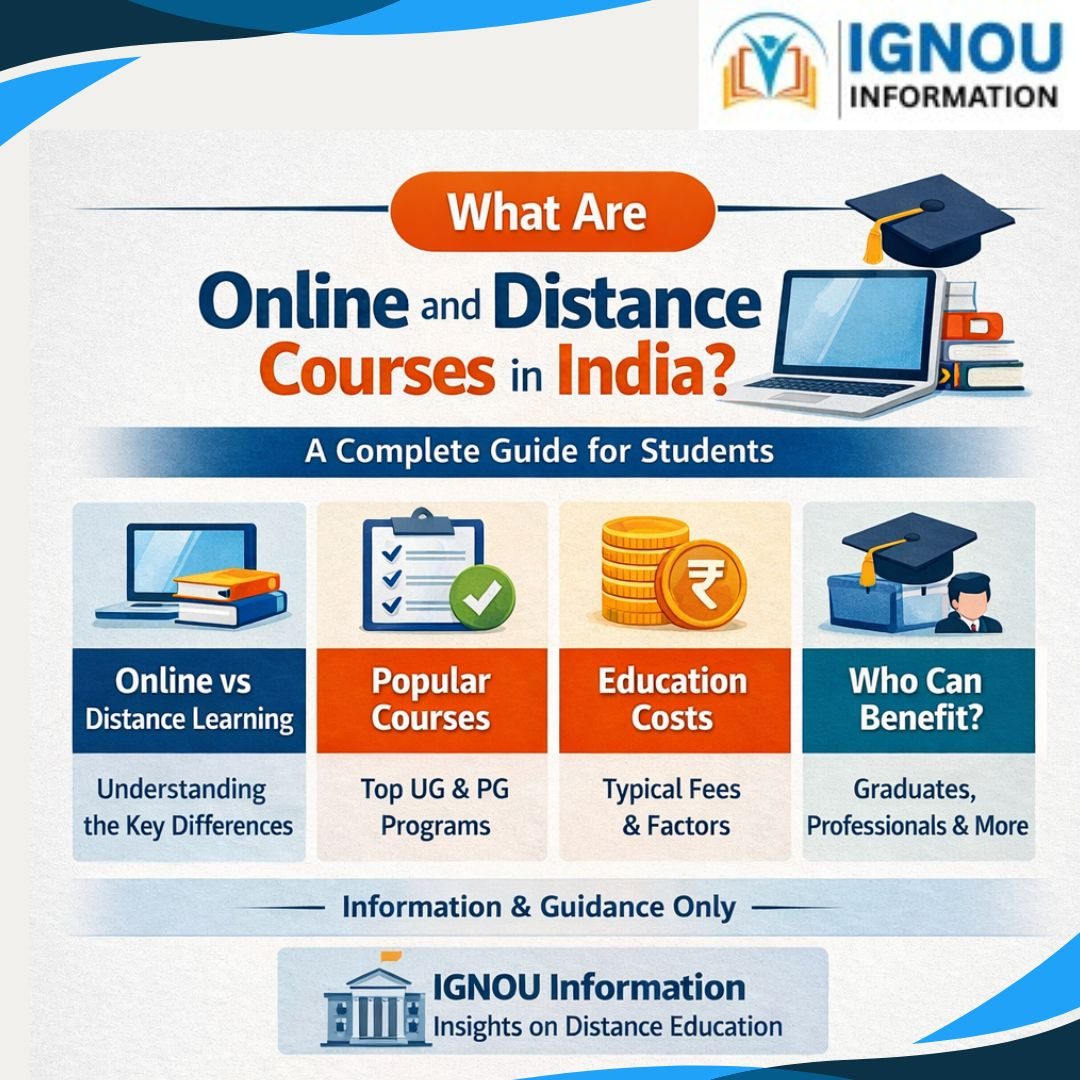
Understanding Online and Distance Courses
Online and distance courses allow students to study without attending physical classrooms every day. These courses are designed for learners who need flexibility in their schedules.
Distance learning and online courses work differently. Distance learning focuses on self-study using printed or digital materials, with exams conducted at designated centers. Online courses use internet-based platforms where students attend live or recorded classes, submit assignments online, and interact with teachers virtually. Both options follow structured academic systems offered by recognized institutions in India.
What Is Regular College Education?
Regular college education follows a traditional classroom model. Students attend daily lectures, participate in practical sessions, and interact with teachers and classmates on campus. This mode of learning suits students who prefer face-to-face teaching, group discussions, and a fixed routine. Campus activities, libraries, and peer interaction are important parts of regular college life.
Online Degree vs Distance Learning vs Regular College
When comparing online degree vs distance learning and regular college, the key differences are:
-
Learning format: Online learning uses digital classrooms, distance learning relies on self-study, and regular college involves in-person classes.
-
Flexibility: Online and distance courses offer flexible schedules, while regular college requires daily attendance.
-
Interaction: Regular college provides direct interaction, online learning offers virtual interaction, and distance learning has limited real-time engagement.
-
Study pace: Distance learning allows students to learn at their own pace, while online and regular college follow structured timelines.
Each option suits different types of learners.
Online and Distance Education Difference in Daily Life
The online and distance education difference becomes clearer when looking at real-life situations.
A working professional may choose online learning to attend classes after office hours. A student preparing for competitive exams may prefer distance learning to manage study time independently. On the other hand, a student who values campus exposure, group projects, and classroom discussions may find regular college more suitable.
Fees and Cost Considerations
One common concern among students is cost. Online distance education fees are generally lower than regular college fees, especially when accommodation, travel, and daily expenses are considered. Distance learning often has the lowest fees, while online courses may cost slightly more due to digital platforms and interactive tools. Regular colleges may involve higher overall expenses because of campus-related costs.
Courses and Career Goals
There are many online distance learning courses in India available at undergraduate and postgraduate levels, including BA, BCom, MA, MBA, and diploma programs. Regular colleges also offer similar programs with added campus exposure.
Students focused on skill development or career growth while working may find online and distance courses useful. Students aiming for research, hands-on training, or campus placements may prefer regular colleges. Choosing the right mode depends on career plans and learning preferences.
Choosing Between Distance Learning Schools and Regular Colleges
When exploring distance learning schools or regular colleges, students should check recognition, academic structure, and evaluation methods. Similarly, online distance learning universities follow specific guidelines for online education. Understanding how these institutions operate helps students make informed choices.
Who Should Choose Which Option?
-
Online and distance courses suit working professionals, competitive exam aspirants, and students needing flexible schedules.
-
Regular college suits students who prefer classroom learning, campus activities, and structured routines.
-
Students unsure about long-term goals may take time to evaluate learning styles before deciding.
Conclusion
Choosing between online and distance courses and regular college depends on individual needs, learning style, and life circumstances. Both options have advantages and limitations. By understanding how each mode works, considering flexibility, costs, and career goals, students can select the path that aligns best with their future plans. Making an informed choice ensures a smoother and more effective learning journey.
Read more: How Online and Distance Courses Can Boost Your Career in India
FAQs
Q. Are online and distance courses valid in India?
Yes, online and distance courses are valid when offered by recognized institutions that follow official education guidelines. Students should always check recognition and approval before choosing any program.
Q. What is the main difference between online and distance courses and regular college?
The main difference is the learning format. Regular college requires daily classroom attendance, while online and distance courses allow students to study remotely with flexible schedules.
Q. How do online degree vs distance learning options differ?
Online degrees involve digital classes, recorded lectures, and virtual interaction with teachers. Distance learning focuses more on self-study using printed or digital materials with limited real-time interaction.
Q. Who should choose online and distance courses instead of regular college?
Online and distance courses are suitable for working professionals, students preparing for competitive exams, and learners who need flexibility due to personal or location constraints.
Q. Are online distance education fees lower than regular college fees?
In most cases, online distance education fees are lower than regular college fees because students save on travel, accommodation, and campus-related expenses. However, fees vary by course and institution.
 Portuguese (Brazil)
 English
 Arabic
 French
 Spanish
 Portuguese
 Deutsch
 Turkish
 Dutch
Dutch
 Italiano
 Russian
 Romaian
 Greek
Greek
