


 Pro Benefits
 About
About
 Terms
Terms
 Privacy
 Child Safety & Protection
 Notifications
 Ayrush Global It Services Pvt Ltd
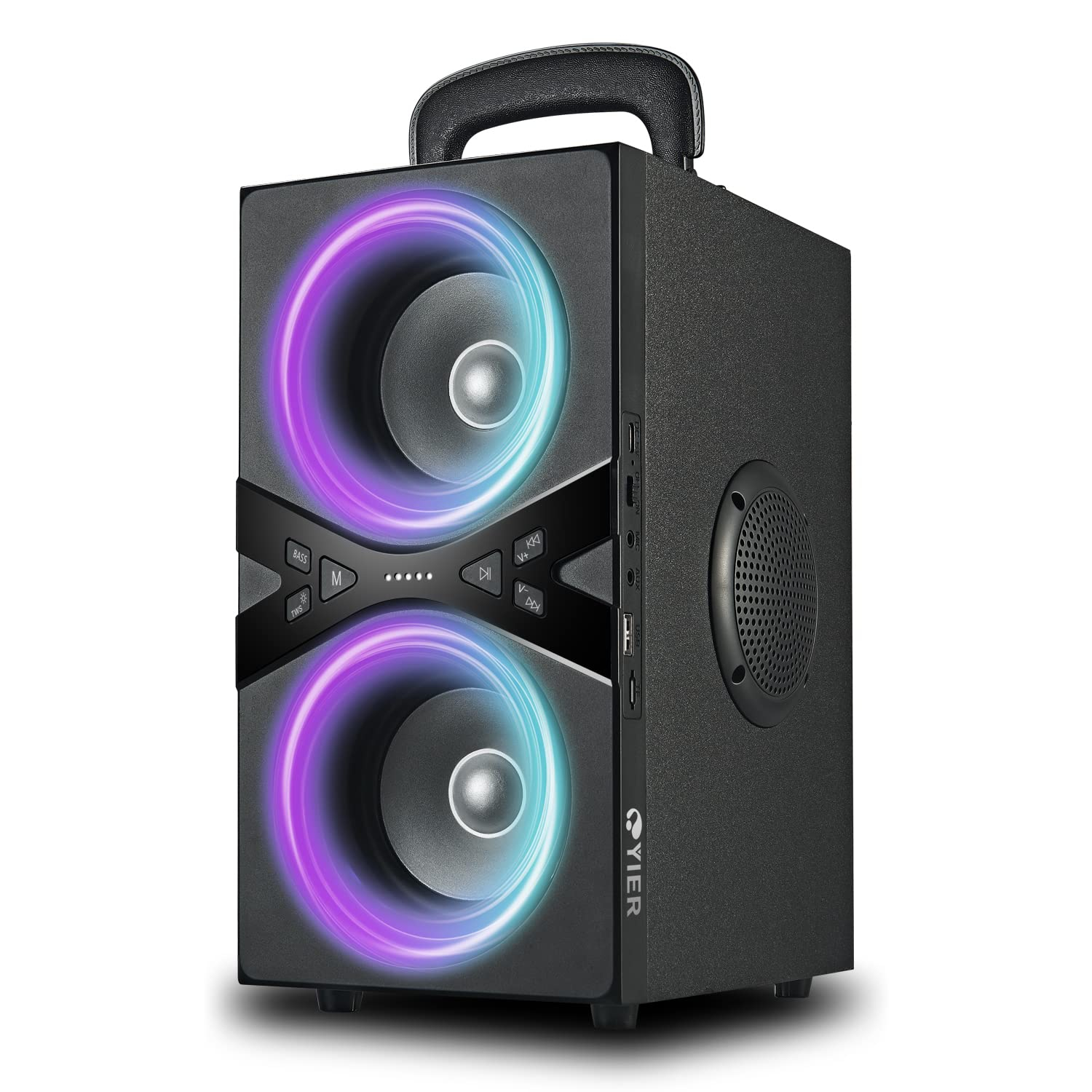
If you love music, movies, podcasts or gaming, the right speakers turn everyday listening into an experience. Headphones are intimate; speakers are shared. They fill a room, add physical presence to bass notes, and make voices feel lifelike. The trick is matching the speaker type to your space, taste, and gear. This practical guide walks you through the choices—bookshelf vs. floorstanding, active vs. passive, soundbars vs. satellites, Bluetooth vs. Wi-Fi—and helps you decode specs like frequency response, sensitivity, and amplification so you buy once and enjoy for years.
Start With Your Space (and Your Ears)
Before you look at watts and woofers, map your room and your listening habits.
-
Room size: Small bedrooms and home offices are perfect for bookshelf speakers or compact soundbars. Medium living rooms can handle larger bookshelf pairs or slim floorstanders. Large, open spaces benefit from floorstanding towers and a subwoofer.
-
Listening distance: Nearfield (2–4 ft) at a desk calls for small, accurate speakers. Couch distance (6–10 ft) wants wider dispersion and more low-end.
-
Content mix: If it’s 80% music, prioritize stereo imaging and midrange clarity. If it’s mostly movies and sports, focus on dialogue intelligibility and dynamic punch. Gamers should consider precise positional cues.
-
Neighbors: If thin walls are a concern, choose speakers with good low-end control and consider a smaller subwoofer or none at all to keep bass from traveling.
Active vs. Passive: Which Is Right for You?
-
Active (powered) speakers have built-in amplifiers. They’re plug-and-play for desks and simple living-room rigs: fewer boxes, matched amps, and often built-in DACs, Bluetooth, or Wi-Fi.
-
Passive speakers need an external amplifier or AV receiver. They’re ideal for upgrade paths: swap amps, add channels, and customize the sound signature over time.
If you want simplicity, go active. If you love to tinker, passive is your playground.
Bookshelf vs. Floorstanding vs. Soundbar
-
Bookshelf speakers: Compact two-way designs (woofer + tweeter). When placed on proper stands and pulled slightly from the wall, they deliver stunning stereo imaging and balanced tone. Add a sub if you want deep bass.
-
Floorstanding speakers: Tall cabinets with extra drivers and internal volume for richer bass and higher output. Great for big rooms and cinematic presence.
-
Soundbars: Ultra-convenient, especially for TV audio. Look for three-key features: a dedicated center channel for dialogue, eARC for hassle-free TV control, and optional wireless surrounds/sub.
What the Specs Actually Mean
Frequency Response (e.g., 45 Hz–20 kHz): The range of sound reproduced. Lower numbers on the left mean deeper bass. Look not just at range but also at how flat and controlled it is—published curves can be optimistic, so user impressions matter too.
Sensitivity (e.g., 86–92 dB): How loud a speaker gets with 1 watt at 1 meter. Higher sensitivity means easier to drive. In small rooms, low-sensitivity speakers can still shine with a decent amp.
Impedance (e.g., 8Ω nominal): How difficult a load the speaker is on an amp. Most gear handles 8Ω fine; 4Ω designs demand sturdier amplification.
Power Handling (e.g., 25–150 W): A range, not a target. Pair with an amp that can deliver clean power without clipping. More headroom is safer than too little.
Driver Materials & Crossovers: Aluminum, paper, polypropylene—materials shape tone and speed. A well-designed crossover (the internal network that splits frequencies) is essential for smooth transitions between woofer and tweeter.
Connectivity & Streaming: Bluetooth, Wi-Fi, and Inputs
-
Bluetooth: Quick, universal, great for casual listening. Look for modern codecs (AAC, aptX family) for better fidelity and latency.
-
Wi-Fi / AirPlay / Chromecast: Better for multi-room setups and lossless streams. Often integrates with voice assistants and apps.
-
Wired inputs: USB (for desktop DAC function), optical or HDMI ARC/eARC (for TVs), and RCA/TRS (for turntables and mixers—note you’ll need a phono stage for most turntables).
The Subwoofer Question
A sub adds depth (20–80 Hz) and impact you feel. But it must be integrated well. If your speakers roll off around 50–60 Hz, a small sealed sub can fill the bottom octave without overwhelming the room. Use crossover and level controls to blend—aim for seamless bass that doesn’t draw attention to itself.
Tip: In apartments, try a smaller sub, place it near the listening position, and keep volume modest. You’ll perceive more bass without rattling the building.
Setup: The Free Upgrade Most People Skip
-
Placement: Start with an equilateral triangle—speakers and listening position roughly equal distance. Toe-in the speakers slightly so tweeters point just past your ears. Pull them 6–18 inches from the wall to reduce boomy bass.
-
Height: Tweeters near ear level. If you must shelf-mount, use isolation pads to reduce resonances.
-
Room treatment: Rugs, curtains, bookshelves, and wall panels tame reflections and tighten bass. Even small changes can make midrange clarity pop.
-
Calibration: Many active speakers include DSP room EQ. For passive systems, an AV receiver with room correction (like Dirac/ARC) can dramatically smooth bass and balance.
Use-Case Recipes
1) Focused Desk Setup (Nearfield Music & Work)
-
Small active bookshelves (4–5" woofers), USB input or a clean DAC.
-
Isolation stands angled to ear height.
-
Optional tiny sub under the desk with low crossover (~60–70 Hz).
-
Expect: holographic imaging, fatigue-free detail at low volumes.
2) Living-Room Music Lover (Stereo First)
-
Larger bookshelves on stands or slim floorstanders.
-
Modest integrated amp or network streamer/amp combo.
-
Optional sealed sub for depth at movie night.
-
Expect: warm, room-filling sound with vocals that sound “in the room.”
3) TV & Movies (Dialogue Clarity + Immersion)
-
Quality soundbar with dedicated center channel or 3.1/5.1 speaker set with an AV receiver.
-
Prioritize clear mids for voices and eARC for simplicity.
-
Surround satellites for spatial effects; sub at moderate gain.
-
Expect: crisp dialogue, convincing effects, and easy remote control.
4) Party Mode (Big Room, Big Energy)
-
Floorstanding towers with higher sensitivity.
-
Robust amplifier headroom.
-
Consider dual subs for even bass coverage.
-
Expect: effortless loudness without harshness or distortion.
How to Build a System That Lasts
-
Buy for the room you have, with an eye on the room you want. It’s easier to add a sub or upgrade an amp later than to make a too-large speaker behave in a small space.
-
Prioritize the midrange. Human ears are most sensitive where voices live. Smooth, natural mids keep you listening longer.
-
Keep the signal chain clean. A modest DAC and quiet amplifier often outperform raw wattage numbers.
-
Plan cable management and power. Short, sturdy runs and a good surge protector/UPS protect your gear and your sanity.
Care & Maintenance
Dust the cones and cabinets with a soft cloth, keep grills clean, and protect drivers from curious fingers. For amplifiers and powered speakers, provide ventilation to avoid heat buildup. Revisit placement once in a while—small moves can yield big sonic gains.
Quick Troubleshooting
-
Boomy bass: Pull speakers away from walls/corners; lower sub level; add rug or bass traps.
-
Harsh highs: Reduce toe-in; try soft furnishings; ensure you’re not over-EQing treble.
-
Weak vocals: Raise speaker height to ear level; check phase (plus to plus, minus to minus); reduce sub crossover.
-
Low volume detail missing: Sit closer (nearfield), use gentle loudness EQ at low levels, or try speakers with better sensitivity.
Where to Buy (and Get It Right the First Time)
Choosing speakers is part science, part taste. The best retailers help you match sound signatures to your preferences, guide placement and accessories, and suggest amps or subs that integrate well. If you want a one-stop shop with curated options—from compact actives for desks to floorstanding towers, soundbars, subs, and the cables and mounts to tie it all together—check out Tecisoft for selection and practical guidance that keeps you out of spec-sheet rabbit holes. Explore the latest speaker gear at Tecisoft and build a setup that sounds great today and can grow with you tomorrow.
Final Take
Great speakers turn “background noise” into a front-row seat. Start with your space and listening distance, choose active for simplicity or passive for flexibility, and focus on placement as much as on specs. Add a sub if you need depth, treat the room a bit, and you’ll unlock a system that makes music alive, movies cinematic, and games gripping—day after day, year after year.

 Arabic
 French
 Spanish
 Portuguese
 Deutsch
 Turkish
 Dutch
Dutch
 Italiano
 Russian
 Romaian
 Portuguese (Brazil)
 Greek
Greek
