


 Pro Benefits
 Environ
 Conditions générale de vente
 Confidentialité
 Child Safety & Protection
 Notifications
 Ayrush Global It Services Pvt Ltd
How to Align HR Strategy with Business Objectives
Introduction
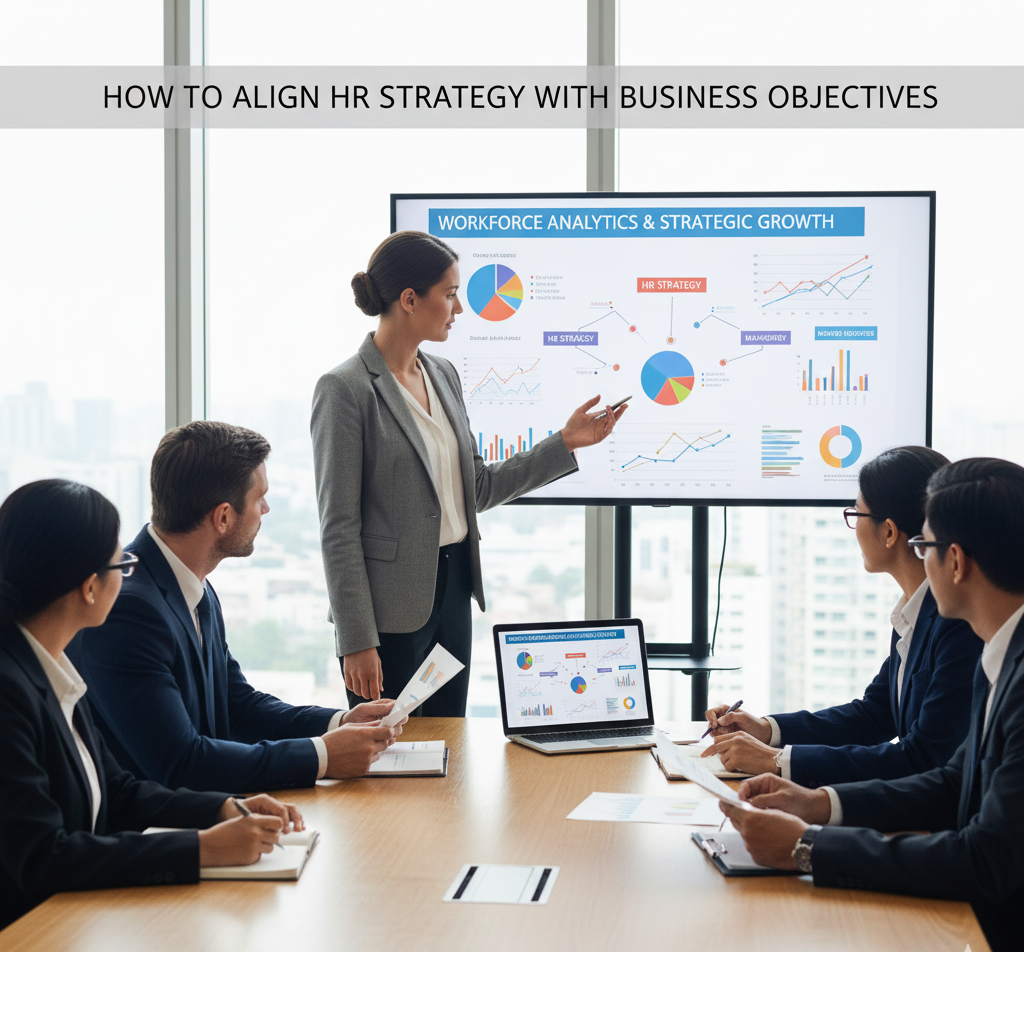
Human Resources play a vital role in helping organizations achieve their goals. A well-aligned HR strategy ensures that employees, processes, and policies support the company’s mission, vision, and objectives. When HR is not in sync with business goals, companies may face lower productivity, disengaged employees, and missed growth opportunities.
Aligning HR strategy with business objectives requires a clear understanding of the company’s long-term plans, workforce needs, and operational priorities. Organizations that successfully connect HR functions to strategic goals often experience better performance, improved employee satisfaction, and stronger competitive advantage.
Understanding HR Alignment
HR alignment is the process of linking HR policies, programs, and practices with the organization’s overall strategy. It involves:
-
Assessing current HR capabilities: Identifying the strengths and weaknesses in HR functions.
-
Defining HR priorities: Determining which HR initiatives directly impact business objectives.
-
Engaging leadership: Ensuring HR leaders understand the company’s goals and collaborate with management.
This alignment helps create a workforce that is focused, motivated, and equipped to support business growth.
Steps to Align HR Strategy with Business Goals
-
Understand Business Objectives Clearly
HR teams must have a thorough understanding of the company’s short-term and long-term goals. This includes financial targets, growth plans, market expansion strategies, and operational priorities. -
Assess Workforce Requirements
Identify the skills, competencies, and roles necessary to achieve business objectives. This ensures HR plans for hiring, training, and development are directly connected to the company’s needs. -
Develop HR Programs that Support Strategy
Initiatives such as performance management systems, learning and development programs, and employee engagement activities should be designed to drive business results. -
Implement Metrics and Reporting
Track HR performance using key indicators such as employee productivity, retention rates, and engagement scores. These metrics help measure the effectiveness of HR programs in supporting organizational goals. -
Maintain Flexibility
Business objectives can change due to market dynamics. HR strategies should be adaptable to accommodate new priorities or evolving business needs.
Role of HR and Recruitment Solutions
Using professional HR and recruitment solutions can make the alignment process more effective. These solutions help businesses connect talent management, recruitment, and HR processes to strategic objectives.
Benefits include:
-
Streamlining recruitment and onboarding processes to fill critical roles faster.
-
Enhancing workforce planning to ensure the right skills are available at the right time.
-
Supporting data-driven HR decisions for better alignment with business needs.
Companies like GCC Solutions help organizations integrate HR processes with business goals. Their structured approach ensures HR activities, including recruitment and talent management, contribute directly to organizational success.
Integrating Recruitment Agencies for Strategic Support
Engaging an HR recruitment agency can strengthen alignment between HR and business objectives. Agencies provide expertise in identifying candidates who not only have the right skills but also fit the company culture and long-term strategy.
-
They reduce hiring delays by providing pre-screened, qualified candidates.
-
Agencies help anticipate future talent needs based on business growth plans.
-
They support workforce planning by recommending staffing strategies aligned with organizational objectives.
Leveraging HR Outsourcing Services
Organizations can also use HR outsourcing services to maintain alignment without overloading internal HR teams. Outsourced providers manage key functions such as payroll, recruitment, and compliance while keeping the focus on strategic goals.
Benefits include:
-
Allowing internal HR teams to focus on strategy rather than administrative tasks.
-
Ensuring compliance with labor laws and regulations while supporting business priorities.
-
Offering expertise and market insights that help in workforce planning and decision-making.
Outsourcing HR functions can result in faster alignment, reduced operational risks, and improved employee satisfaction.
Conclusion
Aligning HR strategy with business objectives is essential for organizational success. Companies that connect HR functions, recruitment, and workforce planning to strategic goals achieve better performance, higher employee engagement, and sustainable growth.
Using professional HR and recruitment solutions, partnering with an HR recruitment agency, and leveraging HR outsourcing services can ensure that HR contributes effectively to business success. A well-aligned HR strategy allows organizations to attract, retain, and develop talent that drives innovation and supports long-term objectives.
 French
 English
 Arabic
 Spanish
 Portuguese
 Deutsch
 Turkish
 Dutch
Dutch
 Italiano
 Russian
 Romaian
 Portuguese (Brazil)
 Greek
Greek
