


 Pro Benefits
 About
About
 Terms
Terms
 Privacy
 Child Safety & Protection
 Notifications
 Ayrush Global It Services Pvt Ltd
Forged Backup Roll – The Backbone of Rolling Mill Performance
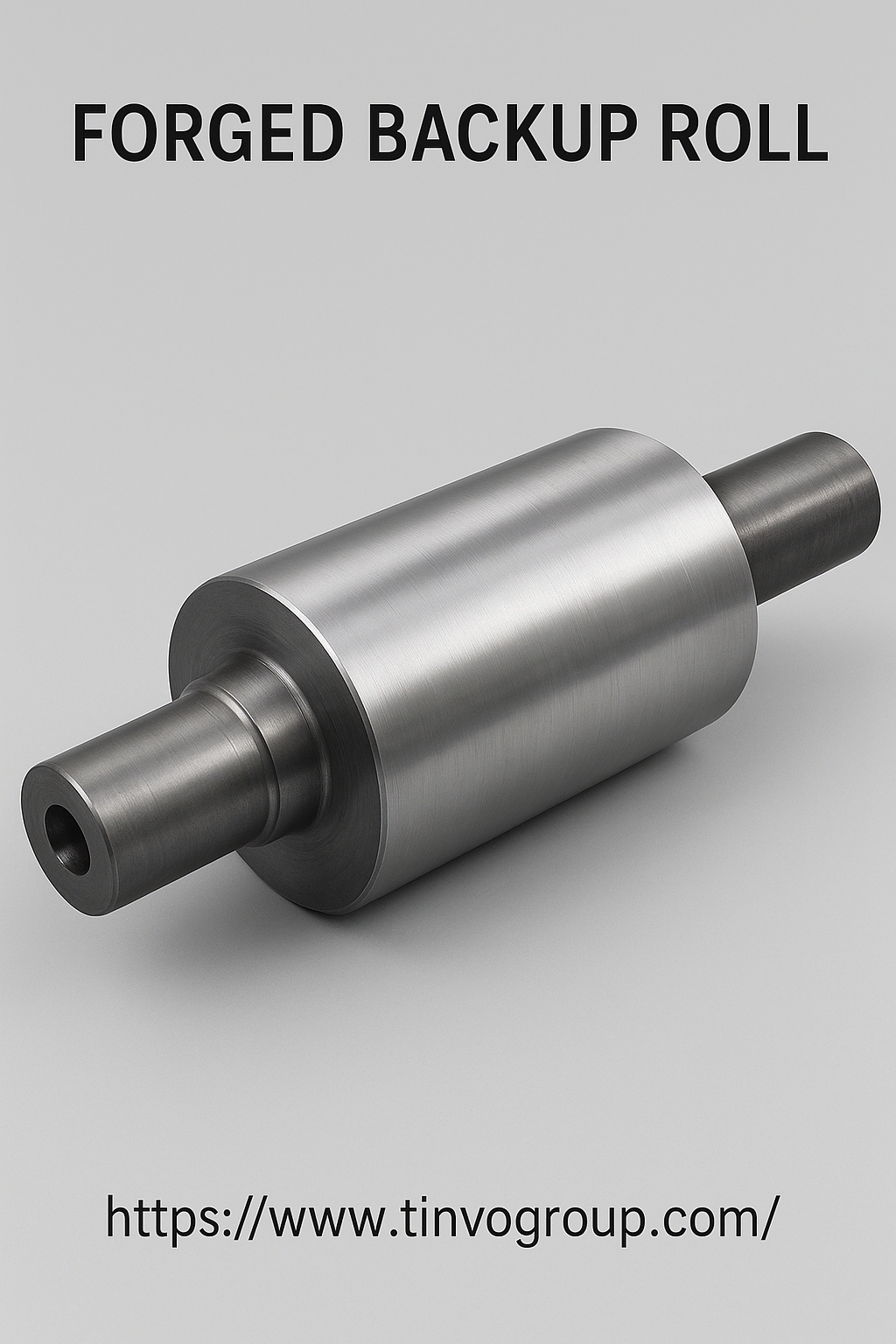
In the modern steel industry, precision, durability, and performance are essential for achieving consistent results in metal forming. One of the most critical components in any rolling mill setup is the forged backup roll. Known for its exceptional strength and resistance to stress, the forged backup roll plays a key role in supporting the work rolls during the rolling process. These rolls ensure product accuracy, maintain uniform thickness, and increase the overall life of the mill equipment.
What is a Forged Backup Roll?
A forged backup roll is a large, solid cylindrical component made from high-quality alloy steel, specifically designed to support the smaller work rolls in a rolling mill. During the metal rolling process, backup rolls prevent deflection or bending of the work rolls, thereby ensuring uniform pressure distribution and accurate product dimensions.
Unlike cast rolls, High speed steel rolls are produced using advanced forging techniques that refine the metal structure, eliminate internal voids, and enhance mechanical strength. This forging process results in superior toughness, resistance to fatigue, and high performance under extreme loads.
Manufacturing Process of Forged Backup Roll
The manufacturing of a forged backup roll is a highly specialized process involving several stages to ensure precision and quality. Here’s an overview of the typical production steps:
-
Material Selection:
Premium-grade alloy steels such as 9Cr, 5% Cr-Mo-V, or other customized compositions are selected to meet specific rolling mill requirements. -
Forging:
The raw steel ingot is heated to high temperatures and forged under massive hydraulic presses to refine its internal structure. This forging process improves grain flow, increases density, and removes impurities. -
Heat Treatment:
The forged backup roll undergoes multiple heat treatment cycles such as quenching and tempering to achieve the desired hardness, strength, and uniformity throughout its cross-section. -
Machining and Grinding:
The rolls are then precision-machined and ground to achieve exact dimensional tolerances, surface finishes, and geometrical accuracy. -
Inspection and Testing:
Every forged backup roll is thoroughly inspected using ultrasonic and magnetic particle tests to ensure there are no internal or surface defects. Only rolls that pass stringent quality checks are approved for delivery.
Applications of Forged Backup Roll
The forged backup roll is a vital component in both hot and cold rolling mills used in steel, aluminum, and non-ferrous metal industries. Its key applications include:
-
Hot Rolling Mills: Used in heavy-duty operations to support work rolls under high thermal and mechanical loads.
-
Cold Rolling Mills: Ensures dimensional precision and surface finish by minimizing roll deflection.
-
Plate and Sheet Mills: Essential for rolling thick steel plates and wide strips.
-
Cluster Mills and Sendzimir Mills: In multi-roll configurations, forged backup rolls provide additional stability and support.
Advantages of Using Forged Backup Rolls
The forged backup roll offers several technical and operational benefits compared to other roll types. These include:
-
High Load-Bearing Capacity:
Due to superior metallurgical properties, forged rolls can withstand high rolling pressures without deformation. -
Longer Service Life:
Forged backup rolls exhibit excellent fatigue strength and wear resistance, reducing maintenance downtime. -
Improved Surface Quality:
The smooth and precise surface finish of forged rolls ensures better contact with work rolls, leading to improved product quality. -
Dimensional Accuracy:
Precision in geometry helps maintain consistent thickness and shape in the rolled product. -
Cost Efficiency:
Although initial investment is higher, the long lifespan and reduced maintenance of forged backup rolls make them more economical in the long term.
Material Properties and Hardness
A forged backup roll is designed to achieve high hardness at the surface while maintaining a tough and ductile core. Typically, the hardness ranges between 35–55 HRC, depending on the application. The core toughness allows it to absorb heavy shocks, while the hard surface provides wear resistance.
Chemical compositions are carefully optimized with elements like Chromium (Cr), Molybdenum (Mo), Nickel (Ni), and Vanadium (V) to enhance hardenability and mechanical stability.
Maintenance and Performance Optimization
Proper maintenance is crucial to extend the lifespan of a forged backup roll. Regular inspection for surface cracks, thermal fatigue, and proper lubrication ensures smooth operation. Advanced grinding and polishing techniques are also used to restore worn-out surfaces, maintaining roll efficiency and minimizing operational costs.
Monitoring roll temperature and load distribution also helps prevent premature wear and structural damage.
Technological Advancements in Forged Backup Rolls
With advancements in metallurgy and forging technology, today’s forged backup rolls are stronger, lighter, and more efficient than ever before. Computer-controlled heat treatment systems ensure precise hardness distribution, while modern CNC machines enable tighter tolerances.
Some manufacturers also use integrated ultrasonic monitoring during production to detect micro-defects in real time, ensuring flawless quality. These innovations help rolling mills achieve better performance, reduced energy consumption, and superior output quality.
Conclusion
In the steel rolling industry, the forged backup roll is an irreplaceable component that ensures the stability, precision, and efficiency of the entire process. Its superior mechanical properties, high fatigue resistance, and long service life make it the preferred choice for hot and cold rolling mills around the world.
Whether it’s for producing thin sheets or heavy steel plates, the forged backup roll plays a crucial role in maintaining product consistency and operational reliability. Investing in high-quality forged backup rolls means investing in durability, precision, and performance — the true backbone of modern rolling technology.
 English
 Arabic
 French
 Spanish
 Portuguese
 Deutsch
 Turkish
 Dutch
Dutch
 Italiano
 Russian
 Romaian
 Portuguese (Brazil)
 Greek
Greek
