


 Pro Benefits
 About
About
 Terms
Terms
 Privacy
 Child Safety & Protection
 Notifications
 Ayrush Global It Services Pvt Ltd
How Vision-Based Intelligence Is Redefining User Experience Testing
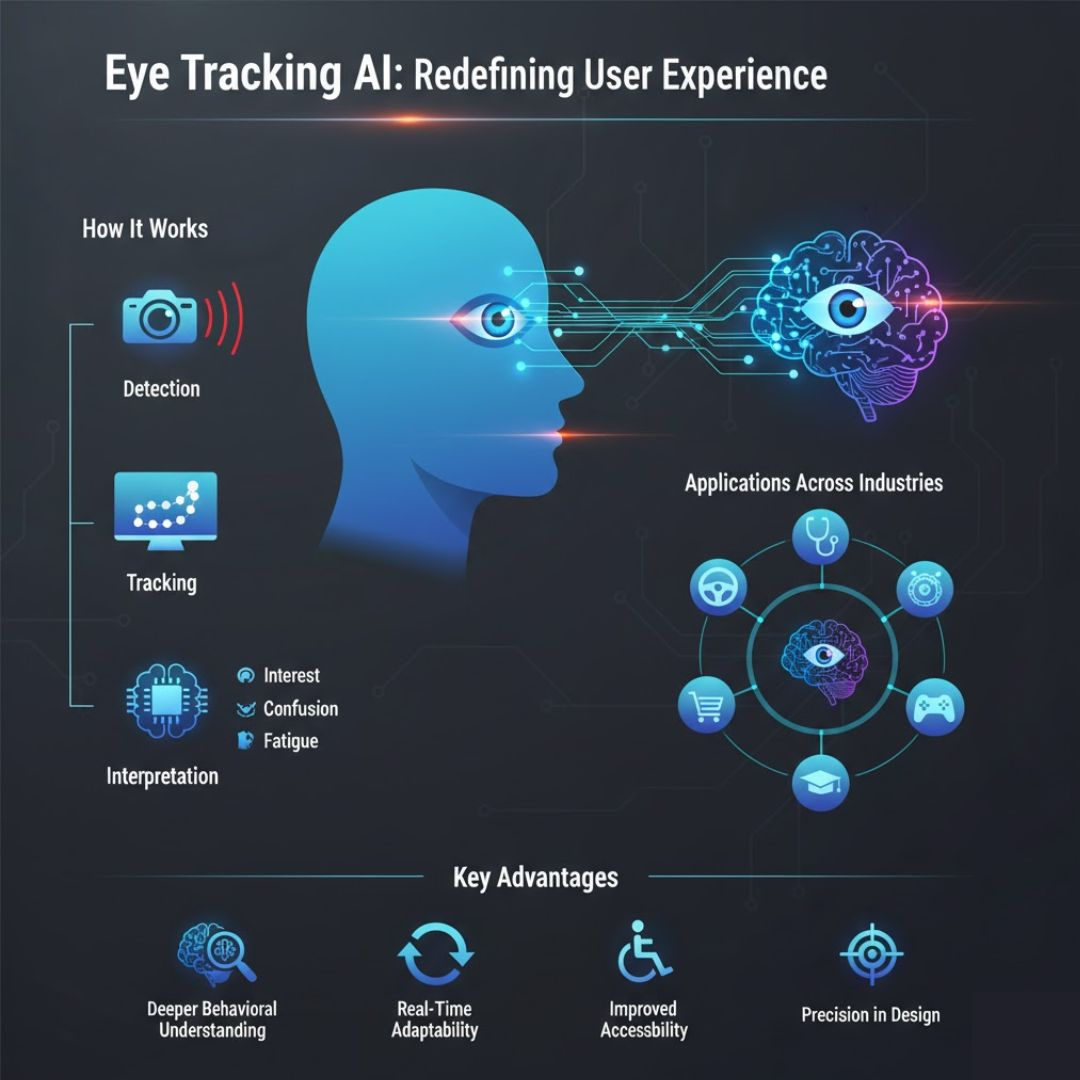
As digital systems grow more interactive, understanding how people visually engage with them has become vital. Beyond clicks and scrolls lies a deeper layer of human response the way our eyes move, pause, and focus when processing information. This is where Eye tracking AI steps in, reshaping how vision-based intelligence is applied across industries. From usability research to education and healthcare, this technology is changing the way we read human attention and emotion.
What Is Eye Tracking AI?
Eye tracking technology has existed for years, but integrating it with artificial intelligence has expanded its potential dramatically. Eye tracking AI uses cameras, sensors, and deep learning models to map a user’s gaze patterns, blink rate, and fixation points. These visual cues reveal not only where someone is looking, but also what holds their attention and how they respond emotionally.
The data collected is then processed by machine learning algorithms to interpret patterns at scale. Whether it’s a student focusing on an online lesson, a driver scanning the road, or a shopper browsing a digital catalog, eye tracking provides valuable insights into human behavior, in real time.
How It Connects to Vision-Based Intelligence
Vision-based intelligence refers to any system that processes visual data to make sense of human activity. Eye tracking sits at the core of this ecosystem it bridges the gap between physical perception and digital interpretation.
By combining gaze data with facial and gesture analysis, vision-based intelligence can interpret context with remarkable precision. It doesn’t just record what people do it interprets why they do it. This allows researchers and designers to understand both attention and intention, making human-computer interaction more responsive and natural.
The Science Behind the Technology
At its foundation, Eye tracking AI works through three main steps:
-
Detection: Cameras identify the user’s eye position and pupil movement using infrared or optical sensors.
-
Tracking: Algorithms follow the eye’s path to map visual focus points across screens or real-world environments.
-
Interpretation: AI models translate this data into behavioral insights such as interest, confusion, or fatigue.
This process happens instantly, allowing real-time feedback and adaptive system responses. For instance, in automotive safety systems, eye tracking can detect drowsiness and trigger alerts before accidents occur. In digital learning, it helps assess student engagement by monitoring focus levels across content modules.
Applications Across Industries
The versatility of eye tracking extends far beyond traditional UX testing.
-
Healthcare: Clinicians use gaze data to assess neurological or cognitive conditions and monitor patient attention during therapy sessions.
-
Automotive: Driver monitoring systems use gaze detection to ensure alertness, improving safety on the road.
-
Retail and E-commerce: Marketers study how consumers view products online or in stores, helping them understand visual attraction and decision triggers.
-
Education: Eye tracking supports personalized learning by identifying which teaching materials capture attention or cause distraction.
-
Gaming and Entertainment: Developers design more immersive experiences by analyzing player focus and reactions in real time.
Each of these applications highlights how understanding visual attention can enhance both performance and user satisfaction across domains.
Advantages of Eye Tracking AI
-
Deeper Behavioral Understanding:
Traditional analytics reveal what users do, but eye tracking uncovers why they act that way. It provides objective data on attention, focus, and cognitive load. -
Real-Time Adaptability:
Systems can respond dynamically adjusting layouts, brightness, or alerts based on the user’s current focus or fatigue level. -
Improved Accessibility:
Eye-controlled interfaces empower individuals with mobility limitations to navigate devices, type, or play games using only their gaze. -
Precision in Design and Research:
Whether testing product packaging or studying medical images, gaze-based data delivers unparalleled clarity into how humans interpret visual information.
Challenges and Considerations
While promising, this technology comes with challenges. High-precision eye tracking requires quality cameras and stable environments to minimize data noise. Privacy is also critical recording gaze data must always follow ethical standards and informed consent.
Moreover, interpreting gaze does not always equal understanding emotion. Eye movement can suggest attention but not necessarily satisfaction. This means researchers must combine gaze data with contextual or verbal feedback to gain a complete understanding of behavior.
The Future of Vision-Based Intelligence
As AI continues to evolve, eye tracking will likely integrate with multimodal systems that combine vision, speech, and gesture recognition. These unified frameworks could create interfaces that adapt automatically, responding to emotional cues, reading stress levels, and adjusting digital environments accordingly.
Imagine a learning platform that slows down when it detects fatigue or a car interface that simplifies when it senses distraction. Such possibilities illustrate how vision-based intelligence, powered by eye tracking, is leading a new era of human-centered technology.
Conclusion
Eye tracking is no longer just a research tool it’s a gateway to understanding human attention, intent, and emotion with remarkable precision. Through the fusion of artificial intelligence and visual analysis, vision-based intelligence is moving closer to reading behavior as naturally as humans do.
By seeing through the lens of human perception, Eye tracking AI brings machines one step closer to truly understanding how we think, react, and connect in an increasingly visual world.
Frequently Asked Questions
Q1. How does eye tracking differ from general vision-based intelligence?
Vision-based intelligence covers all systems that interpret visual data, while eye tracking specifically focuses on gaze and attention mapping within that larger framework.
Q2. What devices are used in Eye tracking AI?
Infrared cameras, webcams, and wearable sensors are commonly used, depending on the environment desktop, automotive, or mobile.
Q3. Is eye tracking safe and private?
Yes, when used responsibly. Participants should always give informed consent, and data should be anonymized to ensure confidentiality.
 English
 Arabic
 French
 Spanish
 Portuguese
 Deutsch
 Turkish
 Dutch
Dutch
 Italiano
 Russian
 Romaian
 Portuguese (Brazil)
 Greek
Greek
