


 Pro Benefits
 About
About
 Terms
Terms
 Privacy
 Child Safety & Protection
 Notifications
 Ayrush Global It Services Pvt Ltd
How Much Does It Cost to Build ERP Software?
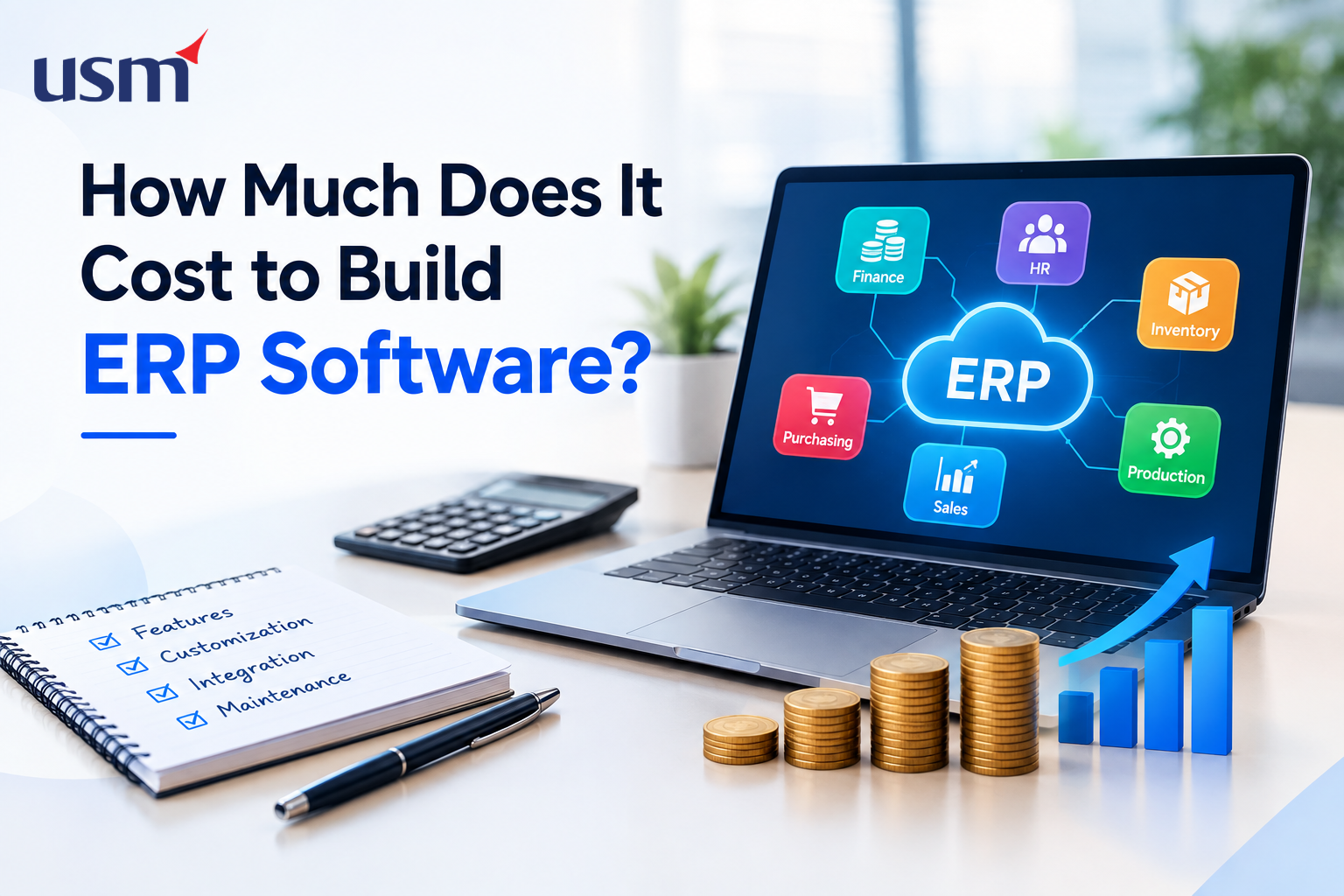
Enterprise Resource Planning (ERP) software brings finance, sales, inventory, procurement, human resources, manufacturing, customer management, and reporting into one connected environment.
So, what should a business expect to spend? The ERP software development cost depends mainly on the scope, complexity, technology stack, integrations, customization, and long-term support requirements.
A clear scope helps businesses estimate investment before development begins.
Typical ERP Development Cost
There is no universal ERP price because a small departmental solution is very different from a multi-location enterprise platform. As a broad planning reference, a basic ERP with a few modules can start from a few lakh rupees, while a mid-sized custom system may require ₹10 lakh to ₹40 lakh or more. Large enterprise platforms with extensive integrations, advanced analytics, mobile applications, multiple entities, and complex workflows can exceed ₹50 lakh and may reach significantly higher budgets.
Key Factors That Influence ERP Software Development Cost
1. Number of Modules
The number and type of modules have a major effect on development effort. Common ERP modules include finance, accounting, inventory, procurement, sales, CRM, HR, payroll, manufacturing, warehouse management, project management, and asset management. Each module requires its own workflows, interfaces, permissions, reports, and testing.
2. Customization and Business Workflows
Off-the-shelf ERP platforms generally provide standardized processes. A custom ERP is designed around the way a company actually operates. Complex approval chains, industry-specific calculations, automated notifications, dashboards, and custom business rules increase development time and cost.
3. Third-Party Integrations
ERP software often needs to communicate with existing systems such as CRM platforms, payment gateways, accounting applications, e-commerce stores, logistics systems, tax services, payroll tools, and business intelligence platforms. Every integration requires API development, authentication, testing, and data synchronization.
4. Data Migration
Moving information from legacy applications, spreadsheets, or databases is another important cost consideration. Data may need to be cleaned, standardized, mapped, validated, and reconciled before it enters the new ERP. Poor-quality historical data can make migration more complicated and increase project effort.
5. User Roles and Security
An ERP may support administrators, managers, finance teams, sales representatives, warehouse staff, suppliers, and other users. Role-based access, approval permissions, audit trails, authentication, encryption, and security controls become increasingly important as the number of departments and users grows.
6. Mobile and AI Capabilities
Businesses may require mobile access for field teams, sales employees, warehouse workers, or executives. Adding mobile applications increases design, development, testing, and maintenance requirements. AI can also extend ERP capabilities through demand forecasting, intelligent reporting, document processing, predictive maintenance, recommendations, and automated workflows.
Development Stages That Affect the Budget
A successful ERP project typically begins with discovery and requirement analysis. Teams then move through architecture, UI/UX design, development, integration, testing, deployment, training, and ongoing maintenance. Each stage contributes to the overall budget.
Skipping discovery or reducing testing may appear to lower initial expenses, but it can create expensive changes after deployment.
How to Reduce ERP Development Costs?
The most practical approach is to prioritize business-critical functionality. Instead of building every possible feature in the first release, organizations can launch a minimum viable ERP covering their highest-value workflows and gradually add modules.
Businesses should define integrations early, clean data before migration, establish user permissions during planning, and create measurable acceptance criteria. Comparing vendors only on the lowest quotation can be risky because a lower initial price may exclude migration, testing, training, security, or post-launch support.
Choosing the Right Technology Partner
ERP development requires more than programming expertise. A reliable technology partner should understand business processes, integration architecture, data security, scalability, and user adoption. Companies looking for broader digital capabilities may also evaluate an AI app development company when they want intelligent automation and AI-driven functionality within their ERP ecosystem.
If mobile experiences are part of the digital transformation roadmap, working with a Best Mobile app development Company can help create secure and user-friendly applications that connect with the ERP backend.
Why Custom ERP Can Be Worth the Investment?
Although custom ERP development can require a substantial upfront investment, it can deliver long-term value by reducing duplicate data entry, connecting departments, improving reporting, automating repetitive processes, and providing a centralized source of operational information.
The real value comes from creating a system that supports business processes, improves decision-making, and scales as organizational requirements evolve.
Conclusion
The cost to build ERP software depends on what the platform must accomplish, how many systems it needs to connect, and how much customization the organization requires. A clear scope, phased development strategy, strong data planning, and experienced implementation partner can make the investment more predictable.
At USM Business Systems, businesses can explore technology solutions designed around their operational and digital transformation goals.
Book an Executive AI Briefing to explore AI use cases for your business.
 English
 Arabic
 French
 Spanish
 Portuguese
 Deutsch
 Turkish
 Dutch
Dutch
 Italiano
 Russian
 Romaian
 Portuguese (Brazil)
 Greek
Greek
