


 Pro Benefits
 About
About
 Terms
Terms
 Privacy
 Child Safety & Protection
 Notifications
 Ayrush Global It Services Pvt Ltd
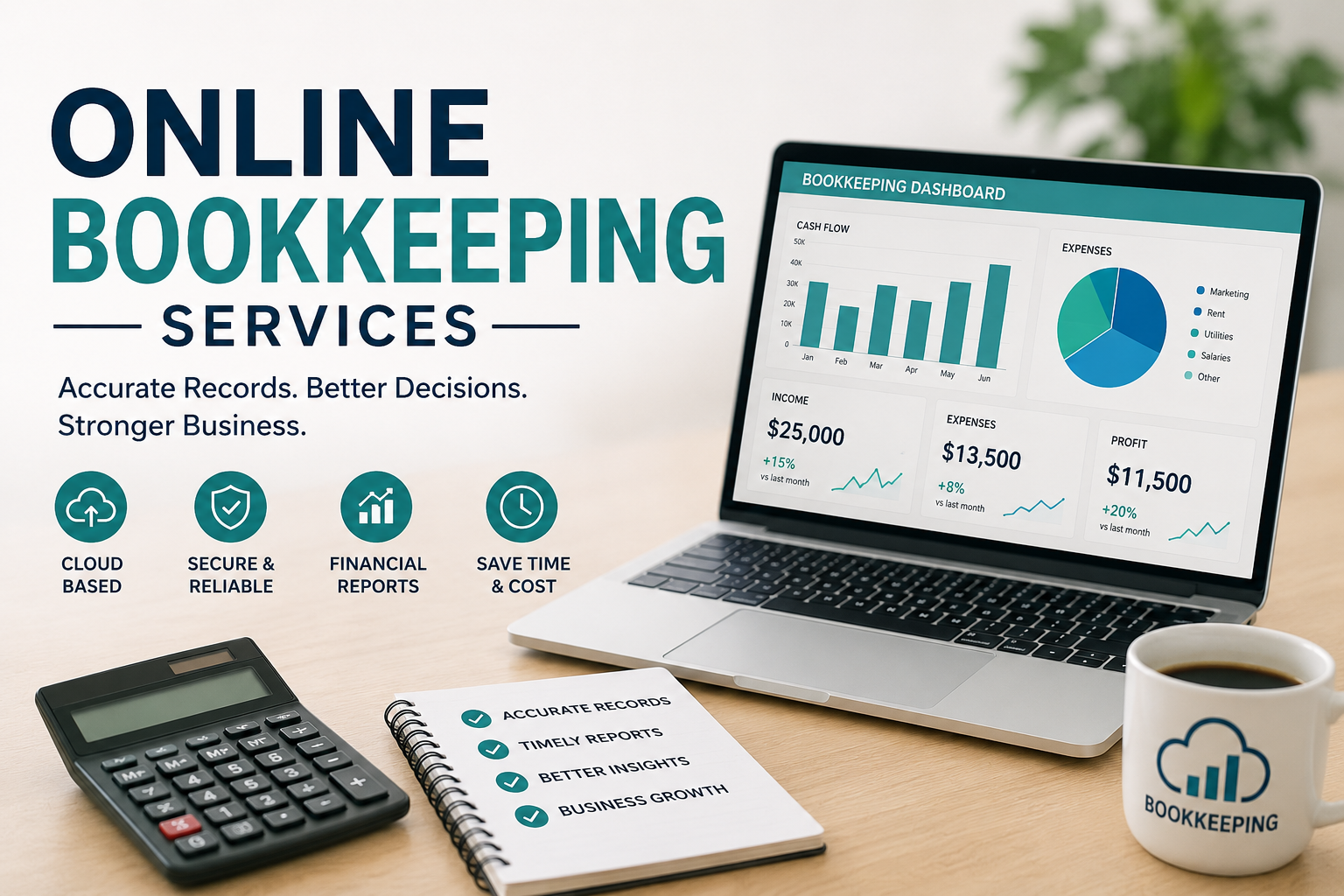
Online Bookkeeping Services: A Complete Guide for Modern Businesses
Introduction
Managing business finances accurately is one of the most important responsibilities for any organisation. From recording daily transactions and tracking expenses to preparing financial reports, bookkeeping provides the foundation for effective financial management. However, many business owners struggle to keep their books organised while also managing customers, employees, operations, and business growth.
This is where Online Bookkeeping services can provide valuable support. Online bookkeeping allows businesses to manage their financial records remotely with the help of professional bookkeepers and digital accounting tools. Instead of maintaining paperwork or handling every transaction manually, businesses can use secure online systems to organise financial information efficiently.
Whether you run a small business, work as a freelancer, operate an e-commerce store, or manage a growing company, reliable bookkeeping can help you maintain better control over your finances. This article explores what online bookkeeping services are, how they work, their benefits, and how businesses can choose the right solution.
What Are Online Bookkeeping Services?
Online bookkeeping services involve managing and maintaining financial records through internet-based accounting systems and professional bookkeeping support. Instead of requiring a bookkeeper to work physically from the company's office, financial information can be accessed, updated, and reviewed remotely.
Professional online bookkeepers may handle tasks such as:
- Recording income and business expenses
- Categorising financial transactions
- Reconciling bank accounts
- Managing accounts payable and receivable
- Preparing financial statements
- Tracking invoices and payments
- Maintaining organised financial records
- Monitoring cash flow
- Preparing bookkeeping information for tax purposes
Cloud-based accounting platforms make it possible for business owners and bookkeepers to collaborate from different locations. This approach can be particularly useful for companies that operate remotely or have employees and clients in different areas.
Why Is Bookkeeping Important for Businesses?
Bookkeeping is more than simply recording numbers. Accurate financial records help business owners understand how their organisation is performing.
Without organised bookkeeping, it can become difficult to answer important questions such as:
- How much revenue did the business generate?
- What are the largest operating expenses?
- Which customers still owe money?
- How much cash is available?
- Are expenses increasing?
- Is the business profitable?
- What financial obligations are approaching?
Reliable bookkeeping provides the information needed to answer these questions.
Better Financial Organisation
Well-maintained records make it easier to locate financial information when it is needed. Instead of searching through receipts, spreadsheets, and paper documents, businesses can maintain structured digital records.
Improved Decision-Making
Business decisions are often influenced by financial performance. Accurate bookkeeping provides useful information that can help owners evaluate expenses, revenue, profitability, and cash flow.
Easier Tax Preparation
When financial transactions are properly categorised and documented throughout the year, preparing information for tax reporting can become more straightforward.
Stronger Financial Control
Regular bookkeeping can help identify unusual transactions, unexpected expenses, outstanding invoices, or cash-flow problems before they become larger issues.
How Do Online Bookkeeping Services Work?
The process usually begins with setting up an accounting system according to the business's requirements. Financial information is then connected or provided to the bookkeeping team through secure digital channels.
A typical process may include several stages.
Step 1: Initial Setup
The bookkeeping provider reviews the business structure, accounting requirements, existing financial records, and preferred accounting software.
The accounts may then be organised into categories such as revenue, operating expenses, assets, liabilities, and other relevant accounts.
Step 2: Transaction Recording
Business transactions are recorded regularly. These may include sales, purchases, payments, bank transactions, and operating expenses.
Step 3: Transaction Categorisation
Transactions are assigned to appropriate accounting categories. Correct categorisation is important because it helps financial reports accurately represent business activity.
Step 4: Bank Reconciliation
Bookkeepers compare accounting records with bank statements to identify discrepancies and ensure that recorded transactions correspond with actual financial activity.
Step 5: Financial Reporting
Regular reports may be prepared to provide an overview of business performance. Depending on the service, reports can include profit and loss statements, balance sheets, cash-flow information, and other management reports.
Step 6: Ongoing Review
Bookkeeping is an ongoing process. Regular reviews help businesses keep their financial records current and organised.
Key Features of Online Bookkeeping Services
Different providers offer different packages, but several services are commonly included.
Bank Reconciliation
Bank reconciliation compares internal bookkeeping records with bank statements. This can help identify missing transactions, duplicate entries, or recording errors.
Expense Tracking
Tracking expenses helps businesses understand where money is being spent. Expenses can often be grouped into categories, making it easier to analyse spending patterns.
Income Recording
Bookkeepers record business income and sales transactions so that revenue information remains current.
Invoice Management
Some online bookkeeping providers assist with monitoring invoices, recording customer payments, and identifying outstanding balances.
Accounts Payable
Accounts payable involves tracking amounts the business owes to suppliers and other parties. Proper records can help businesses manage payment obligations more effectively.
Financial Reports
Financial reports turn bookkeeping data into useful information. Business owners can use these reports to review revenue, expenses, profitability, and financial position.
Benefits of Using Online Bookkeeping Services
Online bookkeeping offers several potential advantages compared with handling all bookkeeping activities internally.
1. Saves Valuable Time
Bookkeeping can require considerable time, particularly when financial transactions are recorded manually. Outsourcing routine bookkeeping tasks allows business owners to focus on customers, products, marketing, and strategic planning.
Instead of spending hours organising financial records, owners can rely on professional support to keep the books updated.
2. Provides Flexible Remote Access
Because online bookkeeping uses digital systems, financial information can often be accessed from different locations.
This flexibility can be useful for:
- Remote businesses
- Freelancers
- Online retailers
- Consultants
- Small companies
- Businesses with multiple locations
Business owners and bookkeepers can collaborate without needing to work in the same physical office.
3. Helps Reduce Administrative Work
Managing receipts, invoices, transactions, and financial statements can create a significant administrative workload. Online systems can streamline many repetitive processes.
Automation may assist with transaction imports, invoice tracking, recurring entries, and reporting, depending on the software being used.
4. Improves Record Accuracy
Professional bookkeepers understand accounting principles and bookkeeping procedures. Their expertise can reduce the risk of common recording and reconciliation errors.
However, businesses should still review their financial records regularly and maintain appropriate supporting documentation.
5. Offers Better Financial Visibility
Updated bookkeeping records provide a clearer picture of the current financial situation.
Business owners can use financial information to monitor:
- Revenue
- Expenses
- Profitability
- Outstanding invoices
- Cash flow
- Business liabilities
Having this information available can make financial planning easier.
6. Can Be Cost-Effective
Hiring a full-time in-house bookkeeper may involve salary, benefits, equipment, workspace, and other employment costs. For some small businesses, outsourcing bookkeeping can be a more flexible option.
Businesses can choose services based on their requirements instead of maintaining a full-time bookkeeping department.
7. Supports Business Growth
As a business grows, financial transactions can become more complex. An organised bookkeeping system provides a foundation for managing increasing transaction volumes.
Professional bookkeeping support can also allow business owners to concentrate on expansion rather than routine financial administration.
Online Bookkeeping vs Traditional Bookkeeping
Traditional bookkeeping often involves working with physical documents, spreadsheets, and on-site financial staff. Online bookkeeping relies more heavily on cloud-based systems and remote communication.
There are advantages to both approaches, depending on the organisation.
Online bookkeeping can provide:
- Remote accessibility
- Digital document management
- Flexible collaboration
- Faster information sharing
- Integration with accounting software
- Reduced dependence on physical paperwork
Traditional bookkeeping may still be suitable for businesses that prefer face-to-face financial management or have specific operational requirements.
The best approach depends on the company's size, industry, technology preferences, budget, and financial processes.
Who Can Benefit from Online Bookkeeping Services?
Online bookkeeping is not limited to large organisations. Businesses of different sizes can use remote bookkeeping support.
Small Businesses
Small business owners often handle multiple responsibilities. Outsourcing bookkeeping can help them spend more time managing daily operations and developing the business.
Freelancers and Contractors
Freelancers may have multiple clients, irregular income, and various business expenses. Organised bookkeeping can help them maintain clear financial records.
E-Commerce Businesses
Online stores may process large numbers of sales and expenses. Accurate bookkeeping can help track revenue, platform fees, shipping costs, inventory-related expenses, and other financial activity.
Startups
New businesses need reliable financial information while establishing their operations. Professional bookkeeping can help startups develop organised accounting processes from the beginning.
Growing Companies
As transaction volumes increase, manual bookkeeping can become more difficult. Online services can provide scalable support as the business expands.
How Technology Is Changing Bookkeeping
Technology has transformed the way financial records are maintained. Cloud accounting platforms, automated transaction feeds, digital invoices, and online document storage have made bookkeeping more efficient.
Automation can reduce repetitive administrative work. For example, transactions may be imported directly from connected financial accounts, while recurring transactions can be processed using predefined rules.
Artificial intelligence and machine-learning technologies are also increasingly being incorporated into financial software. These tools may assist with transaction categorisation, anomaly detection, data entry, and reporting.
However, technology does not eliminate the importance of professional oversight. Human review remains valuable for unusual transactions, accounting decisions, and business-specific financial requirements.
Security Considerations for Online Bookkeeping
Financial information is sensitive, so security should be an important consideration when selecting an online bookkeeping provider.
Businesses should look for providers that use appropriate security measures and follow good data-management practices.
Important considerations include:
- Secure login systems
- Strong passwords
- Multi-factor authentication
- Controlled user access
- Secure document sharing
- Regular software updates
- Reliable data backup
- Clear privacy policies
Business owners should also avoid sharing sensitive financial information through unsecured communication channels.
How to Choose the Right Online Bookkeeping Service
Not every bookkeeping provider will suit every business. Before selecting a service, consider several factors.
Understand Your Requirements
First, identify which tasks you need help with. Some businesses may only require monthly bookkeeping, while others may need more frequent transaction processing and reporting.
Check Experience
Look for bookkeeping professionals who understand your business type and financial requirements.
Review Software Compatibility
If you already use accounting software, make sure the bookkeeping provider can work with it effectively.
Consider Communication
Good communication is important in any outsourced service. Determine how you will communicate with the bookkeeper and how often financial updates will be provided.
Compare Pricing
Pricing structures can vary. Some providers charge monthly fees, while others use transaction-based or hourly pricing.
Rather than choosing solely based on the lowest price, consider the overall value, service quality, experience, and level of support.
Ask About Security
Before sharing financial information, ask how the provider protects client data and controls access to financial records.
Common Bookkeeping Mistakes Businesses Should Avoid
Even with professional support, businesses should understand common bookkeeping problems.
Mixing Personal and Business Expenses
Combining personal and business transactions can make financial records difficult to manage. Maintaining separate accounts can simplify bookkeeping.
Delaying Record Updates
Waiting months before updating financial records can create unnecessary complications. Regular bookkeeping is generally easier to manage than large backlogs.
Losing Receipts and Documentation
Supporting documentation should be stored systematically. Digital document management can make important records easier to locate.
Ignoring Bank Reconciliation
Failing to reconcile financial records with bank statements can allow errors to remain undetected.
Failing to Monitor Outstanding Invoices
Unpaid invoices can affect cash flow. Businesses should regularly monitor receivables and follow up on overdue balances.
The Role of Bookkeeping in Business Growth
Growth requires more than increasing sales. Businesses also need to understand whether growth is generating sustainable profits.
For example, a company might increase revenue while operating expenses rise even faster. Without accurate financial records, this situation may not be immediately obvious.
Regular bookkeeping helps owners evaluate financial trends and identify areas that require attention.
By reviewing financial reports, businesses can assess whether they should:
- Reduce unnecessary expenses
- Adjust pricing
- Invest in marketing
- Hire additional staff
- Improve cash-flow management
- Expand products or services
- Review supplier costs
This makes bookkeeping an important part of strategic business management rather than simply an administrative responsibility.
Future of Online Bookkeeping Services
The future of bookkeeping is likely to involve even greater integration between accounting software, automation, artificial intelligence, and professional financial expertise.
Routine tasks may increasingly be automated, allowing bookkeepers to spend more time on analysis, financial review, and client support.
Cloud technology will also continue to make remote collaboration easier. Businesses may be able to access financial information from virtually anywhere while working with bookkeeping professionals in different locations.
Despite these technological developments, accuracy, confidentiality, professional judgement, and financial understanding will remain essential.
Conclusion
Online Bookkeeping services provide businesses with a flexible way to manage financial records using digital technology and professional bookkeeping expertise. From transaction recording and bank reconciliation to expense tracking and financial reporting, online bookkeeping can simplify many important financial tasks.
For small businesses, freelancers, startups, e-commerce companies, and growing organisations, outsourcing bookkeeping can save time, improve financial organisation, and provide better visibility into business performance.
The key is to choose a reliable provider that understands your requirements, uses appropriate technology, maintains strong security practices, and communicates clearly.
When bookkeeping is accurate and up to date, business owners can make more informed decisions and focus their attention on what matters most: serving customers, improving operations, and building sustainable long-term growth.
 English
 Arabic
 French
 Spanish
 Portuguese
 Deutsch
 Turkish
 Dutch
Dutch
 Italiano
 Russian
 Romaian
 Portuguese (Brazil)
 Greek
Greek
