


 Pro Benefits
 About
About
 Termini e Condizioni
 Privacy
 Child Safety & Protection
 Notifiche
 Ayrush Global It Services Pvt Ltd
ASA Certifications: A Complete Guide to Sailing Credentials
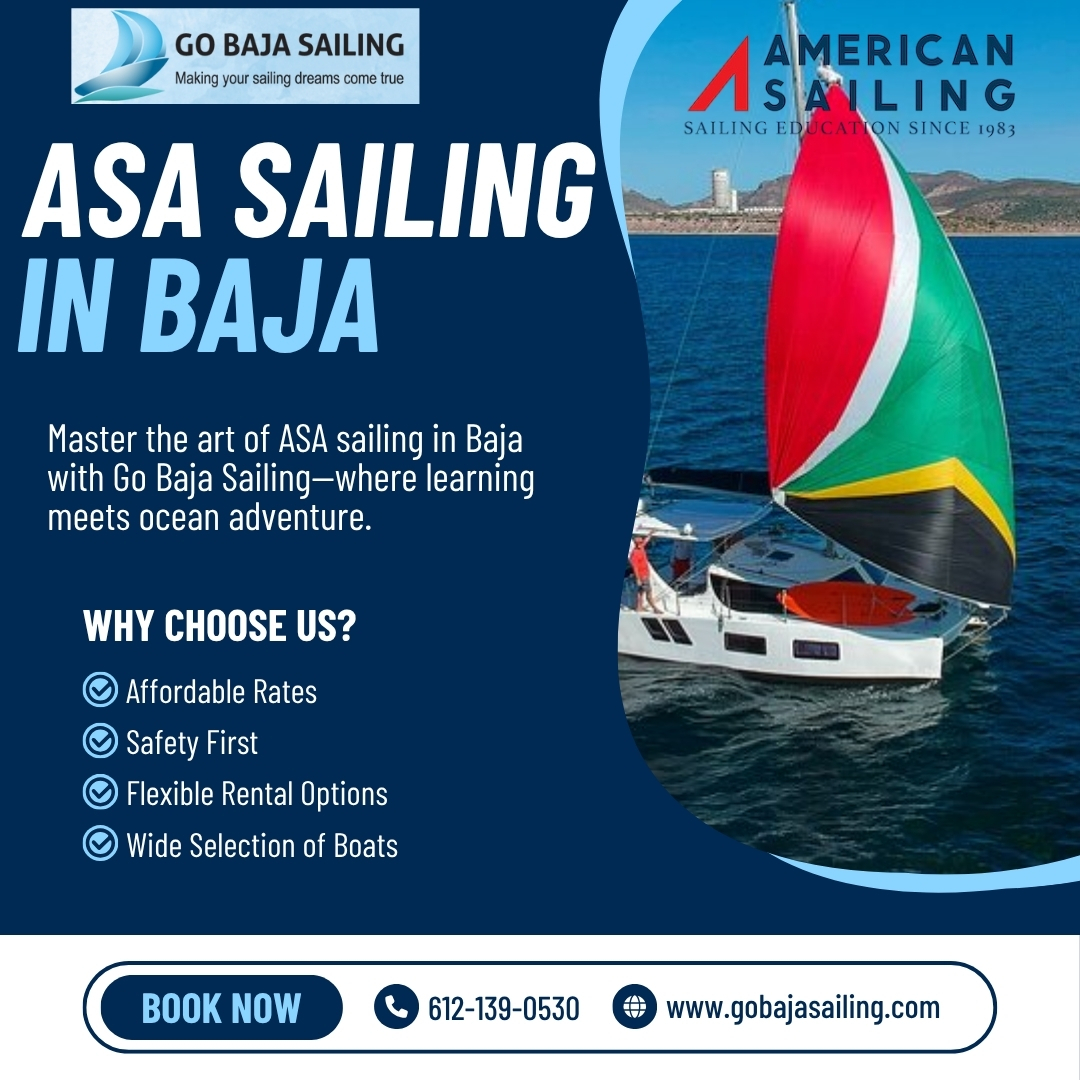
Learning to sail can begin with a simple question: How do I know when I’m actually ready to handle a sailboat on my own? Experience matters, but structured training gives sailors a way to build skills systematically and demonstrate what they have learned.
That is where ASA Certifications come in. Developed through the American Sailing Association, the certification system provides a structured pathway for learning sailing theory, boat handling, navigation, safety, and cruising skills.
For beginners and recreational sailors, certification can turn scattered experience into a more organized progression from basic sailing knowledge toward greater independence on the water.
What Are ASA Certifications?
ASA certifications are sailing credentials awarded through training and assessment based on standards established by the American Sailing Association. They cover progressively more advanced skills, from introductory keelboat sailing through coastal cruising, navigation, and specialized sailing disciplines.
Rather than simply recording time spent aboard a boat, certification focuses on demonstrated knowledge and practical competence. Depending on the course, students may learn points of sail, sail trim, docking, anchoring, safety procedures, navigation, weather awareness, and boat systems.
A typical progression may include:
- ASA 101: Basic Keelboat Sailing
- ASA 103: Basic Coastal Cruising
- ASA 104: Bareboat Cruising
- ASA 114: Cruising Catamaran
- More advanced certifications covering navigation and specialized skills
The exact course combination depends on a sailor's experience, goals, and the training program selected.

Why Are ASA Certifications Important?
ASA certifications provide a structured way to learn sailing skills and demonstrate competence rather than relying entirely on informal experience. They can also help sailors identify gaps in their knowledge before progressing toward more independent cruising.
For a new sailor, this structure is particularly useful. Sailing involves several skills simultaneously: reading wind conditions, controlling sails, steering, communicating with crew, understanding navigation, and responding safely to changing circumstances.
A certification course brings these elements together through guided instruction and assessment.
Certification can also help sailors:
- Establish a foundation of standardized sailing knowledge
- Progress from beginner to more advanced courses
- Build practical boat-handling experience
- Develop safer decision-making habits
- Prepare for coastal or bareboat cruising
- Understand navigation and onboard procedures
- Document completed sailing education
Certification is not a substitute for experience. A sailor who has completed a course should continue practicing in different weather, locations, boats, and crew situations.
How Does the ASA Certification Process Work?
The ASA certification process generally combines classroom-style learning, practical instruction, and assessment. Students first learn the relevant concepts, then apply them aboard a sailboat under the supervision of an instructor.
A typical learning progression looks like this:
- Choose an appropriate course.
Beginners normally start with foundational sailing instruction, while experienced sailors may enter at a more advanced level after discussing their background with a qualified school. - Learn the theory.
Instruction may cover terminology, sailing principles, safety, navigation, weather, boat systems, and relevant seamanship. - Practice aboard the boat.
Students perform practical tasks such as raising and trimming sails, steering, tacking, jibing, maneuvering, anchoring, docking, and communicating with crew. - Complete assessments.
Depending on the certification, students may complete written examinations, practical demonstrations, or both. - Continue building experience.
After certification, regular practice is essential. Skills become more useful when sailors apply them in varied conditions and unfamiliar waters.
This combination of theory and hands-on practice is one reason structured sailing education can be valuable to recreational sailors.

What Skills Do ASA Courses Teach?
ASA certifications can cover considerably more than simply learning how to make a sailboat move. As sailors progress, training typically becomes increasingly focused on boat management, navigation, safety, and independent cruising.
| Training Area | Examples of Skills |
|---|---|
| Sail handling | Raising sails, trimming, reefing, points of sail |
| Boat handling | Steering, tacking, jibing, maneuvering |
| Safety | Crew procedures, emergency response, onboard safety |
| Navigation | Charts, courses, position awareness, navigation planning |
| Anchoring | Selecting an anchorage and setting the anchor |
| Docking | Approaching docks and maneuvering in confined spaces |
| Cruising | Passage planning, watch routines, boat systems |
| Catamaran sailing | Multihull handling, systems, maneuvering considerations |
The emphasis changes as students move into higher-level training. Advanced cruising courses, for example, require more attention to planning and managing an entire sailing trip rather than concentrating only on basic sail handling.
Who Should Consider ASA Certifications?
ASA certifications are suitable for people who want a structured pathway into recreational sailing, particularly beginners and intermediate sailors who want to turn experience into measurable skills.
They can be useful for:
- First-time sailors looking for formal instruction
- Couples learning to cruise together
- Families developing shared boating skills
- Recreational sailors preparing for longer trips
- Sailors interested in bareboat cruising
- People considering catamaran sailing
- Experienced sailors who want to formalize or expand their knowledge
A common mistake is assuming that certification is only for people who have never sailed. In reality, structured training can also help experienced sailors identify weaknesses in navigation, docking, anchoring, safety, or boat systems.

Sailing School vs. Learning Entirely on Your Own
Learning independently can provide valuable experience, but professional instruction offers a more systematic approach to skill development. The best option depends on the sailor's goals, existing experience, access to boats, and comfort level.
| Approach | Main Advantage | Potential Limitation |
| Self-directed learning | Flexible and inexpensive | Skills may develop unevenly |
| Informal sailing with friends | Real-world exposure | Instruction may vary considerably |
| Professional certification course | Structured theory and practical assessment | Requires time and course investment |
| Liveaboard training | Immersive experience aboard a cruising boat | More intensive than short lessons |
For someone planning to cruise independently, combining formal instruction with continued real-world sailing is often the strongest approach.
How Do You Choose the Right ASA Course?
The right course depends primarily on your current sailing experience and what you want to do with the skills afterward. Beginners should generally build foundational competence first, while sailors preparing for independent cruising may need courses covering coastal cruising, bareboat operations, navigation, or catamarans.
Before enrolling, consider:
- How many days you have actually sailed
- Whether you have experience handling sails
- Your navigation knowledge
- Whether you want to sail monohulls or catamarans
- Whether your goal is day sailing or cruising
- Whether you want to charter a boat eventually
- How much hands-on instruction you prefer
For those comparing Sailing schools in La Paz, it is also worth examining the practical environment in which instruction takes place. Training on a cruising boat in real coastal waters can provide a different experience from short lessons conducted exclusively near a marina.
What Should You Look for in an ASA Sailing School?
A reputable school should provide qualified instructors, appropriate training vessels, clearly defined course objectives, and sufficient time for students to practice—not simply observe.
Look for:
- Instructors with relevant sailing and teaching experience
- Clearly identified certification courses
- Practical, hands-on training
- Properly maintained training vessels
- Appropriate safety equipment
- A student-to-instructor ratio that allows meaningful practice
- Transparent course schedules and inclusions
- Training that matches your actual sailing goals
Location can matter as well. Training in a coastal cruising destination may allow students to practice skills such as anchoring, navigation, sail handling, and onboard routines in a realistic environment.
What Is ASA Certification Worth After the Course?
The value of asa certifications depends on how you use the knowledge afterward. Certification provides structured training and a recognized record of completed education, but practical competence grows through continued sailing experience.
Think of certification as a foundation rather than a finish line.
A sailor who completes a cruising course should continue practicing:
- Navigation
- Docking and maneuvering
- Heavy-weather decision-making
- Anchoring
- Reefing and sail management
- Emergency procedures
- Passage planning
- Crew communication
For aspiring cruisers, the most useful progression is usually learn → practice → review → sail again.
Common Mistakes to Avoid
One of the biggest mistakes is treating a certification as proof that every sailing situation will feel easy. Conditions, boats, crew, and destinations vary considerably.
Other common mistakes include:
- Choosing a course without considering your actual experience
- Focusing on the certificate instead of the skills
- Not practicing after completing training
- Underestimating navigation and weather knowledge
- Avoiding docking practice because it feels difficult
- Assuming a familiar boat will handle like every other boat
- Trying to advance too quickly through training levels
Good sailing education should encourage sound judgment, not create false confidence.
How Go Baja Sailing Fits Into the Learning Path
For sailors interested in hands-on training in Mexico, Go Baja Sailing provides sailing education in the La Paz area, including liveaboard training experiences designed around practical sailing instruction.
The Sea of Cortez environment can provide opportunities to practice sailing, anchoring, navigation, boat handling, and cruising routines while spending extended time aboard a training vessel.
For beginners and recreational sailors, an immersive format can be particularly useful because skills are practiced repeatedly rather than isolated into a single short lesson.
The important consideration is not simply earning a credential. It is leaving the course with skills you understand, have practiced, and can continue developing.

Frequently Asked Questions About ASA Certifications
What is ASA certification?
ASA certification is a sailing credential earned through training and assessment following standards established by the American Sailing Association. Courses cover different levels of sailing knowledge and practical skills, from basic keelboat handling to coastal cruising, bareboat cruising, navigation, and specialized sailing.
Is ASA certification worth it for beginners?
Yes, it can be valuable for beginners because it provides a structured learning pathway. Instead of trying to learn terminology, sail handling, safety, and boat control randomly, students develop foundational skills in a logical sequence under instructor supervision.
How long does it take to get an ASA certification?
Course duration varies according to the certification level and training format. Introductory courses may be completed in a shorter period, while immersive cruising programs can span several days and include both practical sailing and theoretical instruction.
Do ASA certifications expire?
ASA certifications themselves are generally treated as records of completed training rather than licenses that simply expire after a fixed period. However, sailors should maintain current practical skills and check the requirements of any charter company or organization they plan to sail with.
Can I get ASA certification without previous sailing experience?
Many introductory courses are designed for beginners with little or no sailing background. Students should select a course appropriate to their experience rather than starting at an advanced level without the necessary foundational knowledge.
Is the American Sailing Association the same as a sailing school?
No. The American Sailing Association establishes certification standards and administers its sailing education system, while individual affiliated sailing schools provide instruction and practical training. Schools may offer different course formats, vessels, locations, and schedules.
Can ASA certifications help with bareboat chartering?
They can be useful because charter companies may consider sailing qualifications and experience when evaluating whether a customer is prepared to charter a vessel. Requirements vary by company, location, boat, and circumstances, so sailors should always confirm specific charter requirements in advance.
Are ASA certifications useful for catamaran sailing?
Yes. There are specialized courses addressing cruising catamarans. Multihulls have different handling characteristics, dimensions, systems, and maneuvering considerations, so dedicated catamaran training can be useful even for sailors who already have monohull experience.
Can I continue taking ASA courses after the beginner level?
Yes. The certification pathway includes progressively more advanced subjects. Sailors can continue developing skills in coastal cruising, bareboat cruising, navigation, catamarans, and other areas depending on their goals and experience.
What should I do after earning an ASA certification?
Keep sailing. Practice the skills learned during training, gradually experience different boats and conditions, review navigation and safety knowledge, and consider additional instruction when your goals require new skills. Certification is most valuable when it becomes part of an ongoing sailing education.
Final Thoughts
ASA certifications offer sailors a structured way to develop knowledge, practical skills, and confidence through progressive education. For beginners, they can provide a clear starting point; for recreational sailors, they can create a pathway toward coastal cruising, bareboat sailing, navigation, and specialized boat handling.
If you're wondering what is asa certification really worth, the simplest answer is this: the certificate documents your training, but the skills you build and continue practicing are what ultimately make you a more capable sailor.
For those exploring professional sailing education in Baja California Sur, Go Baja Sailing offers an opportunity to combine structured instruction with an immersive La Paz sailing environment. The goal should remain the same wherever you train: learn carefully, practice consistently, and become a sailor who can make sound decisions on the water.
Start Your ASA Sailing Journey Today
Go Baja Sailing
Marina Costa Baja Costa Baja, 23010 La Paz, B.C.S., Mexico
+52 612 100 5751
 Italiano
 English
 Arabic
 French
 Spanish
 Portuguese
 Deutsch
 Turkish
 Dutch
Dutch
 Russian
 Romaian
 Portuguese (Brazil)
 Greek
Greek
